
Cookie preferences
This website uses cookies, which are necessary for the technical operation of the website and are always set. Other cookies, which increase the comfort when using this website, are used for direct advertising or to facilitate interaction with other websites and social networks, are only set with your consent.
Configuration
Technically required
These cookies are necessary for the basic functions of the shop.
"Allow all cookies" cookie
"Decline all cookies" cookie
CSRF token
Cookie preferences
Currency change
Customer-specific caching
FACT-Finder tracking
Individual prices
Selected shop
Session
Comfort functions
These cookies are used to make the shopping experience even more appealing, for example for the recognition of the visitor.
Note
Show the facebook fanpage in the right blod sidebar
Statistics & Tracking
Affiliate program
Conversion and usertracking via Google Tag Manager
Track device being used


| Item number | Size | Datasheet | Manual | SDS | Delivery time | Quantity | Price |
|---|---|---|---|---|---|---|---|
| NSJ-FY12995 | 100 µl | - | - |
3 - 10 business days* |
790.00€
|
If you have any questions, please use our Contact Form.
You can also order by e-mail: info@biomol.com
Larger quantity required? Request bulk
You can also order by e-mail: info@biomol.com
Larger quantity required? Request bulk
Rabbit IgG in phosphate buffered saline, pH 7.4, 150mM NaCl, 0.02% sodium azide and 50% glycerol,... more
Product information "Anti-DEGS1 / DES1 / Dihydroceramide desaturase-1, clone 30D03"
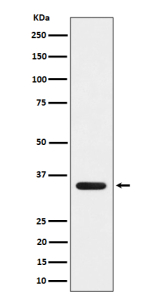
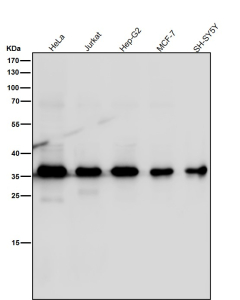
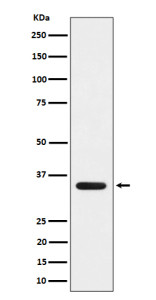
Rabbit IgG in phosphate buffered saline, pH 7.4, 150mM NaCl, 0.02% sodium azide and 50% glycerol, 0.4-0.5mg/ml BSA. DEGS1 antibody detects Dihydroceramide desaturase 1, encoded by the DEGS1 gene. This enzyme catalyzes the introduction of a trans double bond into dihydroceramide to produce ceramide, a central step in the sphingolipid biosynthesis pathway. Ceramides are essential bioactive lipids involved in regulating apoptosis, autophagy, differentiation, and membrane organization. DEGS1 antibody provides researchers with a valuable tool to study sphingolipid metabolism, cellular signaling, and the pathogenesis of metabolic and neurodegenerative diseases.Dihydroceramide desaturase 1 resides in the endoplasmic reticulum and is part of a larger network of enzymes controlling sphingolipid levels. By converting dihydroceramide to ceramide, DEGS1 regulates the balance between precursors and bioactive sphingolipids. Research with DEGS1 antibody has shown that altered activity of this enzyme shifts cellular lipid composition, leading to changes in apoptosis sensitivity and membrane structure. Ceramides produced by DEGS1 also participate in signaling pathways that control stress responses, mitochondrial function, and immune activity.Mutations in DEGS1 cause rare hereditary spastic paraplegia and leukodystrophy, highlighting the enzyme's role in nervous system development and maintenance. Patients with DEGS1 mutations show impaired myelination, progressive neurodegeneration, and developmental delay. Studies using DEGS1 antibody have demonstrated that defective enzyme activity leads to accumulation of dihydroceramides and reduced ceramide production, disrupting neuronal signaling and survival. These findings underscore the enzyme's essential role in neurobiology and its potential as a therapeutic target.In cancer, altered sphingolipid metabolism has been linked to tumor progression and treatment resistance. DEGS1 contributes to the regulation of apoptosis sensitivity, and reduced ceramide levels can enable survival of malignant cells under stress. Research with DEGS1 antibody has associated aberrant expression with poor prognosis in certain cancers, making it a potential biomarker and therapeutic target. Beyond oncology, sphingolipid imbalance has been implicated in metabolic diseases such as diabetes and obesity, further expanding the relevance of DEGS1.DEGS1 antibody is applied in western blotting, immunohistochemistry, and lipidomic studies. Western blotting confirms protein expression levels, while immunohistochemistry highlights tissue specific distribution in brain, liver, and metabolic organs. Functional assays using DEGS1 antibody in combination with lipidomics allow researchers to connect enzyme expression with lipid composition changes, providing a systems level view of sphingolipid biology.By supplying validated DEGS1 antibody reagents, NSJ Bioreagents supports studies of lipid metabolism, neurodegeneration, and cancer biology. Detection of Dihydroceramide desaturase 1 provides a critical tool for understanding how sphingolipid regulation contributes to health and disease.
| Keywords: | Anti-DEGS1, Anti-Retinol isomerase, Anti-Membrane lipid desaturase, Anti-Dihydroceramide desaturase-1, Anti-Degenerative spermatocyte homolog 1, Anti-Sphingolipid delta(4)-desaturase DES1, Anti-Cell migration-inducing gene 15 protein, DEGS1 Antibody / DES |
| Supplier: | NSJ Bioreagents |
| Supplier-Nr: | FY12995 |
Properties
| Application: | WB |
| Antibody Type: | Monoclonal |
| Clone: | 30D03 |
| Conjugate: | No |
| Host: | Rabbit |
| Species reactivity: | human |
| Immunogen: | A synthesized peptide derived from human MLD |
| Format: | Affinity Purified |
Database Information
| KEGG ID : | K04712 | Matching products |
| UniProt ID : | O15121 | Matching products |
| Gene ID : | GeneID 8560 | Matching products |
Handling & Safety
| Storage: | -20°C |
| Shipping: | -20°C (International: -20°C) |
Caution
Our products are for laboratory research use only: Not for administration to humans!
Our products are for laboratory research use only: Not for administration to humans!
Information about the product reference will follow.
more
You will get a certificate here
Viewed