
Cookie preferences
This website uses cookies, which are necessary for the technical operation of the website and are always set. Other cookies, which increase the comfort when using this website, are used for direct advertising or to facilitate interaction with other websites and social networks, are only set with your consent.
Configuration
Technically required
These cookies are necessary for the basic functions of the shop.
"Allow all cookies" cookie
"Decline all cookies" cookie
CSRF token
Cookie preferences
Currency change
Customer-specific caching
FACT-Finder tracking
Individual prices
Selected shop
Session
Comfort functions
These cookies are used to make the shopping experience even more appealing, for example for the recognition of the visitor.
Note
Show the facebook fanpage in the right blod sidebar
Statistics & Tracking
Affiliate program
Conversion and usertracking via Google Tag Manager
Track device being used


| Item number | Size | Datasheet | Manual | SDS | Delivery time | Quantity | Price |
|---|---|---|---|---|---|---|---|
| NSJ-V5890SAF-100UG | 100 µg | - | - |
7 - 12 business days* |
810.00€
|
If you have any questions, please use our Contact Form.
You can also order by e-mail: info@biomol.com
Larger quantity required? Request bulk
You can also order by e-mail: info@biomol.com
Larger quantity required? Request bulk
1 mg/ml in 1X PBS, BSA free, sodium azide free. D-dimer antibody targets a neoantigenic epitope... more
Product information "Anti-D-dimer / Cross-linked fibrin fragment, clone FGG/13043R"
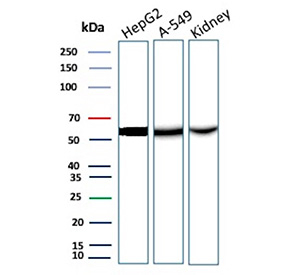
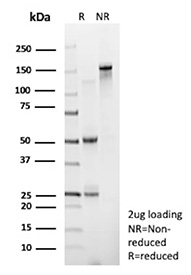
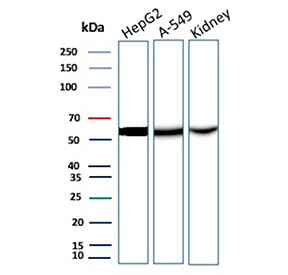
1 mg/ml in 1X PBS, BSA free, sodium azide free. D-dimer antibody targets a neoantigenic epitope present on the cross-linked fibrin fragment known as D-dimer, a specific fibrin degradation product generated during active coagulation and fibrinolysis. D-dimer is formed only after fibrinogen is converted to fibrin by thrombin, fibrin strands are covalently cross-linked by factor XIIIa, and the stabilized clot is subsequently cleaved by plasmin. This multistep requirement makes D-dimer a highly specific molecular marker of clot formation and breakdown rather than a marker of native fibrinogen or unprocessed fibrin.D-dimer is derived primarily from the gamma chain region of fibrinogen (FGG) following cross-linking and proteolytic cleavage, creating a unique conformational epitope that is absent in intact fibrinogen, non-cross-linked fibrin, or individual fibrinogen chains. Antibodies directed against this neoepitope selectively recognize cross-linked fibrin degradation products, providing high specificity for biologically relevant clot turnover. As a result, D-dimer antibody reagents are fundamentally different from antibodies raised against fibrinogen alpha, beta, or gamma chains, which detect native circulating proteins rather than processed clot fragments.The biological significance of D-dimer lies in its role as a direct indicator of ongoing or recent coagulation activity. Elevated D-dimer levels reflect activation of both the coagulation cascade and the fibrinolytic system, making D-dimer a widely used biomarker in thrombosis research and clinical diagnostics. D-dimer antibody tools are extensively applied in studies of venous thromboembolism, disseminated intravascular coagulation, cardiovascular disease, inflammation-associated coagulopathy, cancer-associated thrombosis, and sepsis-related clotting abnormalities.In tissue-based and biochemical research, D-dimer antibody reagents are used to detect fibrin deposition and degradation within vascular and extravascular compartments. Localization of D-dimer-positive material provides insight into sites of active clot formation, fibrinolytic remodeling, and vascular injury. In cancer and inflammatory disease models, detection of cross-linked fibrin fragments can reveal interactions between coagulation pathways, immune cell infiltration, and tissue remodeling processes within the disease microenvironment.The D-dimer antibody clone FGG/13043R is designed to recognize a neoantigenic determinant specific to the D-dimer fragment of cross-linked fibrin. Clone FGG/13043R does not detect native fibrinogen or uncleaved fibrin, supporting its use in research applications that require selective identification of fibrin degradation products. This monoclonal antibody enables precise investigation of coagulation dynamics, clot resolution, and fibrinolytic activity in physiological and pathological experimental systems.
| Keywords: | Anti-FGG, Anti-Fibrinogen gamma chain, D-dimer Antibody / Cross-linked fibrin fragment |
| Supplier: | NSJ Bioreagents |
| Supplier-Nr: | V5890SAF |
Properties
| Application: | WB |
| Antibody Type: | Monoclonal |
| Clone: | FGG/13043R |
| Conjugate: | No |
| Host: | Rabbit |
| Species reactivity: | human |
| Immunogen: | Recombinant human FGA protein (exact sequence is proprietary) was used as the immuongen for the D-dimer antibody |
| Format: | Purified |
Database Information
| KEGG ID : | K03905 | Matching products |
| UniProt ID : | P02679 | Matching products |
| Gene ID : | GeneID 2266 | Matching products |
Handling & Safety
| Storage: | -20°C |
| Shipping: | -20°C (International: -20°C) |
Caution
Our products are for laboratory research use only: Not for administration to humans!
Our products are for laboratory research use only: Not for administration to humans!
Information about the product reference will follow.
more
You will get a certificate here
Viewed