
Cookie preferences
This website uses cookies, which are necessary for the technical operation of the website and are always set. Other cookies, which increase the comfort when using this website, are used for direct advertising or to facilitate interaction with other websites and social networks, are only set with your consent.
Configuration
Technically required
These cookies are necessary for the basic functions of the shop.
"Allow all cookies" cookie
"Decline all cookies" cookie
CSRF token
Cookie preferences
Currency change
Customer-specific caching
FACT-Finder tracking
Individual prices
Selected shop
Session
Comfort functions
These cookies are used to make the shopping experience even more appealing, for example for the recognition of the visitor.
Note
Show the facebook fanpage in the right blod sidebar
Statistics & Tracking
Affiliate program
Conversion and usertracking via Google Tag Manager
Track device being used


| Item number | Size | Datasheet | Manual | SDS | Delivery time | Quantity | Price |
|---|---|---|---|---|---|---|---|
| NSJ-FY12746 | 100 µl | - | - |
3 - 10 business days* |
790.00€
|
If you have any questions, please use our Contact Form.
You can also order by e-mail: info@biomol.com
Larger quantity required? Request bulk
You can also order by e-mail: info@biomol.com
Larger quantity required? Request bulk
Rabbit IgG in phosphate buffered saline, pH 7.4, 150mM NaCl, 0.02% sodium azide and 50% glycerol,... more
Product information "Anti-CTSH / Cathepsin H, clone 31C05"
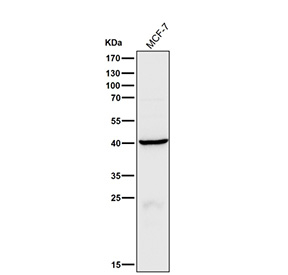
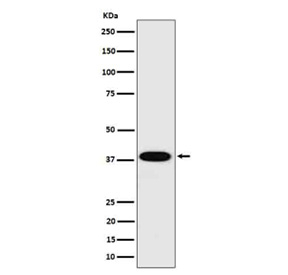
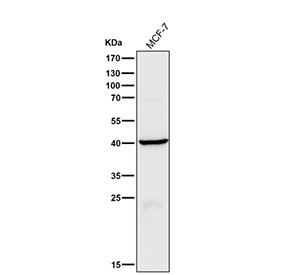
Rabbit IgG in phosphate buffered saline, pH 7.4, 150mM NaCl, 0.02% sodium azide and 50% glycerol, 0.4-0.5mg/ml BSA. CTSH antibody detects cathepsin H, a lysosomal cysteine protease encoded by the CTSH gene. Cathepsin H is also known as mini chain cathepsin H, lysosomal thiol protease H, and EC 3.4.22.16. As a member of the papain like protease family, cathepsin H plays a central role in intracellular protein degradation, antigen processing, and extracellular matrix turnover. The protein is synthesized as an inactive zymogen that is activated in the acidic environment of lysosomes. Structurally, cathepsin H contains a papain like catalytic domain and a mini chain insert that confers aminopeptidase activity in addition to endopeptidase function.CTSH antibody is applied in immunology, cancer biology, and developmental biology. Cathepsin H contributes to general protein turnover in lysosomes and is critical for remodeling of tissues during development and wound healing. In immune cells, CTSH processes antigens for presentation on MHC class II molecules, influencing adaptive immune responses. By detecting cathepsin H, researchers can investigate both housekeeping proteolysis and specialized immune functions. Western blot assays detect both procathepsin H and the mature active enzyme. Immunohistochemistry maps expression in tissues such as lung, kidney, and lymph nodes, while immunofluorescence highlights punctate lysosomal localization. These assays provide robust methods for assessing lysosomal function across systems.Dysregulated CTSH activity has been implicated in cancer progression. Tumor cells exploit cathepsin H and related proteases to degrade extracellular matrix, promoting invasion and metastasis. Elevated expression of CTSH correlates with poor prognosis in lung and breast cancer. Conversely, cathepsin H deficiency impairs immune processing and contributes to altered inflammatory responses. By applying CTSH antibody, researchers can study the balance between protective immune function and pathological proteolysis.Beyond cancer, CTSH plays roles in metabolic and neurodegenerative disease. In the brain, altered lysosomal protease activity contributes to protein aggregation disorders such as Alzheimer disease. Cathepsin H has been linked to processing of amyloid precursor protein and clearance of aggregated proteins. In metabolic disorders, abnormal CTSH expression influences adipose tissue remodeling and insulin sensitivity.CTSH antibody also supports studies in developmental biology. Lysosomal proteases including cathepsin H are required for embryogenesis, bone remodeling, and organ morphogenesis. Mouse knockout models reveal roles in immune cell differentiation and growth factor activation. Detection of CTSH in these contexts informs both basic developmental mechanisms and potential therapeutic interventions.CTSH antibody from NSJ Bioreagents provides reliable specificity for cathepsin H. Its validated performance across diverse experimental systems ensures accurate results in lysosomal biology, cancer research, and immunology.
| Keywords: | Anti-CTSH, Anti-Pro-cathepsin H, CTSH Antibody / Cathepsin H |
| Supplier: | NSJ Bioreagents |
| Supplier-Nr: | FY12746 |
Properties
| Application: | WB, IHC, ICC, IF |
| Antibody Type: | Monoclonal |
| Clone: | 31C05 |
| Conjugate: | No |
| Host: | Rabbit |
| Species reactivity: | human |
| Immunogen: | A synthesized peptide derived from human Cathepsin H |
| Format: | Purified |
Database Information
| KEGG ID : | K01366 | Matching products |
| UniProt ID : | P09668 | Matching products |
| Gene ID : | GeneID 1512 | Matching products |
Handling & Safety
| Storage: | -20°C |
| Shipping: | -20°C (International: -20°C) |
Caution
Our products are for laboratory research use only: Not for administration to humans!
Our products are for laboratory research use only: Not for administration to humans!
Information about the product reference will follow.
more
You will get a certificate here
Viewed