
Cookie preferences
This website uses cookies, which are necessary for the technical operation of the website and are always set. Other cookies, which increase the comfort when using this website, are used for direct advertising or to facilitate interaction with other websites and social networks, are only set with your consent.
Configuration
Technically required
These cookies are necessary for the basic functions of the shop.
"Allow all cookies" cookie
"Decline all cookies" cookie
CSRF token
Cookie preferences
Currency change
Customer-specific caching
FACT-Finder tracking
Individual prices
Selected shop
Session
Comfort functions
These cookies are used to make the shopping experience even more appealing, for example for the recognition of the visitor.
Note
Show the facebook fanpage in the right blod sidebar
Statistics & Tracking
Affiliate program
Conversion and usertracking via Google Tag Manager
Track device being used


| Item number | Size | Datasheet | Manual | SDS | Delivery time | Quantity | Price |
|---|---|---|---|---|---|---|---|
| NSJ-V5868SAF-100UG | 100 µg | - | - |
3 - 10 business days* |
810.00€
|
If you have any questions, please use our Contact Form.
You can also order by e-mail: info@biomol.com
Larger quantity required? Request bulk
You can also order by e-mail: info@biomol.com
Larger quantity required? Request bulk
1 mg/ml in 1X PBS, BSA free, sodium azide free. CTSG antibody targets Cathepsin G, a serine... more
Product information "Anti-CTSG / Cathepsin G, clone r19C3"
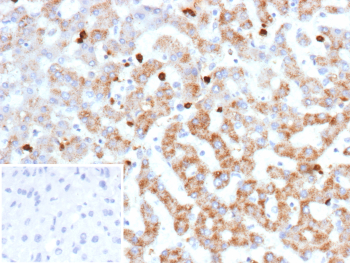
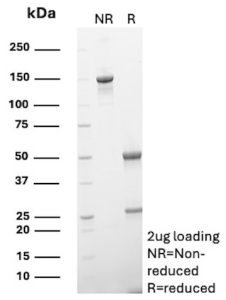
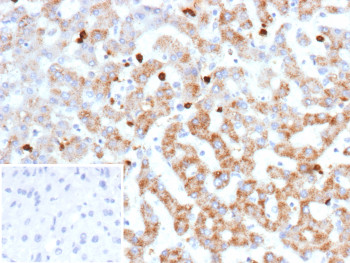
1 mg/ml in 1X PBS, BSA free, sodium azide free. CTSG antibody targets Cathepsin G, a serine protease encoded by the CTSG gene and predominantly expressed in neutrophils and other myeloid lineage cells. Cathepsin G is stored in azurophilic granules and released during neutrophil activation, where it participates in antimicrobial defense, extracellular matrix remodeling, and regulation of inflammatory responses. CTSG antibody is widely used to study innate immune cell function and neutrophil-associated proteolytic activity.Cathepsin G localizes primarily to cytoplasmic granules in resting neutrophils and can be detected extracellularly following degranulation. In addition to neutrophils, Cathepsin G expression has been reported in monocytes, mast cells, and certain epithelial cells under inflammatory conditions. Once released, Cathepsin G can cleave a broad range of substrates, including bacterial proteins, extracellular matrix components, and host signaling molecules. CTSG antibody detection is therefore relevant for investigations into immune defense and tissue remodeling processes.Functionally, Cathepsin G exhibits both proteolytic and regulatory activities. It contributes directly to pathogen killing while also modulating cytokines, chemokines, and cell surface receptors involved in immune cell recruitment and activation. Through these actions, Cathepsin G influences leukocyte migration, vascular permeability, and inflammatory signaling cascades. CTSG antibody reagents support research into protease-driven regulation of innate immunity and inflammation.Dysregulated Cathepsin G activity has been implicated in a variety of pathological conditions, including chronic inflammatory diseases, cardiovascular disorders, and cancer. Excessive CTSG activity can contribute to tissue damage and fibrosis, while altered expression patterns have been observed in inflammatory lesions and tumor microenvironments. These associations underscore the value of CTSG antibody-based detection in studies examining inflammatory pathology and immune-mediated tissue injury.Clone r19C3 is designed to recognize Cathepsin G in research applications. CTSG antibody reagents are suitable for detecting protein expression and localization in immune cells and tissue samples, supporting studies focused on neutrophil biology, inflammatory protease activity, and disease-associated alterations in innate immune responses.
| Keywords: | Anti-CTSG, Anti-Cathepsin G, CTSG Antibody / Cathepsin G |
| Supplier: | NSJ Bioreagents |
| Supplier-Nr: | V5868SAF |
Properties
| Application: | IHC, WB |
| Antibody Type: | Monoclonal |
| Clone: | r19C3 |
| Conjugate: | No |
| Host: | Mouse |
| Species reactivity: | human |
| Immunogen: | Prokaryotic recombinant protein corresponding to a 124 amino acid N-terminal region of the cathepsin G molecule |
| Format: | Purified |
Database Information
| KEGG ID : | K01319 | Matching products |
| UniProt ID : | P08311 | Matching products |
| Gene ID : | GeneID 1511 | Matching products |
Handling & Safety
| Storage: | -20°C |
| Shipping: | -20°C (International: -20°C) |
Caution
Our products are for laboratory research use only: Not for administration to humans!
Our products are for laboratory research use only: Not for administration to humans!
Information about the product reference will follow.
more
You will get a certificate here
Viewed