
This website uses cookies, which are necessary for the technical operation of the website and are always set. Other cookies, which increase the comfort when using this website, are used for direct advertising or to facilitate interaction with other websites and social networks, are only set with your consent.
Configuration
Technically required
These cookies are necessary for the basic functions of the shop.
"Allow all cookies" cookie
"Decline all cookies" cookie
CSRF token
Cookie preferences
Currency change
Customer-specific caching
FACT-Finder tracking
Individual prices
Selected shop
Session
Comfort functions
These cookies are used to make the shopping experience even more appealing, for example for the recognition of the visitor.
Note
Show the facebook fanpage in the right blod sidebar
Statistics & Tracking
Affiliate program
Conversion and usertracking via Google Tag Manager
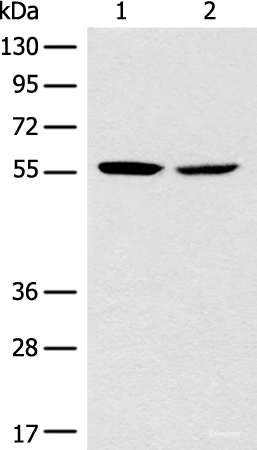
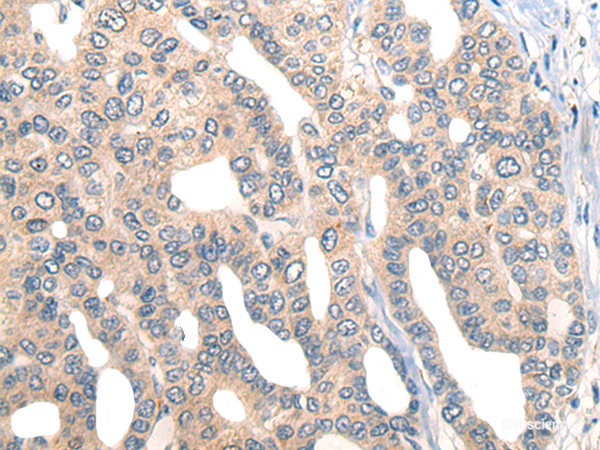
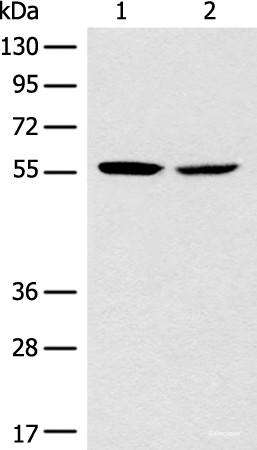
Coronins are a family of WD repeat-containing, actin-binding proteins that localize to submembraneous areas and regulate cell motility and cytoskeletal rearrangement. Coronin 1A (CORO1A, CLIPINA, CLABP, TACO, p57) can form coiled coil-mediated homotrimeric complexes that influence early phagosome formation. PKC-dependent phosphorylation of Coronin 1B (CORO1B) at Serine 2 regulates leading edge dynamics and cell motility in fibroblasts through interactions with Arp2/3 complex. Coronin 1C (CORO1C, Coronin 3, HCRNN4) is abundant in differentiating Neuro-2a cells, PC-12 cells and primary oligodendrocytes, where it is thought to influence neuron morphogenesis and migration. Coronin 2A (CORO2A, CLIPINB, IR10, WDR2) is a component of the approximately 1.5-2 megadalton N-CoR (nuclear receptor corepressor) complex of 10-12 proteins, which recruits HDACs to generate repressive chromatin. Coronin 7 (CORO7, CRN7) localizes to the Golgi membrane and influences the organization of intracellular membrane compartments and vesicular trafficking. Coronin 2B (CORO2B, CLIPINC) and Coronin 6 (CORO6) are similar to other members of this family, since they possess a conserved basic N-terminal motif and 3-10 WD repeats clustered in one to two core domains. Protein function: May play a role in the reorganization of neuronal actin structure. [The UniProt Consortium]
This website uses cookies, which are necessary for the technical operation of the website and are always set. Other cookies, which increase the usability of this website, serve for direct advertising or simplify interaction with other websites and social networks, will only be used with your consent.
More information
