
Cookie preferences
This website uses cookies, which are necessary for the technical operation of the website and are always set. Other cookies, which increase the comfort when using this website, are used for direct advertising or to facilitate interaction with other websites and social networks, are only set with your consent.
Configuration
Technically required
These cookies are necessary for the basic functions of the shop.
"Allow all cookies" cookie
"Decline all cookies" cookie
CSRF token
Cookie preferences
Currency change
Customer-specific caching
FACT-Finder tracking
Individual prices
Selected shop
Session
Comfort functions
These cookies are used to make the shopping experience even more appealing, for example for the recognition of the visitor.
Note
Show the facebook fanpage in the right blod sidebar
Statistics & Tracking
Affiliate program
Conversion and usertracking via Google Tag Manager
Track device being used



| Item number | Size | Datasheet | Manual | SDS | Delivery time | Quantity | Price |
|---|---|---|---|---|---|---|---|
| NSJ-V5860SAF-100UG | 100 µg | - | - |
7 - 12 business days* |
810.00€
|
If you have any questions, please use our Contact Form.
You can also order by e-mail: info@biomol.com
Larger quantity required? Request bulk
You can also order by e-mail: info@biomol.com
Larger quantity required? Request bulk
1 mg/ml in 1X PBS, BSA free, sodium azide free. Apolipoprotein J antibody targets Apolipoprotein... more
Product information "Anti-Clusterin / Apolipoprotein J, clone r7D1"
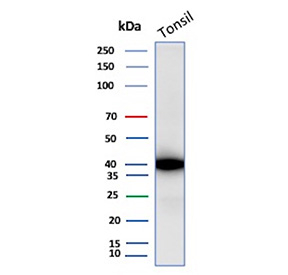
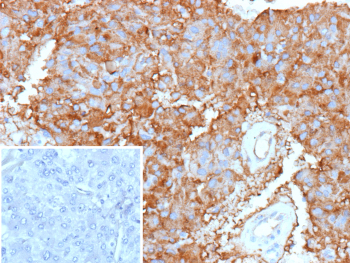
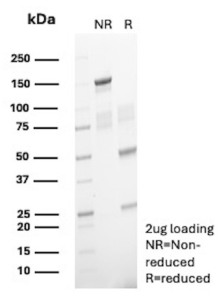
1 mg/ml in 1X PBS, BSA free, sodium azide free. Apolipoprotein J antibody targets Apolipoprotein J, a multifunctional glycoprotein encoded by the CLU gene that is also widely known as Clusterin and ApoJ. Apolipoprotein J functions as an extracellular and intracellular molecular chaperone involved in protein quality control, lipid transport, and cellular stress responses. The protein is expressed in a broad range of tissues, including brain, adrenal gland, kidney, liver, reproductive organs, and epithelial tissues, and can localize to the cytoplasm, nucleus, cell surface, or extracellular space depending on cellular context. Apolipoprotein J antibody is frequently used in research focused on cellular stress pathways, protein homeostasis, and tissue injury responses.Apolipoprotein J exists in multiple isoforms generated through alternative splicing and post-translational processing, resulting in both secreted and intracellular forms with distinct biological roles. The secreted form, often referred to as apolipoprotein J or ApoJ, is associated with lipid transport and extracellular chaperone activity, while intracellular Clusterin has been implicated in apoptosis regulation, DNA damage responses, and cell survival signaling. In the nervous system, Apolipoprotein J expression has been linked to synaptic maintenance and neuroprotection, whereas in endocrine and epithelial tissues it is often associated with differentiation and secretory activity. Clone r7D1 is designed to recognize Apolipoprotein J for research use in studies examining CLU and ApoJ expression and subcellular distribution.Altered Apolipoprotein J expression has been reported in a variety of pathological conditions, including neurodegenerative disorders, cardiovascular disease, inflammation, and cancer. In oncology research, CLU and ApoJ have been investigated for associations with tumor progression, therapy resistance, and cellular adaptation to stress. Changes in Apolipoprotein J expression have also been linked to tissue remodeling and injury responses in organs such as the brain and kidney. Clone r7D1 provides a tool for examining Apolipoprotein J expression and distribution in experimental systems relevant to tissue homeostasis and disease-associated stress responses.This Apolipoprotein J antibody complements a related Clusterin antibody used to study CLU, APO-J, and Apolipoprotein J biology.
| Keywords: | Anti-CLU, Anti-NA1/NA2, Anti-Clusterin, Anti-Apolipoprotein J, Anti-Ku70-binding protein 1, Anti-Sulfated glycoprotein 2, Anti-Complement cytolysis inhibitor, Anti-Aging-associated gene 4 protein, Anti-Complement-associated protein SP-40,40, Anti-Testoste |
| Supplier: | NSJ Bioreagents |
| Supplier-Nr: | V5860SAF |
Properties
| Application: | IHC, WB |
| Antibody Type: | Monoclonal |
| Clone: | r7D1 |
| Conjugate: | No |
| Host: | Mouse |
| Species reactivity: | human |
| Immunogen: | Prokaryotic recombinant protein corresponding to a portion of the alpha subunit of the human clusterin molecule |
| Format: | Purified |
Database Information
| KEGG ID : | K17252 | Matching products |
| UniProt ID : | P10909 | Matching products |
| Gene ID : | GeneID 1191 | Matching products |
Handling & Safety
| Storage: | -20°C |
| Shipping: | -20°C (International: -20°C) |
Caution
Our products are for laboratory research use only: Not for administration to humans!
Our products are for laboratory research use only: Not for administration to humans!
Information about the product reference will follow.
more
You will get a certificate here
Viewed