
Cookie preferences
This website uses cookies, which are necessary for the technical operation of the website and are always set. Other cookies, which increase the comfort when using this website, are used for direct advertising or to facilitate interaction with other websites and social networks, are only set with your consent.
Configuration
Technically required
These cookies are necessary for the basic functions of the shop.
"Allow all cookies" cookie
"Decline all cookies" cookie
CSRF token
Cookie preferences
Currency change
Customer-specific caching
FACT-Finder tracking
Individual prices
Selected shop
Session
Comfort functions
These cookies are used to make the shopping experience even more appealing, for example for the recognition of the visitor.
Note
Show the facebook fanpage in the right blod sidebar
Statistics & Tracking
Affiliate program
Conversion and usertracking via Google Tag Manager
Track device being used


| Item number | Size | Datasheet | Manual | SDS | Delivery time | Quantity | Price |
|---|---|---|---|---|---|---|---|
| NSJ-FY13203 | 100 µl | - | - |
3 - 10 business days* |
790.00€
|
If you have any questions, please use our Contact Form.
You can also order by e-mail: info@biomol.com
Larger quantity required? Request bulk
You can also order by e-mail: info@biomol.com
Larger quantity required? Request bulk
Rabbit IgG in phosphate buffered saline, pH 7.4, 150mM NaCl, 0.02% sodium azide and 50% glycerol,... more
Product information "Anti-Clu / Clusterin, clone 30C68"
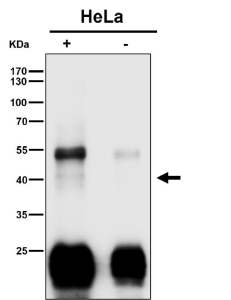
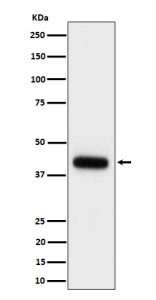
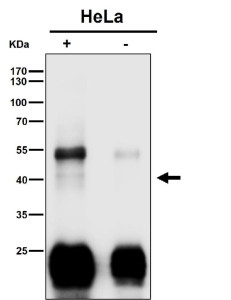
Rabbit IgG in phosphate buffered saline, pH 7.4, 150mM NaCl, 0.02% sodium azide and 50% glycerol, 0.4-0.5mg/ml BSA. Clu antibody detects Clusterin, encoded by the CLU gene. Clusterin is a secreted glycoprotein with diverse functions in lipid transport, apoptosis, and complement regulation. Also known as apolipoprotein J, Clusterin has been studied extensively in neurodegeneration, cancer, and reproductive biology. Clu antibody provides researchers with a versatile reagent to study cell survival, immune regulation, and disease processes.Clusterin is expressed in many tissues and exists in secreted and nuclear forms. Research using Clu antibody has shown that secreted Clusterin acts as an extracellular chaperone, binding misfolded proteins and preventing aggregation. This function is particularly important in the brain, where Clusterin helps clear amyloid proteins associated with neurodegenerative disease. Nuclear Clusterin, in contrast, has been linked to pro-apoptotic signaling, underscoring its context-dependent roles.In neurobiology, Clusterin is associated with Alzheimer's disease and other dementias. Studies with Clu antibody have demonstrated that increased Clusterin levels correlate with amyloid deposition and cognitive decline. Genome-wide association studies have identified CLU variants as risk factors for Alzheimer's disease, further highlighting its importance in neurodegeneration. As a result, Clusterin is being studied as both a biomarker and a therapeutic target.Clusterin also plays important roles in cancer biology. Research using Clu antibody has revealed that secreted Clusterin can protect tumor cells from stress and apoptosis, promoting therapeutic resistance. Conversely, nuclear Clusterin may enhance apoptosis and suppress tumor growth. These opposing roles reflect the complex regulation of CLU expression and processing in cancer.Clusterin has additional roles in reproduction, lipid transport, and complement regulation. Studies with Clu antibody have shown that it binds to sperm membranes and influences fertility, while also participating in complement inhibition during inflammation. Its broad functional repertoire makes it a protein of interest across multiple biological disciplines.Clu antibody is widely used in western blotting, immunohistochemistry, ELISA, and immunofluorescence. Western blotting identifies multiple isoforms, immunohistochemistry reveals expression in brain and tumors, and ELISA quantifies soluble Clusterin in biological fluids. These applications make Clu antibody valuable for translational research.By providing validated Clu antibody reagents, NSJ Bioreagents supports studies into neurodegeneration, cancer, and immune biology. Detection of Clusterin provides insight into how this multifunctional glycoprotein influences health and disease.
| Keywords: | Anti-Clu, Anti-Clustrin, Anti-Clusterin, Anti-Apolipoprotein J, Anti-Sulfated glycoprotein 2, Clu Antibody / Clusterin |
| Supplier: | NSJ Bioreagents |
| Supplier-Nr: | FY13203 |
Properties
| Application: | WB, IHC, IP |
| Antibody Type: | Monoclonal |
| Clone: | 30C68 |
| Conjugate: | No |
| Host: | Rabbit |
| Species reactivity: | mouse, rat |
| Immunogen: | A synthesized peptide derived from human Clusterin |
| Format: | Affinity Purified |
Database Information
| KEGG ID : | K17252 | Matching products |
| UniProt ID : | Q06890 | Matching products |
| Gene ID : | GeneID 12759 | Matching products |
Handling & Safety
| Storage: | -20°C |
| Shipping: | -20°C (International: -20°C) |
Caution
Our products are for laboratory research use only: Not for administration to humans!
Our products are for laboratory research use only: Not for administration to humans!
Information about the product reference will follow.
more
You will get a certificate here
Viewed