
This website uses cookies, which are necessary for the technical operation of the website and are always set. Other cookies, which increase the comfort when using this website, are used for direct advertising or to facilitate interaction with other websites and social networks, are only set with your consent.
Configuration
Technically required
These cookies are necessary for the basic functions of the shop.
"Allow all cookies" cookie
"Decline all cookies" cookie
CSRF token
Cookie preferences
Currency change
Customer-specific caching
FACT-Finder tracking
Individual prices
Selected shop
Session
Comfort functions
These cookies are used to make the shopping experience even more appealing, for example for the recognition of the visitor.
Note
Show the facebook fanpage in the right blod sidebar
Statistics & Tracking
Affiliate program
Conversion and usertracking via Google Tag Manager
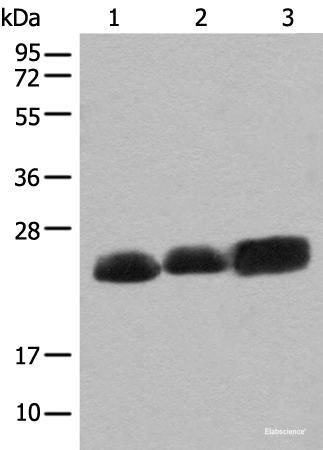
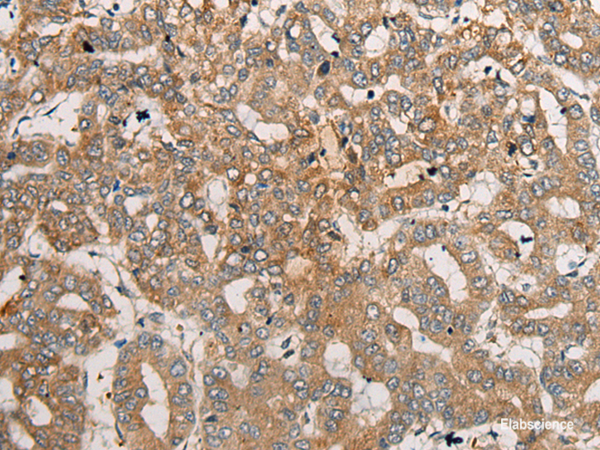
BM88, also known as CEND1 (cell cycle exit and neuronal differentiation protein 1), is a 149 amino acid protein that belongs to the CEND1 familly. Involved in neuroblastoma cell differentiation, BM88 is a single-pass type IV membrane protein that is neuron specific. It is suggested that BM88 forms a dimer of two identical polypeptides linked by disulfide bridges. BM88 has a central proline-rich region containing four PxxP motifs, which typically bind SRC homology-3 (SH3) domains, as well as a putative C-terminal transmembrane region, and several potential sites for N-glycosylation, myristoylation and phosphorylation. It is also suggested that a novel signaling mechanism exists by which BM88 interferes with calcium release from inositol 1,4,5-trisphosphate-sensitive stores and exerts anti-proliferative and anti-apoptotic functions. BM88 is an important molecular target for HDAC inhibition, and transcription of BM88 is induced by trichostatin-A. Protein function: Involved in neuronal differentiation. [The UniProt Consortium]
Keywords:
Anti-BM88, Anti-CEND1, Anti-BM88 antigen, Anti-Cell cycle exit and neuronal differentiation protein 1, CEND1 Polyclonal Antibody
This website uses cookies, which are necessary for the technical operation of the website and are always set. Other cookies, which increase the usability of this website, serve for direct advertising or simplify interaction with other websites and social networks, will only be used with your consent.
More information