
Cookie preferences
This website uses cookies, which are necessary for the technical operation of the website and are always set. Other cookies, which increase the comfort when using this website, are used for direct advertising or to facilitate interaction with other websites and social networks, are only set with your consent.
Configuration
Technically required
These cookies are necessary for the basic functions of the shop.
"Allow all cookies" cookie
"Decline all cookies" cookie
CSRF token
Cookie preferences
Currency change
Customer-specific caching
FACT-Finder tracking
Individual prices
Selected shop
Session
Comfort functions
These cookies are used to make the shopping experience even more appealing, for example for the recognition of the visitor.
Note
Show the facebook fanpage in the right blod sidebar
Statistics & Tracking
Affiliate program
Conversion and usertracking via Google Tag Manager
Track device being used

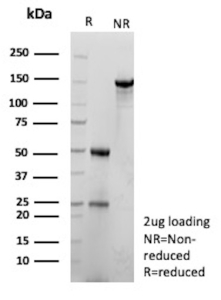
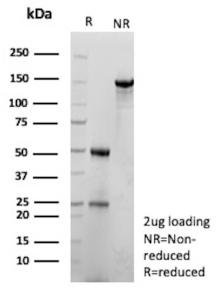
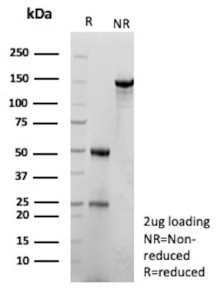

| Item number | Size | Datasheet | Manual | SDS | Delivery time | Quantity | Price |
|---|---|---|---|---|---|---|---|
| NSJ-V5989-20UG | 20 µg | - | - |
7 - 12 business days* |
375.00€
|
||
| NSJ-V5989-100UG | 100 µg | - | - |
7 - 12 business days* |
810.00€
|
If you have any questions, please use our Contact Form.
You can also order by e-mail: info@biomol.com
Larger quantity required? Request bulk
You can also order by e-mail: info@biomol.com
Larger quantity required? Request bulk
0.2 mg/ml in 1X PBS with 0.05% BSA, 0.05% sodium azide. CD66a Cell Adhesion Molecule antibody,... more
Product information "Anti-CEACAM1 / Carcinoembryonic antigen-related cell adhesion molecule 1, clone r29H2"
0.2 mg/ml in 1X PBS with 0.05% BSA, 0.05% sodium azide. CD66a Cell Adhesion Molecule antibody, also known as CEACAM1 antibody, recognizes Carcinoembryonic antigen-related cell adhesion molecule 1, a type I transmembrane glycoprotein encoded by the CEACAM1 gene and commonly referred to as Biliary glycoprotein 1 and BGP-1. CD66a is a member of the carcinoembryonic antigen-related cell adhesion molecule family within the immunoglobulin superfamily and is primarily localized to the plasma membrane of epithelial and immune cells. It is expressed in liver, biliary epithelium, intestine, prostate, and mammary gland, as well as in subsets of activated T cells, B cells, and natural killer cells, supporting epithelial architecture and immune regulation.CD66a Cell Adhesion Molecule antibody detects a protein composed of extracellular immunoglobulin-like domains, a single transmembrane region, and alternatively spliced cytoplasmic tails. Long cytoplasmic isoforms contain immunoreceptor tyrosine-based inhibitory motifs that recruit phosphatases and regulate downstream signaling pathways involved in proliferation, differentiation, and apoptosis. Short isoforms lack these motifs and exhibit altered regulatory capacity. In polarized epithelial tissues, CEACAM1 is enriched at apical and lateral membranes, where it contributes to maintenance of glandular structure and barrier integrity while coordinating adhesion-dependent signaling events.Beyond its structural role, CD66a functions as an immune regulatory receptor. In lymphocytes, CEACAM1 can act as a co-inhibitory receptor influencing T cell activation, tolerance, and inflammatory responses, linking CD66a biology to immune checkpoint-like mechanisms. These functions position CEACAM1 as a relevant target in studies of immune homeostasis, tumor-immune interactions, and inflammatory signaling. In addition, several bacterial and viral pathogens utilize CEACAM family members as host receptors, underscoring the importance of this molecule in host-pathogen interaction research.Altered expression of CEACAM1 has been reported in colorectal carcinoma, hepatocellular carcinoma, breast cancer, melanoma, and prostate cancer. In certain epithelial tumors, reduced expression correlates with decreased intercellular adhesion and increased invasiveness, while in other contexts elevated expression is associated with tumor progression and immune modulation. These context-dependent roles highlight the value of CD66a Cell Adhesion Molecule antibody for evaluating membrane protein expression patterns in both normal and disease-associated tissues.This recombinant monoclonal antibody (clone r29H2) targets CEACAM1 protein in research applications. CD66a Cell Adhesion Molecule antibody supports investigation of adhesion molecule dynamics, isoform-specific signaling differences, and tumor-associated changes in CEACAM1 expression.
| Keywords: | Anti-CEACAM1, Anti-Biliary glycoprotein 1, Anti-Cell adhesion molecule CEACAM1, Anti-Carcinoembryonic antigen-related cell adhesion molecule 1, CEACAM1 Antibody / Carcinoembryonic antigen-related cell adhesion molecule 1 |
| Supplier: | NSJ Bioreagents |
| Supplier-Nr: | V5989 |
Properties
| Application: | IHC |
| Antibody Type: | Monoclonal |
| Clone: | r29H2 |
| Conjugate: | No |
| Host: | Mouse |
| Species reactivity: | human |
| Immunogen: | Prokaryotic recombinant protein corresponding to a 170 amino acid truncate (266 to 436aa) of the CD66a molecule |
| Format: | Purified |
Database Information
| KEGG ID : | K06499 | Matching products |
| UniProt ID : | P13688 | Matching products |
| Gene ID : | GeneID 634 | Matching products |
Handling & Safety
| Storage: | -20°C |
| Shipping: | -20°C (International: -20°C) |
Caution
Our products are for laboratory research use only: Not for administration to humans!
Our products are for laboratory research use only: Not for administration to humans!
Information about the product reference will follow.
more
You will get a certificate here
Viewed