
Cookie preferences
This website uses cookies, which are necessary for the technical operation of the website and are always set. Other cookies, which increase the comfort when using this website, are used for direct advertising or to facilitate interaction with other websites and social networks, are only set with your consent.
Configuration
Technically required
These cookies are necessary for the basic functions of the shop.
"Allow all cookies" cookie
"Decline all cookies" cookie
CSRF token
Cookie preferences
Currency change
Customer-specific caching
FACT-Finder tracking
Individual prices
Selected shop
Session
Comfort functions
These cookies are used to make the shopping experience even more appealing, for example for the recognition of the visitor.
Note
Show the facebook fanpage in the right blod sidebar
Statistics & Tracking
Affiliate program
Conversion and usertracking via Google Tag Manager
Track device being used


| Item number | Size | Datasheet | Manual | SDS | Delivery time | Quantity | Price |
|---|---|---|---|---|---|---|---|
| NSJ-RQ8950 | 100 µl | - | - |
3 - 10 business days* |
790.00€
|
If you have any questions, please use our Contact Form.
You can also order by e-mail: info@biomol.com
Larger quantity required? Request bulk
You can also order by e-mail: info@biomol.com
Larger quantity required? Request bulk
Antibody in PBS with 0.02% sodium azide, 50% glycerol and 0.4-0.5mg/ml BSA. CD39 antibody is a... more
Product information "Anti-CD39 / ENTPD1, clone 17E43"
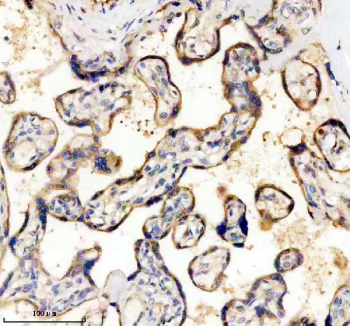
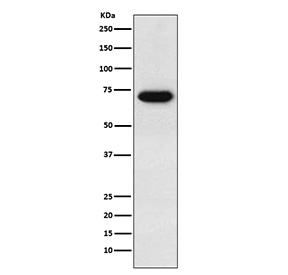
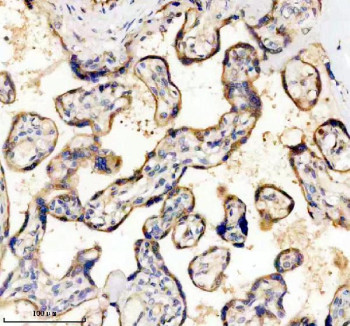
Antibody in PBS with 0.02% sodium azide, 50% glycerol and 0.4-0.5mg/ml BSA. CD39 antibody is a widely used reagent for studying immune regulation, purinergic signaling, and vascular biology. The encoded protein, CD39 (also known as ectonucleoside triphosphate diphosphohydrolase 1 or ENTPD1), is an ectoenzyme expressed on the surface of endothelial cells, immune cells, and platelets. CD39 hydrolyzes extracellular ATP and ADP into AMP, which can then be converted into adenosine by CD73. This ATP-adenosine pathway regulates inflammation, thrombosis, and tissue homeostasis by balancing proinflammatory and immunosuppressive signals.In the immune system, CD39 plays an important role in controlling T cell and regulatory T cell activity. By reducing extracellular ATP levels and increasing adenosine production, CD39 dampens inflammatory responses and promotes immune tolerance. High CD39 expression on regulatory T cells contributes to their immunosuppressive capacity, making CD39 a focus of interest in autoimmune disease, transplantation, and cancer immunology. In the vascular system, CD39 helps prevent platelet aggregation and thrombosis by degrading platelet-activating nucleotides, thereby maintaining vascular health.Dysregulation of CD39 expression or activity has been implicated in diverse diseases. Increased CD39 activity has been observed in tumors, where it contributes to immune evasion by creating an adenosine-rich, immunosuppressive microenvironment. Conversely, reduced CD39 function has been linked to heightened inflammation in autoimmune diseases and transplant rejection. These associations underscore CD39 as both a biomarker and a therapeutic target across multiple areas of biomedical research.At the molecular level, CD39 is a transmembrane glycoprotein with two transmembrane domains and large extracellular loops that contain conserved apyrase motifs responsible for nucleotide hydrolysis. Its enzymatic activity is dependent on divalent cations such as calcium and magnesium. By regulating extracellular nucleotide concentrations, CD39 serves as a critical checkpoint in purinergic signaling pathways that influence vascular tone, immune cell communication, and tissue repair.The CD39 antibody is commonly used in flow cytometry, western blotting, immunohistochemistry, and immunofluorescence to detect protein expression and distribution. These applications are valuable for research in immunology, oncology, and cardiovascular biology. For scientists investigating immune regulation, thrombosis, or purinergic signaling, the CD39 antibody provides a specific and dependable detection tool. NSJ Bioreagents supplies validated antibodies designed to ensure reproducibility and accuracy in advanced molecular studies.
| Keywords: | Anti-ENTPD1, Anti-Ecto-apyrase, Anti-ATP diphosphohydrolase, Anti-Ecto-ATP diphosphohydrolase 1, Anti-Lymphoid cell activation antigen, Anti-Nucleoside triphosphate diphosphohydrolase 1, Anti-Ectonucleoside triphosphate diphosphohydrolase 1, CD39 Antibody |
| Supplier: | NSJ Bioreagents |
| Supplier-Nr: | RQ8950 |
Properties
| Application: | WB, IHC (paraffin) |
| Antibody Type: | Monoclonal |
| Clone: | 17E43 |
| Conjugate: | No |
| Host: | Rabbit |
| Species reactivity: | human |
| Immunogen: | A synthetic peptide specific to ENTPD1 protein |
| Format: | Purified |
Database Information
| KEGG ID : | K01510 | Matching products |
| UniProt ID : | P49961 | Matching products |
| Gene ID : | GeneID 953 | Matching products |
Handling & Safety
| Storage: | -20°C |
| Shipping: | -20°C (International: -20°C) |
Caution
Our products are for laboratory research use only: Not for administration to humans!
Our products are for laboratory research use only: Not for administration to humans!
Information about the product reference will follow.
more
You will get a certificate here
Viewed