
Cookie preferences
This website uses cookies, which are necessary for the technical operation of the website and are always set. Other cookies, which increase the comfort when using this website, are used for direct advertising or to facilitate interaction with other websites and social networks, are only set with your consent.
Configuration
Technically required
These cookies are necessary for the basic functions of the shop.
"Allow all cookies" cookie
"Decline all cookies" cookie
CSRF token
Cookie preferences
Currency change
Customer-specific caching
FACT-Finder tracking
Individual prices
Selected shop
Session
Comfort functions
These cookies are used to make the shopping experience even more appealing, for example for the recognition of the visitor.
Note
Show the facebook fanpage in the right blod sidebar
Statistics & Tracking
Affiliate program
Conversion and usertracking via Google Tag Manager
Track device being used



| Item number | Size | Datasheet | Manual | SDS | Delivery time | Quantity | Price |
|---|---|---|---|---|---|---|---|
| NSJ-F43038-0.08ML | 80 µl | - | - |
3 - 10 business days* |
361.00€
|
||
| NSJ-F43038-0.4ML | 400 µl | - | - |
3 - 10 business days* |
772.00€
|
If you have any questions, please use our Contact Form.
You can also order by e-mail: info@biomol.com
Larger quantity required? Request bulk
You can also order by e-mail: info@biomol.com
Larger quantity required? Request bulk
In 1X PBS, pH 7.4, with 0.09% sodium azide. CD3 epsilon (CD3E) is a membrane-associated component... more
Product information "Anti-CD3 epsilon"
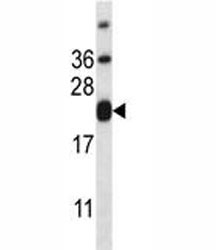
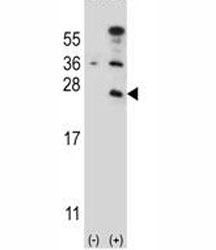
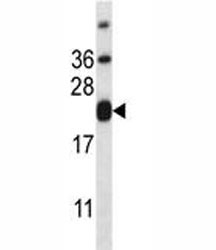
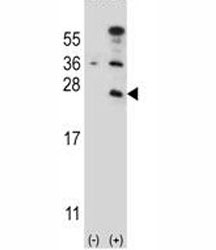
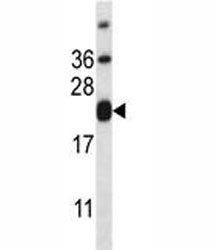
In 1X PBS, pH 7.4, with 0.09% sodium azide. CD3 epsilon (CD3E) is a membrane-associated component of the T-cell receptor (TCR) complex that is consistently expressed on T lymphocytes and plays a central role in antigen recognition and immune response. CD3e Antibody / Tumor Immune Infiltration Marker Antibody enables detection of CD3 Epsilon / CD3E and is widely used to assess T-cell presence within tumor tissues. CD3e antibody, also known as CD3 epsilon antibody or CD3E antibody, is commonly referred to as a tumor immune infiltration marker antibody because it enables identification of tumor-infiltrating lymphocytes within the tumor microenvironment.This CD3e Antibody is uniquely positioned for evaluating immune cell infiltration in solid tumors and hematologic malignancies. CD3 epsilon forms part of the CD3 complex together with CD3 gamma, CD3 delta, and CD3 zeta chains, which associate with the TCR and define T-cell identity. Detection of CD3 epsilon allows direct visualization of T lymphocytes within tumor stroma, invasive margins, and intratumoral compartments, providing spatial insight into immune engagement within cancer tissues.As a tumor immune infiltration marker antibody, CD3e antibody reagents enable both qualitative and quantitative assessment of T-cell distribution in tumors. The density and localization of CD3-positive cells are widely used parameters in tumor immunology, reflecting the degree of immune surveillance and the ability of T cells to access tumor cells. Patterns such as immune-excluded, immune-infiltrated, or immune-desert phenotypes can be distinguished based on CD3 staining patterns, providing biologically meaningful context for interpreting tumor-immune interactions.CD3 epsilon detection is particularly valuable for understanding how T cells interact with tumor cells and surrounding stromal elements. The presence of CD3-positive lymphocytes within tumor nests may indicate active immune engagement, while restriction of CD3-positive cells to stromal regions can reflect barriers to immune infiltration. CD3e Antibody / Tumor Immune Infiltration Marker Antibody supports these analyses by enabling consistent and spatially resolved detection of T cells across tissue sections.In tissue-based studies, CD3e antibody reagents are widely used to evaluate immune infiltration across a broad range of tumor types, including carcinomas, lymphomas, and solid tumors of epithelial origin. Detection of CD3-positive cells supports investigation of immune composition, tumor-associated inflammation, and immune-mediated tumor control. These analyses are central to understanding tumor biology and immune response dynamics.Integration of CD3 detection with additional immune markers, such as CD4, CD8, or macrophage-associated markers, allows further characterization of tumor-infiltrating lymphocyte populations. This enables more detailed profiling of immune cell subsets and functional states within the tumor microenvironment.CD3e Antibody / Tumor Immune Infiltration Marker Antibody provides a robust and spatially informative tool for analyzing T-cell presence in cancer tissues, supporting research focused on tumor immunology, immune surveillance, and microenvironmental interactions.A full range of CD3e antibody reagents for immunohistochemistry, western blot, and flow cytometry is available on our CD3e Antibody collection page.
| Keywords: | Anti-CD3E, Anti-T-cell surface antigen T3/Leu-4 epsilon chain, Anti-T-cell surface glycoprotein CD3 epsilon chain, CD3 epsilon Antibody |
| Supplier: | NSJ Bioreagents |
| Supplier-Nr: | F43038 |
Properties
| Application: | WB, ELISA |
| Antibody Type: | Polyclonal |
| Conjugate: | No |
| Host: | Rabbit |
| Species reactivity: | human |
| Immunogen: | Portion of amino acids 154-182 from the human protein |
| Format: | Purified |
Database Information
| KEGG ID : | K06451 | Matching products |
| UniProt ID : | P07766 | Matching products |
| Gene ID : | GeneID 916 | Matching products |
Handling & Safety
| Storage: | -20°C |
| Shipping: | -20°C (International: -20°C) |
Caution
Our products are for laboratory research use only: Not for administration to humans!
Our products are for laboratory research use only: Not for administration to humans!
Information about the product reference will follow.
more
You will get a certificate here
Viewed