
Cookie preferences
This website uses cookies, which are necessary for the technical operation of the website and are always set. Other cookies, which increase the comfort when using this website, are used for direct advertising or to facilitate interaction with other websites and social networks, are only set with your consent.
Configuration
Technically required
These cookies are necessary for the basic functions of the shop.
"Allow all cookies" cookie
"Decline all cookies" cookie
CSRF token
Cookie preferences
Currency change
Customer-specific caching
FACT-Finder tracking
Individual prices
Selected shop
Session
Comfort functions
These cookies are used to make the shopping experience even more appealing, for example for the recognition of the visitor.
Note
Show the facebook fanpage in the right blod sidebar
Statistics & Tracking
Affiliate program
Conversion and usertracking via Google Tag Manager
Track device being used


| Item number | Size | Datasheet | Manual | SDS | Delivery time | Quantity | Price |
|---|---|---|---|---|---|---|---|
| NSJ-FY12383 | 100 µl | - | - |
3 - 10 business days* |
790.00€
|
If you have any questions, please use our Contact Form.
You can also order by e-mail: info@biomol.com
Larger quantity required? Request bulk
You can also order by e-mail: info@biomol.com
Larger quantity required? Request bulk
Rabbit IgG in phosphate buffered saline, pH 7.4, 150mM NaCl, 0.02% sodium azide and 50% glycerol,... more
Product information "Anti-BIN1 / Bridging integrator 1, clone 30B93"
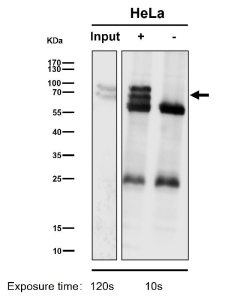
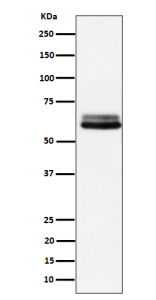
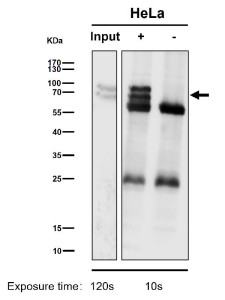
Rabbit IgG in phosphate buffered saline, pH 7.4, 150mM NaCl, 0.02% sodium azide and 50% glycerol, 0.4-0.5mg/ml BSA. BIN1 antibody recognizes bridging integrator 1, a member of the BAR domain protein family that regulates membrane curvature, endocytosis, and cytoskeletal organization. BIN1 is expressed in multiple tissues, with particularly high levels in skeletal and cardiac muscle as well as the nervous system. BIN1 plays important roles in T tubule biogenesis, clathrin mediated endocytosis, and regulation of actin dynamics. Through these functions, BIN1 contributes to muscle physiology, synaptic vesicle recycling, and cellular trafficking.BIN1 antibody is highly relevant for research into neuromuscular disorders, cancer, and Alzheimer disease. Mutations in BIN1 are associated with centronuclear myopathy, a congenital muscle disorder characterized by abnormal nuclei positioning and impaired muscle function. Genome wide association studies have also linked BIN1 to increased risk of Alzheimer disease, suggesting that altered BIN1 expression or function contributes to neurodegeneration. In oncology, BIN1 has been identified as a tumor suppressor, where reduced expression correlates with enhanced proliferation and invasion.The antibody is suitable for western blotting, immunohistochemistry, immunofluorescence, and flow cytometry. BIN1 antibody detects protein bands corresponding to different isoforms, which arise from extensive alternative splicing. In immunohistochemistry, the antibody highlights tissue specific localization, including strong signals in muscle fibers and neuronal tissues. Immunofluorescence enables detailed visualization of BIN1 distribution along membranes and T tubules, reflecting its role in membrane remodeling.BIN1 is also a key regulator of signaling pathways. It interacts with c Myc and modulates transcriptional activity, contributing to its tumor suppressor function. By detecting BIN1 expression with specific antibodies, researchers can explore how changes in BIN1 contribute to malignant transformation. In neuroscience, altered BIN1 expression is thought to affect tau pathology and amyloid processing, making it an important candidate in Alzheimer disease research.BIN1 antibody from NSJ Bioreagents provides reliable specificity across experimental methods, supporting investigations of membrane dynamics, neuromuscular disease, cancer, and neurodegeneration.
| Keywords: | Anti-BIN1, Anti-Amphiphysin II, Anti-Bridging integrator 1, Anti-Amphiphysin-like protein, Anti-Myc box-dependent-interacting protein 1, Anti-Box-dependent myc-interacting protein 1, BIN1 Antibody / Bridging integrator 1 |
| Supplier: | NSJ Bioreagents |
| Supplier-Nr: | FY12383 |
Properties
| Application: | WB, IHC, ICC, IF, IP, FC |
| Antibody Type: | Monoclonal |
| Clone: | 30B93 |
| Conjugate: | No |
| Host: | Rabbit |
| Species reactivity: | human |
| Immunogen: | A synthesized peptide derived from human BIN1 |
| Format: | Purified |
Database Information
| KEGG ID : | K12562 | Matching products |
| UniProt ID : | O00499 | Matching products |
| Gene ID : | GeneID 274 | Matching products |
Handling & Safety
| Storage: | -20°C |
| Shipping: | -20°C (International: -20°C) |
Caution
Our products are for laboratory research use only: Not for administration to humans!
Our products are for laboratory research use only: Not for administration to humans!
Information about the product reference will follow.
more
You will get a certificate here
Viewed