
Cookie preferences
This website uses cookies, which are necessary for the technical operation of the website and are always set. Other cookies, which increase the comfort when using this website, are used for direct advertising or to facilitate interaction with other websites and social networks, are only set with your consent.
Configuration
Technically required
These cookies are necessary for the basic functions of the shop.
"Allow all cookies" cookie
"Decline all cookies" cookie
CSRF token
Cookie preferences
Currency change
Customer-specific caching
FACT-Finder tracking
Individual prices
Selected shop
Session
Comfort functions
These cookies are used to make the shopping experience even more appealing, for example for the recognition of the visitor.
Note
Show the facebook fanpage in the right blod sidebar
Statistics & Tracking
Affiliate program
Conversion and usertracking via Google Tag Manager
Track device being used

| Item number | Size | Datasheet | Manual | SDS | Delivery time | Quantity | Price |
|---|---|---|---|---|---|---|---|
| NSJ-FY12551 | 100 µl | - | - |
3 - 10 business days* |
790.00€
|
If you have any questions, please use our Contact Form.
You can also order by e-mail: info@biomol.com
Larger quantity required? Request bulk
You can also order by e-mail: info@biomol.com
Larger quantity required? Request bulk
Rabbit IgG in phosphate buffered saline, pH 7.4, 150mM NaCl, 0.02% sodium azide and 50% glycerol,... more
Product information "Anti-BIN1 / Bridging integrator 1, clone 30B92"
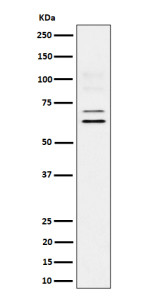
Rabbit IgG in phosphate buffered saline, pH 7.4, 150mM NaCl, 0.02% sodium azide and 50% glycerol, 0.4-0.5mg/ml BSA. BIN1 antibody detects bridging integrator 1, a membrane remodeling protein encoded by the BIN1 gene. BIN1 belongs to the BAR domain protein family that senses and induces membrane curvature. It also contains SH3 and clathrin binding domains that connect membrane trafficking to actin cytoskeleton dynamics and signaling. BIN1 has multiple isoforms with tissue specific functions, including neuronal, muscle, and immune variants.BIN1 antibody is widely used in neuroscience, muscle biology, and oncology. In neurons, BIN1 regulates synaptic vesicle endocytosis and interacts with tau protein, linking it to Alzheimer disease. In muscle cells, BIN1 supports T tubule formation and excitation contraction coupling, where its loss results in centronuclear myopathy. Altered BIN1 expression has also been implicated in cancer, where it acts as a tumor suppressor by modulating MYC signaling. By detecting BIN1, researchers can study how membrane remodeling proteins influence physiology and disease. In western blot assays, BIN1 antibody detects isoforms of varying molecular weight across tissues. Immunohistochemistry maps BIN1 expression in brain, skeletal muscle, and heart, while immunofluorescence highlights localization at endocytic sites and T tubules. ELISA applications support quantification in experimental systems.In Alzheimer disease, BIN1 variants are among the strongest genetic risk factors identified in genome wide association studies. BIN1 interacts with tau and endocytic machinery, contributing to pathological tau propagation and neurodegeneration. By applying BIN1 antibody, scientists can explore mechanisms linking endocytosis to dementia. In muscle biology, BIN1 mutations lead to defective T tubule biogenesis, disrupting calcium handling and muscle contraction. BIN1 antibody is therefore essential for both basic and translational research into neuromuscular disease.BIN1 also functions in immune regulation and tumor suppression. Reduced BIN1 expression correlates with cancer progression and poor prognosis, highlighting its role as a negative regulator of oncogenic signaling. Its diverse functions across tissues make BIN1 antibody valuable for multiple research areas.BIN1 antibody from NSJ Bioreagents provides dependable specificity for studying membrane remodeling, neuromuscular function, and disease. Its strong performance across applications supports high quality data in neuroscience, muscle biology, and oncology research.
| Keywords: | Anti-BIN1, Anti-Amphiphysin II, Anti-Bridging integrator 1, Anti-Amphiphysin-like protein, Anti-Myc box-dependent-interacting protein 1, Anti-Box-dependent myc-interacting protein 1, BIN1 Antibody / Bridging integrator 1 |
| Supplier: | NSJ Bioreagents |
| Supplier-Nr: | FY12551 |
Properties
| Application: | WB, IHC, ICC, IF, FC |
| Antibody Type: | Monoclonal |
| Clone: | 30B92 |
| Conjugate: | No |
| Host: | Rabbit |
| Species reactivity: | human, mouse |
| Immunogen: | A synthesized peptide derived from human BIN1 |
| Format: | Purified |
Database Information
| KEGG ID : | K12562 | Matching products |
| UniProt ID : | O00499 | Matching products |
| Gene ID : | GeneID 274 | Matching products |
Handling & Safety
| Storage: | -20°C |
| Shipping: | -20°C (International: -20°C) |
Caution
Our products are for laboratory research use only: Not for administration to humans!
Our products are for laboratory research use only: Not for administration to humans!
Information about the product reference will follow.
more
You will get a certificate here
Viewed