
Cookie preferences
This website uses cookies, which are necessary for the technical operation of the website and are always set. Other cookies, which increase the comfort when using this website, are used for direct advertising or to facilitate interaction with other websites and social networks, are only set with your consent.
Configuration
Technically required
These cookies are necessary for the basic functions of the shop.
"Allow all cookies" cookie
"Decline all cookies" cookie
CSRF token
Cookie preferences
Currency change
Customer-specific caching
FACT-Finder tracking
Individual prices
Selected shop
Session
Comfort functions
These cookies are used to make the shopping experience even more appealing, for example for the recognition of the visitor.
Note
Show the facebook fanpage in the right blod sidebar
Statistics & Tracking
Affiliate program
Conversion and usertracking via Google Tag Manager
Track device being used



| Item number | Size | Datasheet | Manual | SDS | Delivery time | Quantity | Price |
|---|---|---|---|---|---|---|---|
| NSJ-FY12327 | 100 µl | - | - |
3 - 10 business days* |
790.00€
|
If you have any questions, please use our Contact Form.
You can also order by e-mail: info@biomol.com
Larger quantity required? Request bulk
You can also order by e-mail: info@biomol.com
Larger quantity required? Request bulk
Rabbit IgG in phosphate buffered saline, pH 7.4, 150mM NaCl, 0.02% sodium azide and 50% glycerol,... more
Product information "Anti-AZI2 / 5-Azacytidine-induced protein 2, clone 30A13"
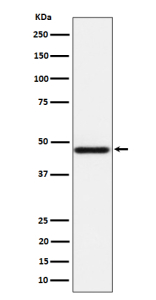
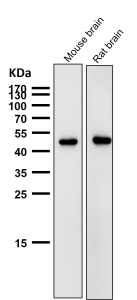
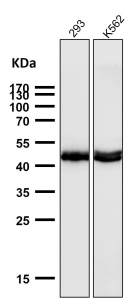
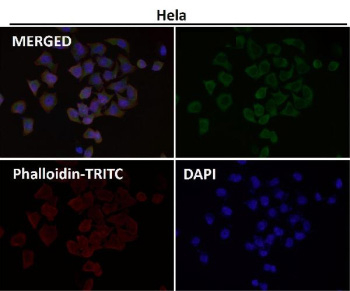
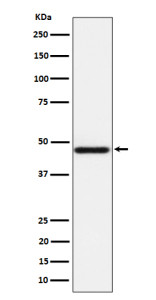
Rabbit IgG in phosphate buffered saline, pH 7.4, 150mM NaCl, 0.02% sodium azide and 50% glycerol, 0.4-0.5mg/ml BSA. AZI2 antibody is designed to detect 5-azacytidine-induced protein 2, also known as NAP1 or TBK1-binding protein 1. AZI2 is a cytoplasmic protein that plays a significant role in innate immunity by regulating signaling pathways that activate interferon regulatory factors (IRFs) and nuclear factor kappa B (NF-kB). Through its interactions with kinases such as TBK1 and IKKe, AZI2 contributes to the activation of interferon-stimulated genes and inflammatory mediators that defend the host against viral and bacterial infections.AZI2 antibody has become a valuable reagent for immunology and virology research. The protein is induced in response to 5-azacytidine and is involved in noncanonical NF-kB signaling. It is known to function in concert with NAP1, facilitating the recruitment of kinases that phosphorylate IRF3 and IRF7, leading to interferon beta production. Detecting AZI2 expression and localization provides insight into how innate immune responses are initiated and regulated at the molecular level.Applications of AZI2 antibody include western blotting, immunohistochemistry, immunofluorescence, and flow cytometry. In western blot assays, AZI2 antibody identifies the protein with specificity, allowing researchers to monitor expression in cells exposed to pathogens or immune modulators. In immunohistochemistry, it reveals tissue-specific distribution patterns, while immunofluorescence highlights cytoplasmic localization and colocalization with signaling proteins. These applications make AZI2 antibody versatile for dissecting immune signaling pathways in diverse research contexts.AZI2 is particularly important in antiviral defense. Studies have demonstrated that AZI2 participates in signaling cascades activated by Toll-like receptors (TLRs) and RIG-I-like receptors (RLRs), key components of pathogen recognition. Altered AZI2 expression can impair interferon responses, contributing to viral persistence or inadequate immune control. By using AZI2 antibody, researchers can track changes in expression that correlate with immune activation and disease outcomes.In addition to innate immunity, AZI2 has been implicated in cancer biology and inflammation. Dysregulation of NF-kB and interferon pathways is common in tumor microenvironments, where chronic inflammation promotes cancer progression. Monitoring AZI2 expression with specific antibodies supports studies aimed at understanding how immune signaling intersects with oncogenesis.AZI2 antibody from NSJ Bioreagents provides researchers with a dependable reagent to study innate immunity, viral infection, and NF-kB signaling. Its proven specificity across assay platforms ensures accurate detection, supporting investigations into host defense and immune regulation.
| Keywords: | Anti-TILP, Anti-AZI2, Anti-5-azacytidine-induced protein 2, Anti-NF-kappa-B-activating kinase-associated protein 1, AZI2 Antibody / 5-Azacytidine-induced protein 2 |
| Supplier: | NSJ Bioreagents |
| Supplier-Nr: | FY12327 |
Properties
| Application: | WB, ICC, IF |
| Antibody Type: | Monoclonal |
| Clone: | 30A13 |
| Conjugate: | No |
| Host: | Rabbit |
| Species reactivity: | human, mouse, rat |
| Immunogen: | A synthesized peptide derived from human TAF3 |
| Format: | Purified |
Database Information
| KEGG ID : | K12651 | Matching products |
| UniProt ID : | Q9H6S1 | Matching products |
| Gene ID : | GeneID 64343 | Matching products |
Handling & Safety
| Storage: | -20°C |
| Shipping: | -20°C (International: -20°C) |
Caution
Our products are for laboratory research use only: Not for administration to humans!
Our products are for laboratory research use only: Not for administration to humans!
Information about the product reference will follow.
more
You will get a certificate here
Viewed