
Cookie preferences
This website uses cookies, which are necessary for the technical operation of the website and are always set. Other cookies, which increase the comfort when using this website, are used for direct advertising or to facilitate interaction with other websites and social networks, are only set with your consent.
Configuration
Technically required
These cookies are necessary for the basic functions of the shop.
"Allow all cookies" cookie
"Decline all cookies" cookie
CSRF token
Cookie preferences
Currency change
Customer-specific caching
FACT-Finder tracking
Individual prices
Selected shop
Session
Comfort functions
These cookies are used to make the shopping experience even more appealing, for example for the recognition of the visitor.
Note
Show the facebook fanpage in the right blod sidebar
Statistics & Tracking
Affiliate program
Conversion and usertracking via Google Tag Manager
Track device being used

| Item number | Size | Datasheet | Manual | SDS | Delivery time | Quantity | Price |
|---|---|---|---|---|---|---|---|
| NSJ-FY13076 | 100 µl | - | - |
3 - 10 business days* |
790.00€
|
If you have any questions, please use our Contact Form.
You can also order by e-mail: info@biomol.com
Larger quantity required? Request bulk
You can also order by e-mail: info@biomol.com
Larger quantity required? Request bulk
Rabbit IgG in phosphate buffered saline, pH 7.4, 150mM NaCl, 0.02% sodium azide and 50% glycerol,... more
Product information "Anti-ATP5G1 / ATP5MC1, clone 29A75"
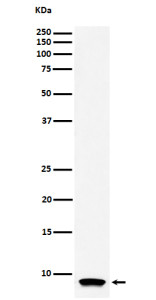
Rabbit IgG in phosphate buffered saline, pH 7.4, 150mM NaCl, 0.02% sodium azide and 50% glycerol, 0.4-0.5mg/ml BSA. ATP5MC1 antibody detects ATP synthase membrane subunit c locus 1, mitochondrial, encoded by the ATP5MC1 gene. This protein is a component of the F0 sector of mitochondrial ATP synthase, also known as Complex V of the oxidative phosphorylation system. ATP5MC1 contributes to the proton translocation ring that drives rotary catalysis, coupling the proton gradient across the mitochondrial inner membrane to the synthesis of ATP. ATP5MC1 antibody provides researchers with a specific reagent for exploring mitochondrial energy metabolism, oxidative phosphorylation, and metabolic disorders.Mitochondrial ATP synthase consists of a catalytic F1 domain and a membrane embedded F0 domain. ATP5MC1 belongs to the subunit c family of small hydrophobic proteins that form a ring structure in the F0 domain. This ring serves as the proton channel, allowing proton flow to power rotation of the central stalk, driving ATP synthesis. Research using ATP5MC1 antibody has revealed that this protein is essential for energy transduction, ensuring efficient conversion of electrochemical gradients into chemical energy. Without proper function, cells face energy deficits that compromise survival and function.Mutations in ATP5MC1 and related subunits have been associated with mitochondrial disease, including encephalomyopathy, developmental delay, and neuromuscular weakness. Studies with ATP5MC1 antibody have demonstrated that defects disrupt assembly and function of ATP synthase, leading to decreased ATP production. Because high energy organs such as the brain, heart, and skeletal muscle depend heavily on oxidative phosphorylation, ATP5MC1 dysfunction has widespread clinical consequences. These findings underscore its importance in human health.Beyond rare mitochondrial disorders, alterations in ATP synthase subunit expression have been linked to aging, neurodegeneration, and cancer. Research with ATP5MC1 antibody has shown that tumor cells can modulate expression of ATP synthase components to reprogram metabolism, balancing oxidative phosphorylation and glycolysis to support growth. In neurodegeneration, reduced ATP synthase function impairs neuronal survival and synaptic activity, contributing to cognitive decline. This positions ATP5MC1 as a valuable target for both basic and translational research.ATP5MC1 antibody is widely used in western blotting, immunohistochemistry, and immunofluorescence. Western blotting confirms its abundance in mitochondria rich tissues, immunohistochemistry highlights distribution in energy demanding organs, and immunofluorescence demonstrates mitochondrial localization through colocalization with established mitochondrial markers. These applications make ATP5MC1 antibody indispensable in mitochondrial biology research.By providing validated ATP5MC1 antibody reagents, NSJ Bioreagents supports studies into mitochondrial energy metabolism, disease, and cancer biology. Detection of ATP synthase membrane subunit c locus 1 helps researchers explore how ATP production is maintained and how its disruption contributes to pathology.
| Keywords: | Anti-ATP5MC1, Anti-ATPase protein 9, Anti-ATPase subunit c, Anti-ATP synthase proteolipid P1, Anti-ATP synthase lipid-binding protein, Anti-ATP synthase membrane subunit c locus 1, Anti-ATP synthase F(0) complex subunit C1, mitochondrial, Anti-Proton-cond |
| Supplier: | NSJ Bioreagents |
| Supplier-Nr: | FY13076 |
Properties
| Application: | WB, ICC, IF |
| Antibody Type: | Monoclonal |
| Clone: | 29A75 |
| Conjugate: | No |
| Host: | Rabbit |
| Species reactivity: | human, mouse, rat |
| Immunogen: | A synthesized peptide derived from human ATP5G1 |
| Format: | Affinity Purified |
Database Information
| KEGG ID : | K02128 | Matching products |
| UniProt ID : | P05496 | Matching products |
| Gene ID : | GeneID 516 | Matching products |
Handling & Safety
| Storage: | -20°C |
| Shipping: | -20°C (International: -20°C) |
Caution
Our products are for laboratory research use only: Not for administration to humans!
Our products are for laboratory research use only: Not for administration to humans!
Information about the product reference will follow.
more
You will get a certificate here
Viewed