
Cookie preferences
This website uses cookies, which are necessary for the technical operation of the website and are always set. Other cookies, which increase the comfort when using this website, are used for direct advertising or to facilitate interaction with other websites and social networks, are only set with your consent.
Configuration
Technically required
These cookies are necessary for the basic functions of the shop.
"Allow all cookies" cookie
"Decline all cookies" cookie
CSRF token
Cookie preferences
Currency change
Customer-specific caching
FACT-Finder tracking
Individual prices
Selected shop
Session
Comfort functions
These cookies are used to make the shopping experience even more appealing, for example for the recognition of the visitor.
Note
Show the facebook fanpage in the right blod sidebar
Statistics & Tracking
Affiliate program
Conversion and usertracking via Google Tag Manager
Track device being used



| Item number | Size | Datasheet | Manual | SDS | Delivery time | Quantity | Price |
|---|---|---|---|---|---|---|---|
| NSJ-FY12265 | 100 µg | - | - |
3 - 10 business days* |
790.00€
|
If you have any questions, please use our Contact Form.
You can also order by e-mail: info@biomol.com
Larger quantity required? Request bulk
You can also order by e-mail: info@biomol.com
Larger quantity required? Request bulk
Adding 0.2 ml of distilled water will yield a concentration of 500 ug/ml. ATP4B antibody detects... more
Product information "Anti-ATP4B / Potassium-transporting ATPase subunit beta"
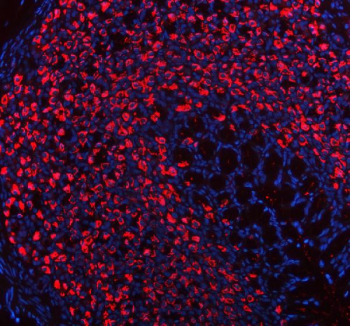
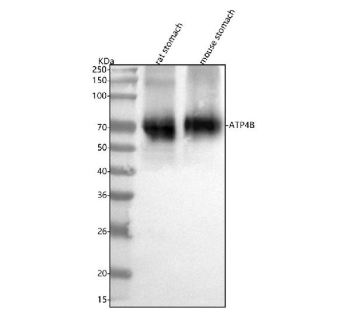
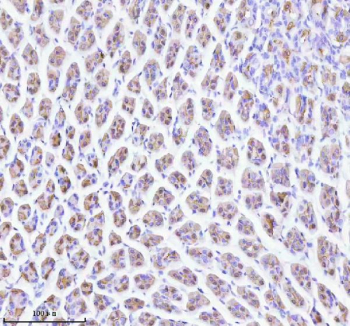
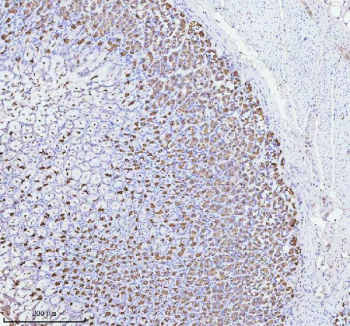
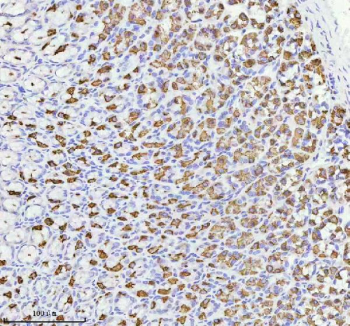
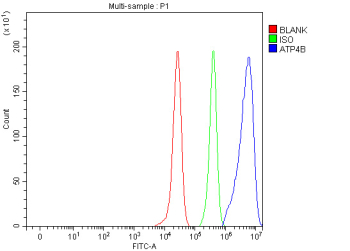
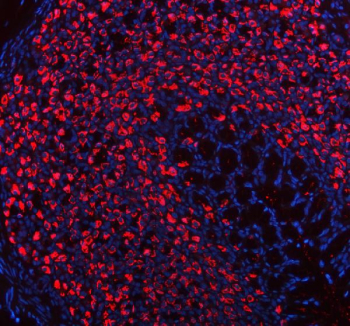
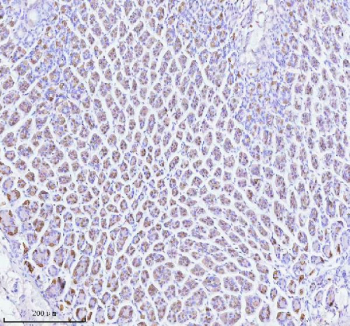
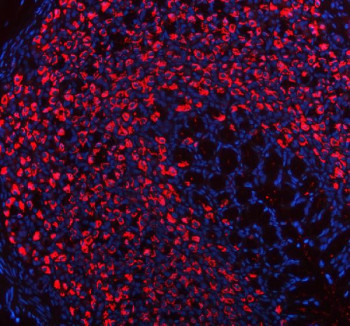
Adding 0.2 ml of distilled water will yield a concentration of 500 ug/ml. ATP4B antibody detects Gastric H+/K+ ATPase subunit beta, encoded by the ATP4B gene on chromosome 13q34. ATP4B antibody is widely used in gastrointestinal biology, acid secretion research, and studies of gastric disorders. ATP4B encodes the beta subunit of the gastric proton pump, a P-type ATPase that exchanges intracellular H+ for extracellular K+, enabling secretion of gastric acid into the stomach lumen. This pump is critical for digestion, absorption of nutrients, and defense against pathogens.Structurally, ATP4B is a ~35 kDa glycoprotein composed of a single transmembrane helix, an extracellular N-terminal domain, and a short cytoplasmic C-terminus. The extracellular domain contains multiple disulfide bonds and glycosylation sites that stabilize the alpha subunit and regulate membrane targeting. ATP4B forms a heterodimer with ATP4A, the catalytic alpha subunit, to generate a functional H+/K+ ATPase complex.Functionally, ATP4B supports assembly, trafficking, and stability of the proton pump. Without ATP4B, the alpha subunit is misfolded and degraded, impairing gastric acid secretion. ATP4B also contributes to immune recognition in autoimmune gastritis, where it becomes an autoantigen. Researchers use ATP4B antibody to study gastric physiology, autoimmunity, and therapeutic targets for acid-related diseases.Clinically, ATP4B is implicated in conditions such as autoimmune gastritis, atrophic gastritis, and gastric cancer. Autoantibodies against ATP4B and ATP4A are hallmarks of autoimmune gastritis and pernicious anemia. ATP4B mutations or dysregulation may contribute to gastric acid secretion defects, influencing susceptibility to infections such as Helicobacter pylori. Proton pump inhibitors target the H+/K+ ATPase, making ATP4B research relevant for drug development. NSJ Bioreagents provides ATP4B antibody for gastric physiology, pathology, and therapeutic research.Experimentally, ATP4B antibody is used in western blotting to detect the ~35 kDa subunit, in immunohistochemistry to visualize gastric parietal cells, and in immunofluorescence microscopy to assess subcellular localization. It is also applied in autoantibody detection assays for autoimmune gastritis.
| Keywords: | Anti-ATP4B, Anti-Proton pump beta chain, Anti-Gastric H(+)/K(+) ATPase subunit beta, Anti-Potassium-transporting ATPase subunit beta, ATP4B Antibody / Potassium-transporting ATPase subunit beta |
| Supplier: | NSJ Bioreagents |
| Supplier-Nr: | FY12265 |
Properties
| Application: | ELISA, FC, IF, IHC, WB |
| Antibody Type: | Polyclonal |
| Conjugate: | No |
| Host: | Rabbit |
| Species reactivity: | human, mouse, rat |
| Immunogen: | E.coli-derived human ATP4B recombinant protein (Position: Y60-D277) |
| Format: | Purified |
Database Information
| KEGG ID : | K01543 | Matching products |
| UniProt ID : | P51164 | Matching products |
| Gene ID : | GeneID 496 | Matching products |
Handling & Safety
| Storage: | +4°C |
| Shipping: | +4°C (International: +4°C) |
Caution
Our products are for laboratory research use only: Not for administration to humans!
Our products are for laboratory research use only: Not for administration to humans!
Information about the product reference will follow.
more
You will get a certificate here
Viewed