
Cookie preferences
This website uses cookies, which are necessary for the technical operation of the website and are always set. Other cookies, which increase the comfort when using this website, are used for direct advertising or to facilitate interaction with other websites and social networks, are only set with your consent.
Configuration
Technically required
These cookies are necessary for the basic functions of the shop.
"Allow all cookies" cookie
"Decline all cookies" cookie
CSRF token
Cookie preferences
Currency change
Customer-specific caching
FACT-Finder tracking
Individual prices
Selected shop
Session
Comfort functions
These cookies are used to make the shopping experience even more appealing, for example for the recognition of the visitor.
Note
Show the facebook fanpage in the right blod sidebar
Statistics & Tracking
Affiliate program
Conversion and usertracking via Google Tag Manager
Track device being used



| Item number | Size | Datasheet | Manual | SDS | Delivery time | Quantity | Price |
|---|---|---|---|---|---|---|---|
| NEO-328-MSM1-P1ABX | 100 µg | - | - |
Request delivery time estimate |
704.00€
|
If you have any questions, please use our Contact Form.
You can also order by e-mail: info@biomol.com
Larger quantity required? Request bulk
You can also order by e-mail: info@biomol.com
Larger quantity required? Request bulk
Formulation: Purified Ab WITHOUT BSA and Azide at 1.0mg/ml. Cellular Localization: Cytoplasm,... more
Product information "Anti-APEX Nuclease I, clone CPTC-APEX1-2"
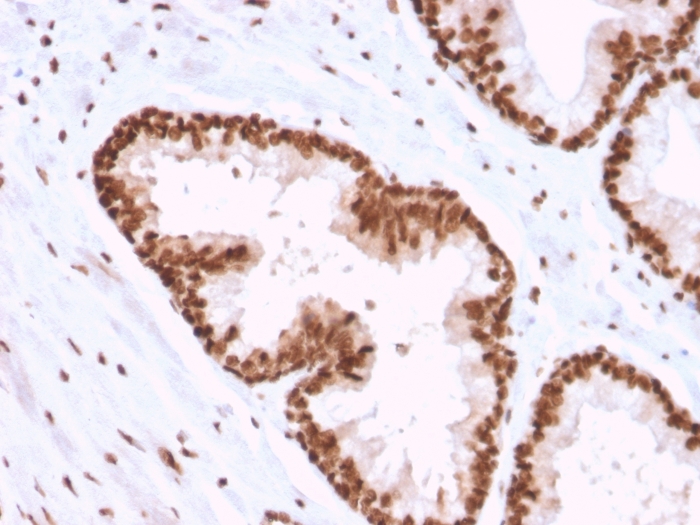
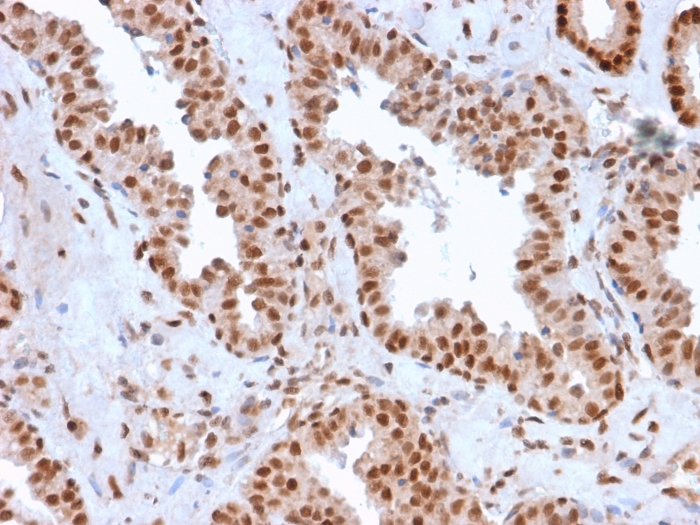
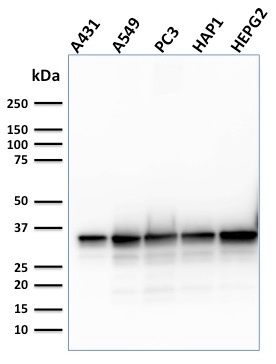
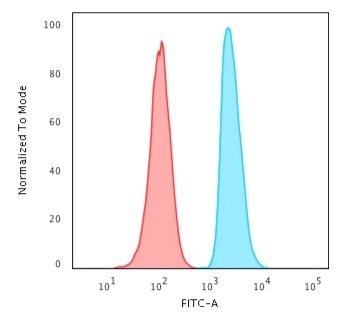
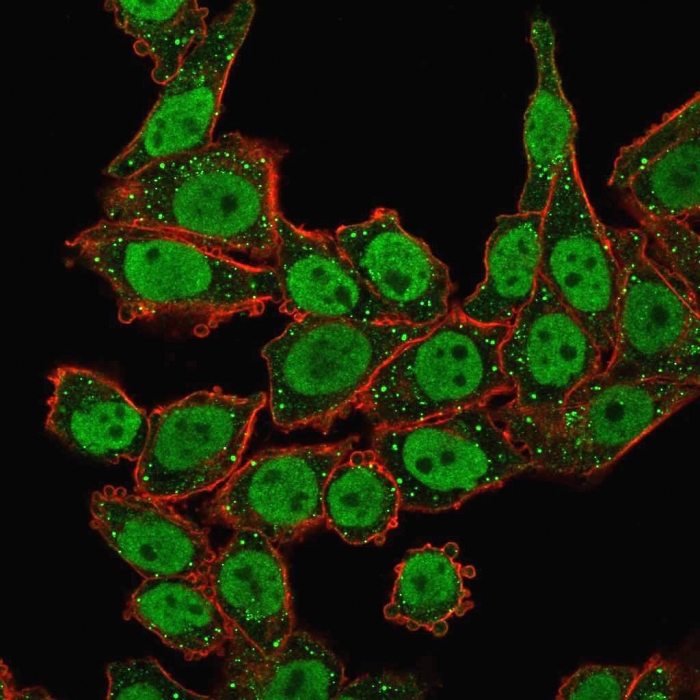
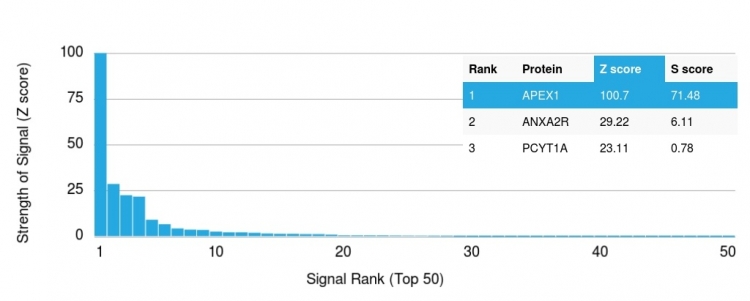
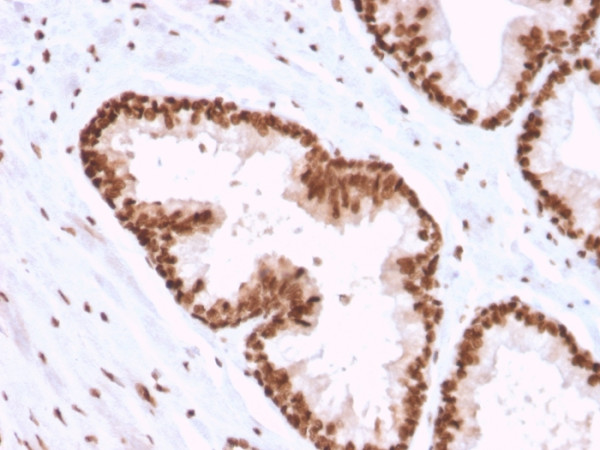
Formulation: Purified Ab WITHOUT BSA and Azide at 1.0mg/ml. Cellular Localization: Cytoplasm, Endoplasmic reticulum, Mitochondrion, Nucleolus, Nucleus, Nucleus speckle. Positive Control: A431, A549, HAP1, HeLa, HePG2, MCF-7, NIH/3T3 and C6 whole cell lysates. Human ovarian carcinoma., PC3. Chromosome Location: 14q11.2. Protein Function: Multifunctional protein that plays a central role in the cellular response to oxidative stress. The two major activities of APEX1 are DNA repair and redox regulation of transcriptional factors (PubMed:11118054, PubMed:11452037, PubMed:15831793, PubMed:18439621, PubMed:18579163, PubMed:21762700, PubMed:24079850, PubMed:8355688, PubMed:9108029, PubMed:9560228). Functions as an apurinic/apyrimidinic (AP) endodeoxyribonuclease in the base excision repair (BER) pathway of DNA lesions induced by oxidative and alkylating agents. Initiates repair of AP sites in DNA by catalyzing hydrolytic incision of the phosphodiester backbone immediately adjacent to the damage, generating a single-strand break with 5'-deoxyribose phosphate and 3'-hydroxyl ends. Also incises at AP sites in the DNA strand of DNA/RNA hybrids, single-stranded DNA regions of R-loop structures, and single-stranded RNA molecules (PubMed:15380100, PubMed:16617147, PubMed:18439621, PubMed:19123919, PubMed:19188445, PubMed:19934257, PubMed:20699270, PubMed:21762700, PubMed:24079850, PubMed:8932375, PubMed:8995436, PubMed:9804799). Operates at switch sites of immunoglobulin (Ig) constant regions where it mediates Ig isotype class switch recombination. Processes AP sites induced by successive action of AICDA and UNG. Generates staggered nicks in opposite DNA strands resulting in the formation of double-strand DNA breaks that are finally resolved via non-homologous end joining repair pathway (By similarity). Has 3'-5' exodeoxyribonuclease activity on mismatched deoxyribonucleotides at the 3' termini of nicked or gapped DNA molecules during short-patch BER (PubMed:11832948, PubMed:1719477). Possesses DNA 3' phosphodiesterase activity capable of removing lesions (such as phosphoglycolate and 8-oxoguanine) blocking the 3' side of DNA strand breaks (PubMed:15831793, PubMed:7516064). Also acts as an endoribonuclease involved in the control of single-stranded RNA metabolism. Plays a role in regulating MYC mRNA turnover by preferentially cleaving in between UA and CA dinucleotides of the MYC coding region determinant (CRD). In association with NMD1, plays a role in the rRNA quality control process during cell cycle progression (PubMed:19188445, PubMed:19401441, PubMed:21762700). Acts as a loading factor for POLB onto non-incised AP sites in DNA and stimulates the 5'-terminal deoxyribose 5'-phosphate (dRp) excision activity of POLB (PubMed:9207062). Exerts reversible nuclear redox activity to regulate DNA binding affinity and transcriptional activity of transcriptional factors by controlling the redox status of their DNA-binding domain, such as the FOS/JUN AP-1 complex after exposure to IR (PubMed:10023679, PubMed:11118054, PubMed:11452037, PubMed:18579163, PubMed:8355688, PubMed:9108029). Involved in calcium-dependent down-regulation of parathyroid hormone (PTH) expression by binding to negative calcium response elements (nCaREs). Together with HNRNPL or the dimer XRCC5/XRCC6, associates with nCaRE, acting as an activator of transcriptional repression (PubMed:11809897, PubMed:14633989, PubMed:8621488). May also play a role in the epigenetic regulation of gene expression by participating in DNA demethylation (PubMed:21496894). Stimulates the YBX1-mediated MDR1 promoter activity, when acetylated at Lys-6 and Lys-7, leading to drug resistance (PubMed:18809583). Plays a role in protection from granzyme-mediated cellular repair leading to cell death (PubMed:18179823). Binds DNA and RNA. Associates, together with YBX1, on the MDR1 promoter. Together with NPM1, associates with rRNA (PubMed:19188445, PubMed:19401441, PubMed:20699270) [The Uniprot Consortium]
| Keywords: | Anti-APEX1, Anti-APEX nuclease, Anti-Redox factor-1, Anti-Apurinic-apyrimidinic endonuclease 1, Anti-DNA repair nuclease/redox regulator APEX1, Anti-DNA-(apurinic or apyrimidinic site) endonuclease, 559 |
| Supplier: | NeoBiotechnologies |
| Supplier-Nr: | 328-MSM1ABX |
Properties
| Application: | FC, IF, IHC, WB |
| Antibody Type: | Monoclonal |
| Clone: | CPTC-APEX1-2 |
| Conjugate: | No |
| Host: | Mouse |
| Species reactivity: | human |
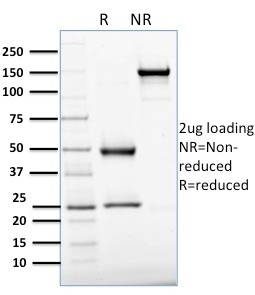
| MW: | 35 kD |
| Format: | Purified |
Database Information
| KEGG ID : | K10771 | Matching products |
| UniProt ID : | P27695 | Matching products |
| Gene ID : | GeneID 328 | Matching products |
Handling & Safety
| Storage: | -20°C |
| Shipping: | +4°C (International: +4°C) |
Caution
Our products are for laboratory research use only: Not for administration to humans!
Our products are for laboratory research use only: Not for administration to humans!
You will get a certificate here
Viewed