
Cookie preferences
This website uses cookies, which are necessary for the technical operation of the website and are always set. Other cookies, which increase the comfort when using this website, are used for direct advertising or to facilitate interaction with other websites and social networks, are only set with your consent.
Configuration
Technically required
These cookies are necessary for the basic functions of the shop.
"Allow all cookies" cookie
"Decline all cookies" cookie
CSRF token
Cookie preferences
Currency change
Customer-specific caching
FACT-Finder tracking
Individual prices
Selected shop
Session
Comfort functions
These cookies are used to make the shopping experience even more appealing, for example for the recognition of the visitor.
Note
Show the facebook fanpage in the right blod sidebar
Statistics & Tracking
Affiliate program
Conversion and usertracking via Google Tag Manager
Track device being used


| Item number | Size | Datasheet | Manual | SDS | Delivery time | Quantity | Price |
|---|---|---|---|---|---|---|---|
| NSJ-V6105-20UG | 20 µg | - | - |
7 - 12 business days* |
684.00€
|
||
| NSJ-V6105-100UG | 100 µg | - | - |
7 - 12 business days* |
1,160.00€
|
If you have any questions, please use our Contact Form.
You can also order by e-mail: info@biomol.com
Larger quantity required? Request bulk
You can also order by e-mail: info@biomol.com
Larger quantity required? Request bulk
Antibody in 1X PBS with 0.05% BSA, 0.05% sodium azide. Prostatic acid phosphatase (ACP3), also... more
Product information "Anti-ACP3 / Prostatic acid phosphatase, clone MSVA-452M"
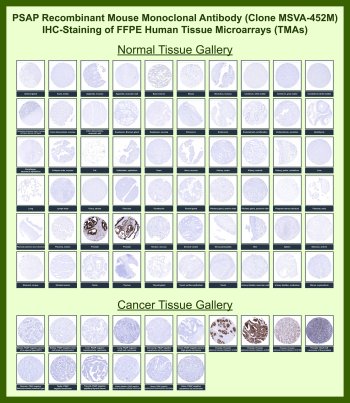
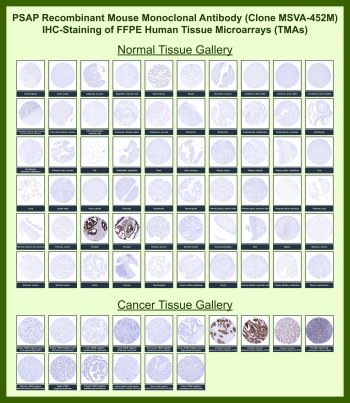
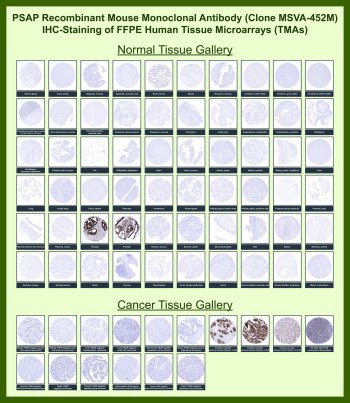
Antibody in 1X PBS with 0.05% BSA, 0.05% sodium azide. Prostatic acid phosphatase (ACP3), also known as PAP, is a secreted phosphatase highly expressed in prostate epithelium and widely used as a biomarker in prostate cancer research and pathology. Prostatic Acid Phosphatase Antibody for IHC (clone MSVA-452M) recognizes this prostate-associated enzyme, which belongs to the histidine acid phosphatase family and participates in phosphomonoester hydrolysis. PAP is predominantly expressed in prostate epithelial cells and secreted into prostatic fluid, where it contributes to normal prostate physiology and enzymatic activity within the gland.Prostatic Acid Phosphatase Antibody for IHC enables visualization of PAP protein expression in formalin-fixed paraffin-embedded tissues using immunohistochemistry. In IHC staining, PAP is typically detected in prostate epithelial cells where staining may appear cytoplasmic or luminal due to the secretory nature of the enzyme. This staining pattern reflects the physiological localization of prostatic acid phosphatase in glandular epithelial cells of the prostate and related secretory tissues.Immunohistochemistry detection of prostatic acid phosphatase has long been used in studies of prostate biology and prostate cancer. PAP expression is strongly associated with prostate epithelial differentiation and is frequently evaluated in prostate carcinoma research. IHC staining using Prostatic Acid Phosphatase Antibody for IHC allows researchers to identify PAP-positive prostate epithelial cells and examine expression patterns in prostate tumors and metastatic lesions.Prostatic acid phosphatase was historically used as one of the earliest biomarkers for prostate cancer prior to the introduction of PSA testing, and it continues to serve as a valuable marker of prostate epithelial differentiation. PAP expression can be observed in prostate glandular epithelium and prostate carcinoma cells, supporting studies of tumor differentiation and prostate tissue biology.Prostatic Acid Phosphatase Antibody for IHC provides a research tool for detecting PAP expression in prostate tissues and prostate cancer models. Immunohistochemistry staining of ACP3 enables investigators to examine prostate epithelial differentiation, evaluate tumor cell phenotype in prostate carcinoma, and study the biological role of ACP3 in prostate tissue physiology and prostate cancer progression.This ACP3 antibody is also part of a broader collection of IHC antibodies validated by tissue microarray analysis, supporting consistent staining across normal and cancer tissues.
| Keywords: | Anti-ACP3, Anti-5'-nucleotidase, Anti-Acid phosphatase 3, Anti-Ecto-5'-nucleotidase, Anti-Thiamine monophosphatase, Anti-Prostatic acid phosphatase, Anti-Protein tyrosine phosphatase ACP3, ACP3 Antibody / Prostatic acid phosphatase |
| Supplier: | NSJ Bioreagents |
| Supplier-Nr: | V6105 |
Properties
| Application: | IHC |
| Antibody Type: | Monoclonal |
| Clone: | MSVA-452M |
| Conjugate: | No |
| Host: | Mouse |
| Species reactivity: | human |
| Immunogen: | Recombinant full-length human ACPP3/PAP protein |
| Format: | Purified |
Database Information
| KEGG ID : | K19283 | Matching products |
| UniProt ID : | P15309 | Matching products |
| Gene ID : | GeneID 55 | Matching products |
Handling & Safety
| Storage: | -20°C |
| Shipping: | -20°C (International: -20°C) |
Caution
Our products are for laboratory research use only: Not for administration to humans!
Our products are for laboratory research use only: Not for administration to humans!
Information about the product reference will follow.
more
You will get a certificate here
Viewed