
Cookie preferences
This website uses cookies, which are necessary for the technical operation of the website and are always set. Other cookies, which increase the comfort when using this website, are used for direct advertising or to facilitate interaction with other websites and social networks, are only set with your consent.
Configuration
Technically required
These cookies are necessary for the basic functions of the shop.
"Allow all cookies" cookie
"Decline all cookies" cookie
CSRF token
Cookie preferences
Currency change
Customer-specific caching
FACT-Finder tracking
Individual prices
Selected shop
Session
Comfort functions
These cookies are used to make the shopping experience even more appealing, for example for the recognition of the visitor.
Note
Show the facebook fanpage in the right blod sidebar
Statistics & Tracking
Affiliate program
Conversion and usertracking via Google Tag Manager
Track device being used

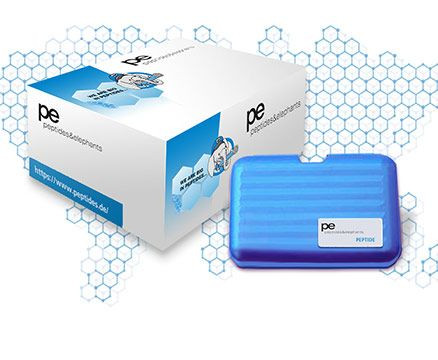
| Item number | Size | Datasheet | Manual | SDS | Delivery time | Quantity | Price |
|---|---|---|---|---|---|---|---|
| PE-LB02113.1 | 1 set (15 nmol (~25µg)/peptide for 2.5 x 10^8 cells) | - |
Request delivery time estimate |
249.00€
|
If you have any questions, please use our Contact Form.
You can also order by e-mail: info@biomol.com
Larger quantity required? Request bulk
You can also order by e-mail: info@biomol.com
Larger quantity required? Request bulk
Pool of 21 peptides derived from a peptide scan (15mers with 11 aa overlap) through ESAT-6... more
Product information "M. tuberculosis esxA esaT6 Peptide Pool"
Pool of 21 peptides derived from a peptide scan (15mers with 11 aa overlap) through ESAT-6 (Uni-Prot ID: P9WNK7) of M. Tuberculosis - strain ATCC 25618 / H37Rv. One unit allows the stimulation of 2,5 x 10^8 cells. Protein function: A secreted protein that plays a number of roles in modulating the host's immune response to infection as well as being responsible for bacterial escape into the host cytoplasm. Acts as a strong host (human) T-cell antigen (PubMed:7729876, PubMed:11940590). Inhibits IL- 12 p40 (IL12B) and TNF-alpha expression by infected host (mouse) macrophages, reduces the nitric oxide response by about 75% (PubMed:14557536). In mice previously exposed to the bacterium, elicits high level of IFN-gamma production by T-cells upon subsequent challenge by M.tuberculosis, in the first phase of a protective immune response (PubMed:7897219, PubMed:7729876). Higher levels (1.6-3.3 uM) of recombinant protein inhibit IFN-gamma production by host (human) T- cells and also IL-17 and TNF-alpha production but not IL-2, decreases expression of host ATF-2 and JUN transcription factors by affecting T- cell receptors signaling downstream of ZAP70, without cytotoxicity or apoptosis (PubMed:19265145). EsxA inhibits IFN-gamma production in human T-cells by activating p38 MAPK (MAPK14), p38 MAPK is not responsible for IL-17 decrease (PubMed:21586573). Binds host (mouse) Toll-like receptor 2 (TLR2) and decreases host MYD88-dependent signaling, binding to TLR2 activates host kinase AKT and subsequently inhibits downstream activation of NF-kappa-B, the C-terminal 20 residues (76-95) are necessary and sufficient for the TLR2 inhibitory effect (PubMed:17486091). Required for induction of host (human) IL-1B maturation and release by activating the host NLRP3/ASC inflammasome, may also promote access of other tuberculosis proteins to the host cells cytoplasm (PubMed:20148899). Induces IL-8 (CXCL8) expression in host (human) lung epithelial cells (PubMed:23867456). Exogenously applied protein, or protein expressed in host (human and mouse), binds beta-2-microglobulin (B2M) and decreases its export to the cell surface, probably leading to defects in class I antigen presentation by the host cell (PubMed:25356553). Responsible for mitochondrial fragmention, redistribution around the cell nucleus and decreased mitochondrial mass, this effect is not seen until 48 hours post- infection (PubMed:26092385). Able to disrupt artificial planar bilayers in the absence of EsxB (CFP-10) (PubMed:14557547). Native protein binds artificial liposomes in the absence but not presence of EsxB and is able to rigidify and lyse them, the EsxA-EsxB complex dissociates at acidic pH, EsxB might serve as a chaperone to prevent membrane lysis (PubMed:17557817). Recombinant protein induces leakage of phosphocholine liposomes at acidic pH in the absence of ExsB, undergoes conformational change, becoming more alpha-helical at acidic pH (PubMed:23150662, PubMed:25645924). The study using recombinant protein did not find dissociation of EsxA-EsxB complex at acidic pH (PubMed:23150662). Involved in translocation of bacteria from the host (human) phagolysosome to the host cytoplasm (PubMed:17604718, PubMed:22319448). Translocation into host cytoplasm is visible 3 days post-infection using cultured human cells and precedes host cell death (PubMed:22319448). Recombinant protein induces apoptosis in host (human) differentiated cell lines, which is cell-line dependent, bacteria missing the ESX-1 locus do not induce apoptosis (PubMed:17298391). Host (human) cells treated with EsxA become permeable to extracellular dye (PubMed:17298391). EsxA and EsxA-EsxB are cytotoxic to pneumocytes (PubMed:19906174). ESX-1 secretion system- induced host (mouse) cell apoptosis, which is probably responsible for infection of new host cells, might be due to EsxA (PubMed:23848406). EsxA induces necrosis in aged neutrophils (PubMed:25321481). May help regulate assembly and function of the type VII secretion system (T7SS). EsxA disassembles pre-formed EccC-EsxB multimers, possibly by making EccC-EsxA-EsxB trimers instead of EccC-EsxB-EsxB- EccC tetramers. [The UniProt Consortium]
| Keywords: | esaT6, Rv3875, ESAT-6, MTV027.10, 6 kDa early secretory antigenic target |
| Supplier: | peptides and elephants |
| Supplier-Nr: | LB02113 |
Properties
| Application: | T-cell immunity |
| Conjugate: | No |
| Species reactivity: | Mycobacterium tuberculosis (strain ATCC 25618 / H37Rv) |
| Format: | Lyophilized |
Database Information
| KEGG ID : | K14956 | Matching products |
| UniProt ID : | P9WNK7 | Matching products |
| Gene ID : | GeneID 45427879 | Matching products |
Handling & Safety
| Storage: | -20°C |
| Shipping: | +20°C (International: +20°C) |
Caution
Our products are for laboratory research use only: Not for administration to humans!
Our products are for laboratory research use only: Not for administration to humans!
You will get a certificate here
Viewed