
Cookie preferences
This website uses cookies, which are necessary for the technical operation of the website and are always set. Other cookies, which increase the comfort when using this website, are used for direct advertising or to facilitate interaction with other websites and social networks, are only set with your consent.
Configuration
Technically required
These cookies are necessary for the basic functions of the shop.
"Allow all cookies" cookie
"Decline all cookies" cookie
CSRF token
Cookie preferences
Currency change
Customer-specific caching
FACT-Finder tracking
Individual prices
Selected shop
Session
Comfort functions
These cookies are used to make the shopping experience even more appealing, for example for the recognition of the visitor.
Note
Show the facebook fanpage in the right blod sidebar
Statistics & Tracking
Affiliate program
Conversion and usertracking via Google Tag Manager
Track device being used


| Item number | Size | Datasheet | Manual | SDS | Delivery time | Quantity | Price |
|---|---|---|---|---|---|---|---|
| ABS-PP-26037.20 | 20 µg | - | - |
10 - 14 business days* |
90.00€
|
||
| ABS-PP-26037.100 | 100 µg | - | - |
10 - 14 business days* |
180.00€
|
If you have any questions, please use our Contact Form.
You can also order by e-mail: info@biomol.com
Larger quantity required? Request bulk
You can also order by e-mail: info@biomol.com
Larger quantity required? Request bulk
Tag: C-His. Modification: unmodified. Start Site: Val131. End Site: Gly320. Coverage: 0.18.... more
Product information "Recombinant Human PI3 Kinase p110 alpha Protein"
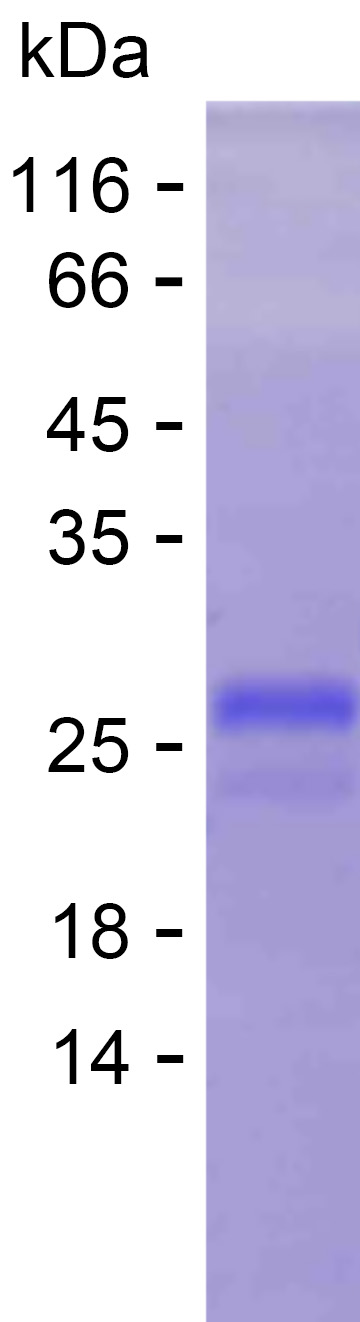
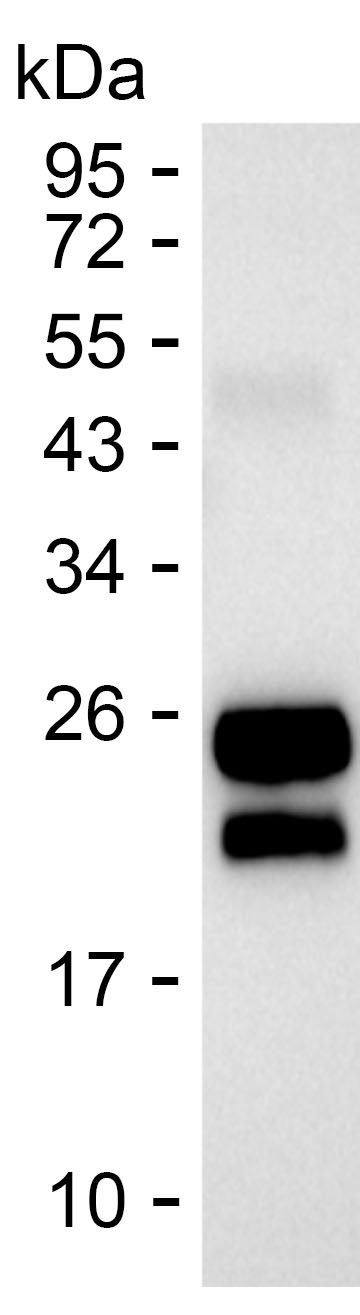
Tag: C-His. Modification: unmodified. Start Site: Val131. End Site: Gly320. Coverage: 0.18. Isoelectric Point: 9. Core Sequence: VKDPEVQDFR RNILNVCKEA VDLRDLNSPH SRAMYVYPPN VESSPELPKH IYNKLDKGQI IVVIWVIVSP NNDKQKYTLK INHDCVPEQV IAEAIRKKTR SMLLSSEQLK LCVLEYQGKY ILKVCGCDEY FLEKYPLSQY KYIRSCIMLG RMPNLMLMAK ESLYSQLPMD CFTMPSYSRR ISTATPYMNG. Homologies: Highest protein sequence identity to the following orthologs: Mouse - 99%, Rat - 99%, Pig - 100%, Cynomolgus monkey - 100%, Protein Function: Phosphoinositide-3-kinase (PI3K) phosphorylates phosphatidylinositol (PI) and its phosphorylated derivatives at position 3 of the inositol ring to produce 3-phosphoinositides (PubMed:15135396, PubMed:23936502, PubMed:28676499). Uses ATP and PtdIns(4,5)P2 (phosphatidylinositol 4,5-bisphosphate) to generate phosphatidylinositol 3,4,5-trisphosphate (PIP3) (PubMed:15135396, PubMed:28676499). PIP3 plays a key role by recruiting PH domain-containing proteins to the membrane, including AKT1 and PDPK1, activating signaling cascades involved in cell growth, survival, proliferation, motility and morphology. Participates in cellular signaling in response to various growth factors. Involved in the activation of AKT1 upon stimulation by receptor tyrosine kinases ligands such as EGF, insulin, IGF1, VEGFA and PDGF. Involved in signaling via insulin-receptor substrate (IRS) proteins. Essential in endothelial cell migration during vascular development through VEGFA signaling, possibly by regulating RhoA activity. Required for lymphatic vasculature development, possibly by binding to RAS and by activation by EGF and FGF2, but not by PDGF. Regulates invadopodia formation through the PDPK1-AKT1 pathway. Participates in cardiomyogenesis in embryonic stem cells through a AKT1 pathway. Participates in vasculogenesis in embryonic stem cells through PDK1 and protein kinase C pathway. In addition to its lipid kinase activity, it displays a serine-protein kinase activity that results in the autophosphorylation of the p85alpha regulatory subunit as well as phosphorylation of other proteins such as 4EBP1, H-Ras, the IL-3 beta c receptor and possibly others (PubMed:23936502, PubMed:28676499). Plays a role in the positive regulation of phagocytosis and pinocytosis (By similarity) [The Uniprot Consortium]
| Keywords: | PIK3CA, Phosphoinositide 3-kinase alpha, Serine/threonine protein kinase PIK3CA, Phosphoinositide-3-kinase catalytic alpha polypeptide, Phosphatidylinositol 4,5-bisphosphate 3-kinase catalytic subunit alpha isoform, Phosphatidylinositol 4,5-bisphosphate 3 |
| Supplier: | Absea |
| Supplier-Nr: | PP-26037 |
Properties
| Conjugate: | No |
| Host: | E.coli |
| Species reactivity: | human |
| MW: | 24.5 kD |
| Format: | Solution |
Database Information
| KEGG ID : | K00922 | Matching products |
| UniProt ID : | P42336 | Matching products |
| Gene ID : | GeneID 5290 | Matching products |
Handling & Safety
| Storage: | -20°C (avoid repeat freezing and thawing cycles) |
| Shipping: | -20°C (International: +4°C) |
Caution
Our products are for laboratory research use only: Not for administration to humans!
Our products are for laboratory research use only: Not for administration to humans!
You will get a certificate here
Viewed