
Cookie preferences
This website uses cookies, which are necessary for the technical operation of the website and are always set. Other cookies, which increase the comfort when using this website, are used for direct advertising or to facilitate interaction with other websites and social networks, are only set with your consent.
Configuration
Technically required
These cookies are necessary for the basic functions of the shop.
"Allow all cookies" cookie
"Decline all cookies" cookie
CSRF token
Cookie preferences
Currency change
Customer-specific caching
FACT-Finder tracking
Individual prices
Selected shop
Session
Comfort functions
These cookies are used to make the shopping experience even more appealing, for example for the recognition of the visitor.
Note
Show the facebook fanpage in the right blod sidebar
Statistics & Tracking
Affiliate program
Conversion and usertracking via Google Tag Manager
Track device being used

| Item number | Size | Datasheet | Manual | SDS | Delivery time | Quantity | Price |
|---|---|---|---|---|---|---|---|
| CSB-EP896902HU1.20 | 20 µg | - | - | - |
10 - 14 business days* |
292.00€
|
|
| CSB-EP896902HU1.100 | 100 µg | - | - | - |
10 - 14 business days* |
533.00€
|
|
| CSB-EP896902HU1.1 | 1 mg | - | - | - |
10 - 14 business days* |
2,209.00€
|
If you have any questions, please use our Contact Form.
You can also order by e-mail: info@biomol.com
Larger quantity required? Request bulk
You can also order by e-mail: info@biomol.com
Larger quantity required? Request bulk
Organism: Homo sapiens (Human). Source: E.coli. Expression Region: 2-389aa. Protein Length:... more
Product information "YTH domain-containing family protein 2 (YTHDF2), partial, recombinant human"
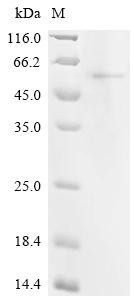
Organism: Homo sapiens (Human). Source: E.coli. Expression Region: 2-389aa. Protein Length: Partial. Tag Info: C-terminal 6xHis-tagged. Target Protein Sequence: SASSLLEQRP KGQGNKVQNG SVHQKDGLND DDFEPYLSPQ ARPNNAYTAM SDSYLPSYYS PSIGFSYSLG EAAWSTGGDT AMPYLTSYGQ LSNGEPHFLP DAMFGQPGAL GSTPFLGQHG FNFFPSGIDF SAWGNNSSQG QSTQSSGYSS NYAYAPSSLG GAMIDGQSAF ANETLNKAPG MNTIDQGMAA LKLGSTEVAS NVPKVVGSAV GSGSITSNIV ASNSLPPATI APPKPASWAD IASKPAKQQP KLKTKNGIAG SSLPPPPIKH NMDIGTWDNK GPVAKAPSQA LVQNIGQPTQ GSPQPVGQQA NNSPPVAQAS VGQQTQPLPP PPPQPAQLSV QQQAAQPTRW VAPRNRGSGF GHNGVDGNGV GQSQAGSGST PSEPHPVL. Purity: Greater than 85% as determined by SDS-PAGE. Endotoxin: Not test. Biological Activity: n/a. Form: Liquid or Lyophilized powder. Buffer: If the delivery form is liquid, the default storage buffer is Tris/PBS-based buffer, 5%-50% glycerol. If the delivery form is lyophilized powder, the buffer before lyophilization is Tris/PBS-based buffer, 6% Trehalose, pH 8.0. Reconstitution: We recommend that this vial be briefly centrifuged prior to opening to bring the contents to the bottom. Please reconstitute protein in deionized sterile water to a concentration of 0.1-1.0 mg/mL.We recommend to add 5-50% of glycerol (final concentration) and aliquot for long-term storage at -20°C/-80°C. Our default final concentration of glycerol is 50%. Customers could use it as reference. Storage: The shelf life is related to many factors, storage state, buffer ingredients, storage temperature and the stability of the protein itself. Generally, the shelf life of liquid form is 6 months at -20°C/-80°C. The shelf life of lyophilized form is 12 months at -20°C/-80°C. Notes: Repeated freezing and thawing is not recommended. Store working aliquots at 4°C for up to one week. Relevance: Specifically recognizes and binds N6-methyladenosine (m6A)-containing RNAs, and regulates their stability. M6A is a modification present at internal sites of mRNAs and some non-coding RNAs and plays a role in mRNA stability and processing. Acts as a regulator of mRNA stability by promoting degradation of m6A-containing mRNAs via interaction with the CCR4-NOT and ribonuclease P/MRP complexes, depending on the context. The YTHDF paralogs (YTHDF1, YTHDF2 and YTHDF3) share m6A-containing mRNAs targets and act redundantly to mediate mRNA degradation and cellular differentiation. M6A-containing mRNAs containing a binding site for RIDA/HRSP12 (5'-GGUUC-3') are preferentially degraded by endoribonucleolytic cleavage: cooperative binding of RIDA/HRSP12 and YTHDF2 to transcripts leads to recruitment of the ribonuclease P/MRP complex. Other m6A-containing mRNAs undergo deadenylation via direct interaction between YTHDF2 and CNOT1, leading to recruitment of the CCR4-NOT and subsequent deadenylation of m6A-containing mRNAs. Required maternally to regulate oocyte maturation: probably acts by binding to m6A-containing mRNAs, thereby regulating maternal transcript dosage during oocyte maturation, which is essential for the competence of oocytes to sustain early zygotic development. Also required during spermatogenesis: regulates spermagonial adhesion by promoting degradation of m6A-containing transcripts coding for matrix metallopeptidases. Also involved in hematopoietic stem cells specification by binding to m6A-containing mRNAs, leading to promote their degradation. Also acts as a regulator of neural development by promoting m6A-dependent degradation of neural development-related mRNA targets. Inhibits neural specification of induced pluripotent stem cells by binding to methylated neural-specific mRNAs and promoting their degradation, thereby restraining neural differentiation. Regulates circadian regulation of hepatic lipid metabolism: acts by promoting m6A-dependent degradation of PPARA transcripts. Regulates the innate immune response to infection by inhibiting the type I interferon response: acts by binding to m6A-containing IFNB transcripts and promoting their degradation. May also act as a promoter of cap-independent mRNA translation following heat shock stress: upon stress, relocalizes to the nucleus and specifically binds mRNAs with some m6A methylation mark at their 5'-UTR, protecting demethylation of mRNAs by FTO, thereby promoting cap-independent mRNA translation. Regulates mitotic entry by promoting the phase-specific m6A-dependent degradation of WEE1 transcripts. Promotes formation of phase-separated membraneless compartments, such as P-bodies or stress granules, by undergoing liquid-liquid phase separation upon binding to mRNAs containing multiple m6A-modified residues: polymethylated mRNAs act as a multivalent scaffold for the binding of YTHDF proteins, juxtaposing their disordered regions and thereby leading to phase separation. The resulting mRNA-YTHDF complexes then partition into different endogenous phase-separated membraneless compartments, such as P-bodies, stress granules or neuronal RNA granules. May also recognize and bind RNAs modified by C5-methylcytosine (m5C) and act as a regulator of rRNA processing. , (Microbial infection) Promotes viral gene expression and replication of polyomavirus SV40: acts by binding to N6-methyladenosine (m6A)-containing viral RNAs. , (Microbial infection) Promotes viral gene expression and virion production of kaposis sarcoma-associated herpesvirus (KSHV) at some stage of the KSHV life cycle (in iSLK.219 and iSLK.BAC16 cells). Acts by binding to N6-methyladenosine (m6A)-containing viral RNAs. Reference: n/a. Function: nan
| Keywords: | CLL-associated antigen KW-14, Renal carcinoma antigen NY-REN-2, High-glucose-regulated protein 8, YTH domain-containing family protein 2 |
| Supplier: | Cusabio |
| Supplier-Nr: | EP896902HU1 |
Properties
| Application: | Activity not tested |
| Conjugate: | No |
| Host: | E.coli |
| Species reactivity: | human |
| MW: | 46.9 kD |
| Purity: | >85% (SDS-PAGE) |
Database Information
| KEGG ID : | K20102 | Matching products |
| UniProt ID : | Q9Y5A9 | Matching products |
| Gene ID : | GeneID 51441 | Matching products |
Handling & Safety
| Storage: | -20°C |
| Shipping: | +4°C (International: +4°C) |
Caution
Our products are for laboratory research use only: Not for administration to humans!
Our products are for laboratory research use only: Not for administration to humans!
You will get a certificate here
Viewed