
Cookie preferences
This website uses cookies, which are necessary for the technical operation of the website and are always set. Other cookies, which increase the comfort when using this website, are used for direct advertising or to facilitate interaction with other websites and social networks, are only set with your consent.
Configuration
Technically required
These cookies are necessary for the basic functions of the shop.
"Allow all cookies" cookie
"Decline all cookies" cookie
CSRF token
Cookie preferences
Currency change
Customer-specific caching
FACT-Finder tracking
Individual prices
Selected shop
Session
Comfort functions
These cookies are used to make the shopping experience even more appealing, for example for the recognition of the visitor.
Note
Show the facebook fanpage in the right blod sidebar
Statistics & Tracking
Affiliate program
Conversion and usertracking via Google Tag Manager
Track device being used

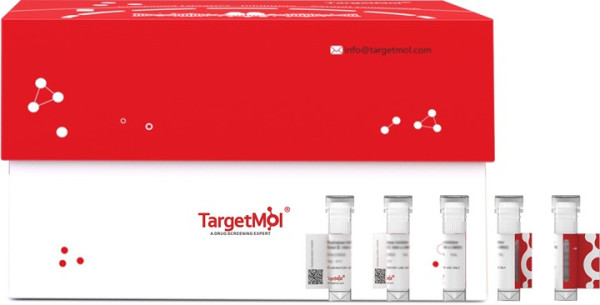
| Item number | Size | Datasheet | Manual | SDS | Delivery time | Quantity | Price |
|---|---|---|---|---|---|---|---|
| TGM-TMPY-02163-100ug | 100 µg | - |
7 - 10 business days* |
658.00€
|
If you have any questions, please use our Contact Form.
You can also order by e-mail: info@biomol.com
Larger quantity required? Request bulk
You can also order by e-mail: info@biomol.com
Larger quantity required? Request bulk
Description: Peptidoglycan recognition protein 1, also known as Peptidoglycan recognition protein... more
Product information "PGLYRP1 Protein, Mouse, Recombinant (His)"
Description: Peptidoglycan recognition protein 1, also known as Peptidoglycan recognition protein short, PGRP-S, PGLYRP1, PGLYRP, PGRP and TNFSF3L, is a secreted protein that belongs to the N-acetylmuramoyl-L-alanine amidase 2 family. PGLYRP1 / PGLYRP is highly expressed in bone marrow. It is weakly expressed in kidney, liver, small intestine, spleen, thymus, peripheral leukocyte, lung, fetal spleen and neutrophils. PGLYRP1 / PGLYRP is a pattern receptor that binds to murein peptidoglycans (PGN) of Gram-positive bacteria. It has bactericidal activity towards Gram-positive bacteria. PGLYRP1 / PGLYRP may kill Gram-positive bacteria by interfering with peptidoglycan biosynthesis. It binds also to Gram-negative bacteria, and has bacteriostatic activity towards Gram-negative bacteria. Peptidoglycan recognition proteins (PGRPs or PGLYRPs) are innate immunity proteins that are conserved from insects to mammals, recognize bacterial peptidoglycan, and function in antibacterial immunity and inflammation. Mammals have four PGRPs: PGLYRP1, PGLYRP2, PGLYRP3, and PGLYRP4. They are secreted proteins expressed in polymorphonuclear leukocytes (PGLYRP1), liver (PGLYRP2), or on body surfaces, mucous membranes, and in secretions (saliva, sweat) (PGLYRP3 and PGLYRP4). All PGRPs recognize bacterial peptidoglycan. The PGRPs likely play a role both in antibacterial defenses and several inflammatory diseases. They modulate local inflammatory responses in tissues (such as arthritic joints) and there is evidence for association of PGRPs with inflammatory diseases, such as psoriasis.
| Keywords: | Tnfsf3l, PGRP, peptidoglycan recognition protein 1, Tag7, Tasg7, PGRP-S, Pglyrp |
| Supplier: | TargetMol |
| Supplier-Nr: | TMPY-02163 |
Properties
| Conjugate: | No |
| MW: | 20.2 kD |
Database Information
| KEGG ID : | K01446 | Matching products |
| UniProt ID : | O88593 | Matching products |
| Gene ID : | GeneID 21946 | Matching products |
Handling & Safety
| Storage: | -20°C |
| Shipping: | +20°C (International: +4°C) |
Caution
Our products are for laboratory research use only: Not for administration to humans!
Our products are for laboratory research use only: Not for administration to humans!
You will get a certificate here
Viewed