
Cookie preferences
This website uses cookies, which are necessary for the technical operation of the website and are always set. Other cookies, which increase the comfort when using this website, are used for direct advertising or to facilitate interaction with other websites and social networks, are only set with your consent.
Configuration
Technically required
These cookies are necessary for the basic functions of the shop.
"Allow all cookies" cookie
"Decline all cookies" cookie
CSRF token
Cookie preferences
Currency change
Customer-specific caching
FACT-Finder tracking
Individual prices
Selected shop
Session
Comfort functions
These cookies are used to make the shopping experience even more appealing, for example for the recognition of the visitor.
Note
Show the facebook fanpage in the right blod sidebar
Statistics & Tracking
Affiliate program
Conversion and usertracking via Google Tag Manager
Track device being used

| Item number | Size | Datasheet | Manual | SDS | Delivery time | Quantity | Price |
|---|---|---|---|---|---|---|---|
| HYC-HC2143-1mG | 1 mg | - |
Request delivery time estimate |
383.00€
|
If you have any questions, please use our Contact Form.
You can also order by e-mail: info@biomol.com
Larger quantity required? Request bulk
You can also order by e-mail: info@biomol.com
Larger quantity required? Request bulk
The complement system plays important roles in both innate and adaptive immune response and can... more
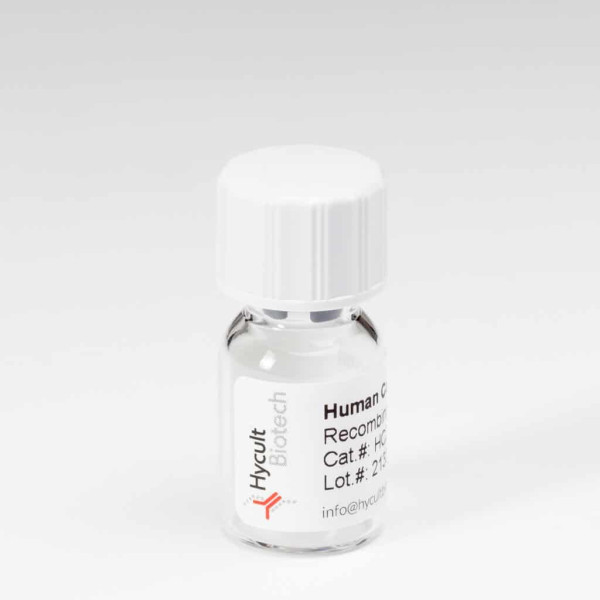
Product information "C1q, Human, Natural"
The complement system plays important roles in both innate and adaptive immune response and can produce an inflammatory and protective reaction to challenges from pathogens before an adaptive response can occur. There are three pathways of complement activation. The classical pathway is initiated by Immune complexes, the lectin pathway by surface bound mannan binding lectin, and the AP by all the surfaces that are not specifically protected against it. Each generates a C3 convertase, a serine protease that cleaves the central complement protein C3, and generates the major cleavage fragment C3b. The C3 and C5 convertases are enzymatic complexes that initiate and amplify the activity of the complement pathways and ultimately generate the cytolytic MAC. C1q forms together with C1r and C1s the C1 macromolecule, the first component of the classical complement pathway. C1q is complex of 18 polypeptide chains of three different types (A,B,C, resp. 29,27,23 kDa). Interaction of immune complexes with C1q induces a conformational change within the C1 complex, which results in activation of the classical pathway. C1q functions as recognition unit by binding to the heavy chain of IgG or IgM (Fc gamma and Fc micro) provided that the immunoglobulins are bound to their antigen. Furthermore, C1q can also recognize molecular patterns associated with pathogens and it can bind to apoptotic blebs, where it activates the classical complement pathway and mediates phagocytosis. C1q is predominantly produced by macrophages but also by follicular dendritic cells, interdigitating cells and cells of the monocyte-macrophage lineage. C1q deficiency has a profound effect on host defense and clearance of immune complexes. Absence of C1q may cause autoimmunity by impairment of the clearance of apoptotic cells. Inherited C1q deficiency is also associated with the development of systemic lupus erythematosus (SLE). Furthermore recent studies show involvement of C1q in non-complement cellular processes, including neovascularization during pregnancy, coagulation, tissue repair, cancer and functioning of the neurological synapse.
| Keywords: | C1QB, Complement C1q subcomponent subunit B |
| Supplier: | Hycult Biotech |
| Supplier-Nr: | HC2143 |
Properties
| Application: | FA, ELISA, WB |
| Conjugate: | No |
| Host: | Human |
| Species reactivity: | human |
| Format: | Solution |
Database Information
| KEGG ID : | K03987 | Matching products |
| UniProt ID : | P02746 | Matching products |
| Gene ID : | GeneID 713 | Matching products |
Handling & Safety
| Storage: | -80°C |
| Shipping: | -80°C (International: °C) |
Caution
Our products are for laboratory research use only: Not for administration to humans!
Our products are for laboratory research use only: Not for administration to humans!
You will get a certificate here
Viewed