
Cookie preferences
This website uses cookies, which are necessary for the technical operation of the website and are always set. Other cookies, which increase the comfort when using this website, are used for direct advertising or to facilitate interaction with other websites and social networks, are only set with your consent.
Configuration
Technically required
These cookies are necessary for the basic functions of the shop.
"Allow all cookies" cookie
"Decline all cookies" cookie
CSRF token
Cookie preferences
Currency change
Customer-specific caching
FACT-Finder tracking
Individual prices
Selected shop
Session
Comfort functions
These cookies are used to make the shopping experience even more appealing, for example for the recognition of the visitor.
Note
Show the facebook fanpage in the right blod sidebar
Statistics & Tracking
Affiliate program
Conversion and usertracking via Google Tag Manager
Track device being used

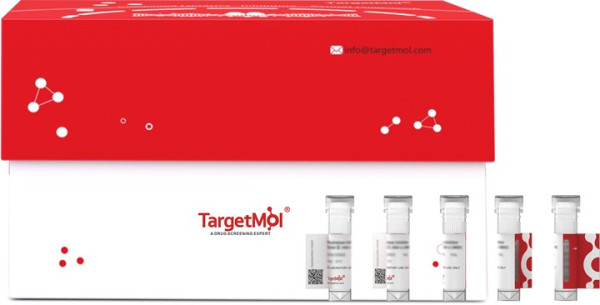
| Item number | Size | Datasheet | Manual | SDS | Delivery time | Quantity | Price |
|---|---|---|---|---|---|---|---|
| TGM-TMPY-02461-100ug | 100 µg | - |
7 - 10 business days* |
1,004.00€
|
If you have any questions, please use our Contact Form.
You can also order by e-mail: info@biomol.com
Larger quantity required? Request bulk
You can also order by e-mail: info@biomol.com
Larger quantity required? Request bulk
Description: Aldehyde reductase (AKR1A1) is a member of the aldo-keto reductase superfamily,... more
Product information "AKR1A1 Protein, Human, Recombinant (His)"
Description: Aldehyde reductase (AKR1A1) is a member of the aldo-keto reductase superfamily, which consists of more than 40 known enzymes and proteins that includes variety of monomeric NADPH-dependent oxidoreductases, such as aldehyde reductase. Aldehyde reductase has wide substrate specificities for carbonyl compounds. These enzymes are implicated in the development of diabetic complications by catalyzing the reduction of glucose to sorbitol. Aldehyde reductase possess a structure with a beta-alpha-beta fold which contains a novel NADP-binding motif. The binding site is located in a large, deep, elliptical pocket in the C-terminal end of the beta sheet, the substrate being bound in an extended conformation. This binding is more similar to FAD- than to NAD(P)-binding oxidoreductases. AKR1A1 is involved in the reduction of biogenic and xenobiotic aldehydes and is present in virtually every tissue.
| Keywords: | HEL-S-6, ALDR1, DD3, ARM, aldo-keto reductase family 1, member A1 (aldehyde reductase), ALR |
| Supplier: | TargetMol |
| Supplier-Nr: | TMPY-02461 |
Properties
| Conjugate: | No |
| MW: | 39 kD |
Database Information
| KEGG ID : | K00002 | Matching products |
| UniProt ID : | P14550 | Matching products |
| Gene ID : | GeneID 10327 | Matching products |
Handling & Safety
| Storage: | -20°C |
| Shipping: | +4°C (International: +4°C) |
Caution
Our products are for laboratory research use only: Not for administration to humans!
Our products are for laboratory research use only: Not for administration to humans!
You will get a certificate here
Viewed