

No results were found for the filter!
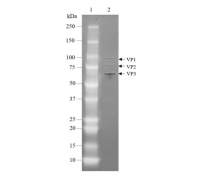 AAV8 SaCas9
Item number: BPS-78485

Adeno-Associated Virus serotype 8 (AAV8) was isolated from rhesus monkey tissue, and the AAV8 rep and cap nucleotide sequences have 88% homology with AAV7 and 82% with AAV2. AAV8 exhibits greater transduction efficiency in the liver than other AAV serotypes. AAV8 and 9 have recently been used to correct...
| Keywords: | SaCas9, CRISPR-associated endonuclease Cas9, |
| Application: | SaCas9 expression to enable genome editing |
| Species reactivity: | human |
819.00€
*
 AAV9 SaCas9
Item number: BPS-78486
Adeno-Associated Virus serotype 9 (AAV9) is one of the most promising serotypes for gene therapy applications. AAV9 transduces a wide range of tissue types, including cardiac and skeletal muscle, and liver, pancreas, and eye tissue. AAV8 and AAV9 have recently been used to correct disease-causing mutations and...
| Keywords: | SaCas9, CRISPR-associated endonuclease Cas9, |
| Application: | SaCas9 expression to enable genome editing |
| Species reactivity: | human |
819.00€
*
 NFAT Luciferase-eGFP Reporter Lentivirus (G418) 78656-G
Item number: BPS-78656-G
The NFAT Luciferase-eGFP Reporter Lentiviruses are replication incompetent, HIV-based, VSV-G pseudotyped lentiviral particles that are ready to transduce almost all types of mammalian cells, including primary and non-dividing cells. The particles contain a firefly luciferase and eGFP cassette driven by the NFAT...
| Keywords: | Luciferase, Luciferin 4-monooxygenase, |
| Application: | Activator / inhibitor screening, stable cell line generation |
| Species reactivity: | human |
1,307.00€
*
 p53 Luciferase Reporter Lentivirus
Item number: BPS-78666
The p53 Luciferase Reporter Lentiviruses are replication incompetent, HIV-based, VSV-G pseudotyped lentiviral particles that are ready to transduce most types of mammalian cells, including primary and non-dividing cells. The particles contain a firefly luciferase gene driven by p53 response elements located upstream...
| Keywords: | P53, TP53, Antigen NY-CO-13, Phosphoprotein p53, Tumor suppressor p53, Cellular tumor antigen p53, |
| Application: | Activator / inhibitor screening, stable cell line generation |
| Species reactivity: | human |
1,380.00€
*
 NFAT Luciferase Reporter Lentivirus (G418) 79579-G
Item number: BPS-79579-G
The NFAT Luciferase Reporter Lentiviruses are replication incompetent, HIV-based, VSV-G pseudotyped lentiviral particles that are ready to transduce almost all types of mammalian cells, including primary and non-dividing cells. The particles contain a firefly luciferase gene driven by the NFAT response element...
| Keywords: | Luciferase, Luciferin 4-monooxygenase, |
| Application: | Activator / inhibitor screening, stable cell line generation |
| Species reactivity: | human |
1,373.00€
*
 AAV1 Luciferase
Item number: BPS-78452
Adeno-Associated Virus Serotype 1 (AAV1) exhibits high homology with other AAV serotypes. AAV1 efficiently transduces muscle tissue, as determined by a region of the capsid protein VP1 (amino acids 350 to 430) which functions as a major determinant of tissue tropism. These AAV particles constitutively express the...
| Keywords: | Luciferase, Luciferin 4-monooxygenase, |
| Application: | Transduction positive control, transduction assay optimization, over time expression tracking |
| Species reactivity: | human |
819.00€
*
 AAV2 Luciferase
Item number: BPS-78453
Adeno-Associated Virus serotype 2 (AAV2) is the best characterized AAV serotype. Nearly all recombinant AAV serotypes utilize the AAV2 inverted terminal repeats (ITRs). AAV2 requires the expression of Heparan Sulfate Proteoglycan (HSPG) on the surface of host for cells for binding and internalization. Of nearly all...
| Keywords: | Luciferase, Luciferin 4-monooxygenase, |
| Application: | Transduction positive control, transduction assay optimization, over time expression tracking |
| Species reactivity: | human |
819.00€
*
 AAV2 Luciferase-eGFP
Item number: BPS-78462
Adeno-Associated Virus serotype 2 (AAV2) is the best characterized AAV serotype. Nearly all recombinant AAV serotypes utilize the AAV2 inverted terminal repeats (ITRs). AAV2 requires the expression of Heparan Sulfate Proteoglycan (HSPG) on the surface of host cells for binding and internalization. Of nearly all the...
| Keywords: | Luciferase, Luciferin 4-monooxygenase, |
| Application: | Transduction positive control, transduction assay optimization, over time expression tracking |
| Species reactivity: | human |
819.00€
*
 AAV5 Luciferase-eGFP
Item number: BPS-78465
Adeno-Associated Virus Serotype 5 (AAV5) differs from other parvovirus serotypes according to serological and DNA hybridization data, and AAV5 also uses different inverted terminal repeats (ITRs) compared to other AAV serotypes. AAV5 is the most efficient vector for transducing sensory neurons and is good at...
| Keywords: | Luciferase, Luciferin 4-monooxygenase, |
| Application: | Transduction positive control, transduction assay optimization, over time expression tracking |
| Species reactivity: | human |
819.00€
*
 AAV6 Luciferase-eGFP
Item number: BPS-78466
Adeno-Associated Virus serotype 6 (AAV6) appears to be related to AAV1 by sequence analysis and shows the highest transduction efficiency in pancreatic beta-cells compared to other AAV serotypes. These AAV6 particles constitutively express the firefly (Photinus pyralis) luciferase and enhanced Green Fluorescent...
| Keywords: | Luciferase, Luciferin 4-monooxygenase, |
| Application: | Transduction positive control, transduction assay optimization, over time expression tracking |
| Species reactivity: | human |
819.00€
*
 AAV8 Luciferase-eGFP
Item number: BPS-78467
Adeno-Associated Virus serotype 8 (AAV8) was first isolated from rhesus monkey tissue, and the AAV8 rep and cap nucleotide sequences have 88% homology with AAV7 and 82% with AAV2. AAV8 exhibits greater transduction efficiency in the liver than other AAV serotypes. AAV8 and 9 have recently been used to correct...
| Keywords: | Luciferase, Luciferin 4-monooxygenase, |
| Application: | Transduction positive control, transduction assay optimization, over time expression tracking |
| Species reactivity: | human |
819.00€
*
 AAV9 Luciferase-eGFP
Item number: BPS-78468
Adeno-Associated Virus serotype 9 (AAV9) is one of the most promising serotypes for gene therapy applications. AAV9 transduces a wide range of tissue types, including cardiac and skeletal muscle, liver, pancreas, and eye tissue. AAV8 and AAV9 have recently been used to correct disease-causing mutations and improve...
| Keywords: | Luciferase, Luciferin 4-monooxygenase, |
| Application: | Transduction positive control, transduction assay optimization, over time expression tracking |
| Species reactivity: | human |
819.00€
*