
Cookie preferences
This website uses cookies, which are necessary for the technical operation of the website and are always set. Other cookies, which increase the comfort when using this website, are used for direct advertising or to facilitate interaction with other websites and social networks, are only set with your consent.
Configuration
Technically required
These cookies are necessary for the basic functions of the shop.
"Allow all cookies" cookie
"Decline all cookies" cookie
CSRF token
Cookie preferences
Currency change
Customer-specific caching
FACT-Finder tracking
Individual prices
Selected shop
Session
Comfort functions
These cookies are used to make the shopping experience even more appealing, for example for the recognition of the visitor.
Note
Show the facebook fanpage in the right blod sidebar
Statistics & Tracking
Affiliate program
Conversion and usertracking via Google Tag Manager
Track device being used


| Item number | Size | Datasheet | Manual | SDS | Delivery time | Quantity | Price |
|---|---|---|---|---|---|---|---|
| BPS-84220 | 2 vials | - | - |
3 - 10 business days* |
15,164.00€
|
If you have any questions, please use our Contact Form.
You can also order by e-mail: info@biomol.com
Larger quantity required? Request bulk
You can also order by e-mail: info@biomol.com
Larger quantity required? Request bulk
The Activin E Responsive Luciferase Reporter HEK293 Cell Line is a HEK293 cell line engineered to... more
Product information "Activin E Responsive Luciferase Reporter HEK293 Cell Line"
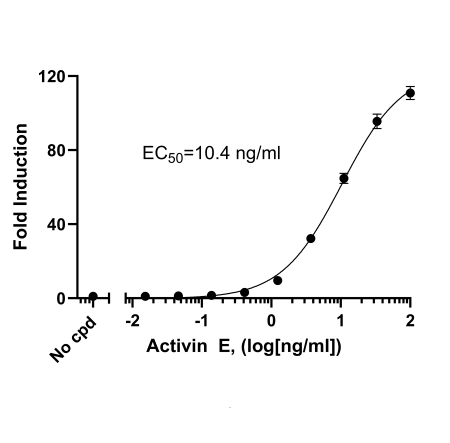
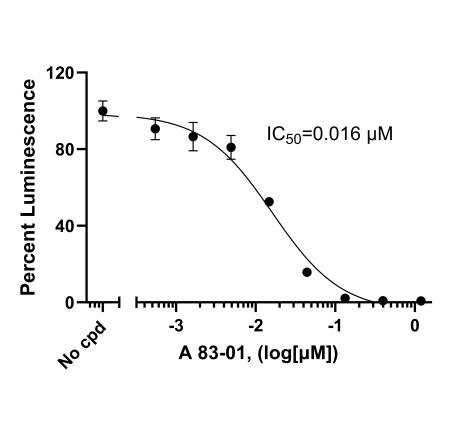
The Activin E Responsive Luciferase Reporter HEK293 Cell Line is a HEK293 cell line engineered to express human Activin A Receptor Type 1C (ACVR1C), also known as Activin Receptor-Like Kinase 7 (ALK7) (NM_145259.3). The construct was delivered by lentiviral transduction of TGFbeta/Activin A/Myostatin-Responsive Reporter HEK293 Cell Line (#60653), which expresses a firefly luciferase reporter driven by SMAD-responsive elements (SMAD binding elements, SBE). After activation by Activin E, the endogenous SMAD transcription factors bind to the response elements, inducing transcription of the luciferase reporter. This cell line has been validated to respond to Activin E. Figure 1: Illustration of the mechanism of action of the Activin E Responsive Luciferase Reporter HEK293 Cell Line. Interested in screening and profiling inhibitors, blocking antibodies, or activators of ALK7 without the need to purchase and license the cell line? Check out our Metabolic Diseases screening services. Activin Receptor-Like Kinase 7 (ALK7), also known as Activin Receptor Type 1C (ACVR1C), is a type I serine/threonine kinase receptor that belongs to the TGF-beta (transforming growth factor beta) superfamily, which plays an important role in regulating fat storage and metabolism. It is found in reproductive tissue, pancreatic cells, brain cells, and adipose tissue where it is highly expressed. ALK7 signaling is carried out via a tetrameric complex consisting of two TGF-beta type II receptors (ActIIA or ActIIB) and two type I receptors (ALK7). Binding of Activin E results in phosphorylation of type II receptors followed by activation of ALK7 kinase activity. Once activated, ALK7 phosphorylates the intracellular signaling proteins SMAD2/3 (SMAD family member 2/3). Nuclear translocation leads to interaction with transcription factors to control the expression of target genes. In obesity, elevated ALK7 signaling has been linked to decreased lipolysis and lipid oxidation, leading to increased fat storage. Furthermore, genetic studies have indicated that decreased ALK7 activity is associated with reduced abdominal adipose tissue and enhanced insulin sensitivity. The development of therapeutic strategies designed to modulate ALK7 is a growing field of research showing promising results for the treatment of metabolic diseases.
| Keywords: | ACVR1C, Activin receptor type-1C, Activin receptor type IC, Activin receptor-like kinase 7 |
| Supplier: | BPS Bioscience |
| Supplier-Nr: | 84220 |
Properties
| Application: | ALK7 signaling modulatior screeninng/characterization |
| Species reactivity: | human |
Database Information
| KEGG ID : | K13568 | Matching products |
| UniProt ID : | Q8NER5 | Matching products |
| Gene ID : | GeneID 130399 | Matching products |
Handling & Safety
| Storage: | -80°C |
| Shipping: | -80°C (International: -80°C) |
Caution
Our products are for laboratory research use only: Not for administration to humans!
Our products are for laboratory research use only: Not for administration to humans!
You will get a certificate here
Viewed