
Cookie preferences
This website uses cookies, which are necessary for the technical operation of the website and are always set. Other cookies, which increase the comfort when using this website, are used for direct advertising or to facilitate interaction with other websites and social networks, are only set with your consent.
Configuration
Technically required
These cookies are necessary for the basic functions of the shop.
"Allow all cookies" cookie
"Decline all cookies" cookie
CSRF token
Cookie preferences
Currency change
Customer-specific caching
FACT-Finder tracking
Individual prices
Selected shop
Session
Comfort functions
These cookies are used to make the shopping experience even more appealing, for example for the recognition of the visitor.
Note
Show the facebook fanpage in the right blod sidebar
Statistics & Tracking
Affiliate program
Conversion and usertracking via Google Tag Manager
Track device being used

| Item number | Size | Datasheet | Manual | SDS | Delivery time | Quantity | Price |
|---|---|---|---|---|---|---|---|
| ABS-ES-092.1 | 1 pair (100 µg/100 µg) | - | - |
10 - 14 business days* |
1,080.00€
|
If you have any questions, please use our Contact Form.
You can also order by e-mail: info@biomol.com
Larger quantity required? Request bulk
You can also order by e-mail: info@biomol.com
Larger quantity required? Request bulk
Product Description: Human IgG1 is the most abundant subclass of IgG antibodies, representing... more
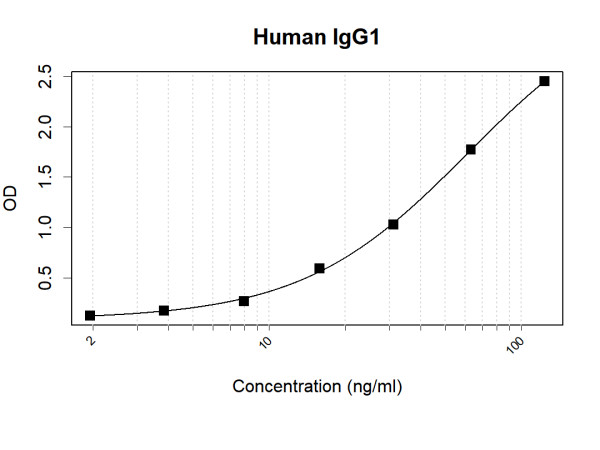
Product information "Anti-Human IgG1 Antibody Pair"
Product Description: Human IgG1 is the most abundant subclass of IgG antibodies, representing 60-70% of total IgG in human serum. IgG1 has a flexible structure with a longer hinge region compared to other IgG subclasses, allowing for greater mobility of the Fab fragments relative to the Fc region. This flexibility affects IgG1's ability to bind and activate the classical complement pathway through C1q, as well as its binding to Fc receptors (FcgammaR) on phagocytic cells to mediate antibody-dependent cell-mediated cytotoxicity (ADCC) and phagocytosis. Deficiencies or abnormalities in IgG1 levels or function have been associated with various disease states. IgG1 deficiency is often linked to hypogammaglobulinemia, as IgG1 makes up the majority of total IgG, and low IgG1 levels can lead to increased susceptibility to viral infections. Conversely, excessive or dysregulated IgG1 responses have been implicated in autoimmune diseases and allergic disorders. Protein Function: Constant region of immunoglobulin heavy chains. Immunoglobulins, also known as antibodies, are membrane-bound or secreted glycoproteins produced by B lymphocytes. In the recognition phase of humoral immunity, the membrane-bound immunoglobulins serve as receptors which, upon binding of a specific antigen, trigger the clonal expansion and differentiation of B lymphocytes into immunoglobulins-secreting plasma cells. Secreted immunoglobulins mediate the effector phase of humoral immunity, which results in the elimination of bound antigens (PubMed:20176268, PubMed:22158414). The antigen binding site is formed by the variable domain of one heavy chain, together with that of its associated light chain. Thus, each immunoglobulin has two antigen binding sites with remarkable affinity for a particular antigen. The variable domains are assembled by a process called V-(D)-J rearrangement and can then be subjected to somatic hypermutations which, after exposure to antigen and selection, allow affinity maturation for a particular antigen (PubMed:17576170, PubMed:20176268). Mediates IgG effector functions on monocytes triggering ADCC of virus-infected cells [The Uniprot Consortium]
| Keywords: | Anti-IGHG1, Anti-Ig gamma-1 chain C region, Anti-Ig gamma-1 chain C region EU, Anti-Ig gamma-1 chain C region KOL, Anti-Ig gamma-1 chain C region NIE, Anti-Immunoglobulin heavy constant gamma 1, Anti-Human IgG1 Antibody Pair |
| Supplier: | Absea |
| Supplier-Nr: | ES-092 |
Properties
| Application: | ELISA |
| Antibody Type: | Monoclonal |
| Clone: | KT46/KT132 |
| Conjugate: | No |
| Host: | Rat/Mouse |
| Species reactivity: | human |
| Purity: | >85% |
| Format: | Solution |
Database Information
| UniProt ID : | P01857 | Matching products |
Handling & Safety
| Storage: | -20°C (avoid repeat freezing and thawing cycles) |
| Shipping: | -20°C (International: +4°C) |
Caution
Our products are for laboratory research use only: Not for administration to humans!
Our products are for laboratory research use only: Not for administration to humans!
You will get a certificate here
Viewed