
Cookie-Einstellungen
Diese Website benutzt Cookies, die für den technischen Betrieb der Website erforderlich sind und stets gesetzt werden. Andere Cookies, die den Komfort bei Benutzung dieser Website erhöhen, der Direktwerbung dienen oder die Interaktion mit anderen Websites und sozialen Netzwerken vereinfachen sollen, werden nur mit Ihrer Zustimmung gesetzt.
Konfiguration
Technisch erforderlich
Diese Cookies sind für die Grundfunktionen des Shops notwendig.
"Alle Cookies ablehnen" Cookie
"Alle Cookies annehmen" Cookie
Ausgewählter Shop
CSRF-Token
Cookie-Einstellungen
FACT-Finder Tracking
Individuelle Preise
Kundenspezifisches Caching
Session
Währungswechsel
Komfortfunktionen
Diese Cookies werden genutzt um das Einkaufserlebnis noch ansprechender zu gestalten, beispielsweise für die Wiedererkennung des Besuchers.
Facebook-Seite in der rechten Blog - Sidebar anzeigen
Merkzettel
Statistik & Tracking
Endgeräteerkennung
Kauf- und Surfverhalten mit Google Tag Manager
Partnerprogramm

| Artikelnummer | Größe | Datenblatt | Manual | SDB | Lieferzeit | Menge | Preis |
|---|---|---|---|---|---|---|---|
| NSJ-FY13407 | 100 µl | - | - |
7 - 12 Werktage* |
790,00 €
|
Bei Fragen nutzen Sie gerne unser Kontaktformular.
Bestellen Sie auch per E-Mail: info@biomol.com
Größere Menge gewünscht? Bulk-Anfrage
Bestellen Sie auch per E-Mail: info@biomol.com
Größere Menge gewünscht? Bulk-Anfrage
Rabbit IgG in phosphate buffered saline, pH 7.4, 150mM NaCl, 0.02% sodium azide and 50% glycerol,... mehr
Produktinformationen "Anti-phospho-SIRT1 (pThr530), clone HAI-19"
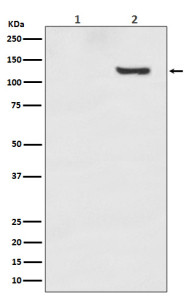
Rabbit IgG in phosphate buffered saline, pH 7.4, 150mM NaCl, 0.02% sodium azide and 50% glycerol, 0.4-0.5mg/ml BSA. Sirtuin 1 (SIRT1) is a NAD-dependent protein deacetylase involved in regulation of metabolic adaptation, chromatin signaling, oxidative stress responses, and cellular survival pathways. Phospho-SIRT1 (pThr530) Antibody / Stress Signaling Regulator is useful for studying phosphorylation-dependent regulation of SIRT1 activity during cellular stress and signal transduction events. Phospho-SIRT1 antibody, also referred to as Phospho-Sirtuin 1 antibody and pSIRT1 Thr530 antibody in the literature, recognizes SIRT1 phosphorylated at threonine 530, a modification associated with regulation of stress-response and metabolic signaling pathways.SIRT1 is predominantly localized within the nucleus where it regulates acetylation-dependent transcriptional programs involving p53, FOXO transcription factors, NF-kappaB, PGC1-alpha, and chromatin-associated proteins. Phosphorylation of SIRT1 contributes to modulation of protein stability, enzymatic activity, intracellular localization, and signaling interactions associated with cellular adaptation to metabolic and oxidative stress conditions. The Thr530 phosphorylation site has been implicated in pathways regulating stress-response signaling, transcriptional control, and adaptive cellular survival mechanisms.Because SIRT1 signaling is closely linked to aging biology, tumor metabolism, and stress adaptation, phosphorylation-dependent regulation of SIRT1 has become increasingly important in studies examining metabolic disease, cancer progression, and inflammatory signaling. Altered SIRT1 phosphorylation may influence mitochondrial function, apoptosis, chromatin accessibility, and cellular resistance to oxidative damage. These signaling pathways are relevant to cancer biology, neurodegenerative disease, metabolic syndrome, and energy-responsive regulatory networks.Phosphorylation-specific antibodies targeting SIRT1 are valuable tools for distinguishing activated signaling states from total protein expression. A recombinant rabbit monoclonal clone HAI-19 antibody can be used for studies examining phosphorylation-dependent regulation of SIRT1 signaling pathways and metabolic stress adaptation mechanisms. Because phosphorylation of SIRT1 contributes to dynamic regulation of chromatin signaling and cellular stress responses, this target remains highly relevant for studies investigating metabolic adaptation, transcriptional regulation, and signal-dependent post-translational modification pathways.Researchers studying metabolic signaling, stress-response pathways, and acetylation-dependent transcriptional regulation may also be interested in our broader Signal Transduction Antibodies collection featuring targets involved in chromatin signaling, cellular adaptation, and energy-responsive regulatory mechanisms.
| Schlagworte: | Anti-phospho-SIRT1, Anti-phospho-SIR2-like protein 1, Anti-phospho-Regulatory protein SIR2 homolog 1, Anti-phospho-NAD-dependent protein deacylase sirtuin-1, Anti-phospho-NAD-dependent protein deacetylase sirtuin-1, Phospho-SIRT1 (pThr530) Antibody |
| Hersteller: | NSJ Bioreagents |
| Hersteller-Nr: | FY13407 |
Eigenschaften
| Anwendung: | WB |
| Antikörper-Typ: | Monoclonal |
| Klon: | HAI-19 |
| Konjugat: | No |
| Wirt: | Rabbit |
| Spezies-Reaktivität: | human |
| Immunogen: | Synthesized peptide derived from human SIRT1 (pThr530) |
| Format: | Affinity Purified |
Datenbank Information
| KEGG ID : | K11411 | Passende Produkte |
| UniProt ID : | Q96EB6 | Passende Produkte |
| Gene ID : | GeneID 23411 | Passende Produkte |
Handhabung & Sicherheit
| Lagerung: | -20°C |
| Versand: | -20°C (International: -20°C) |
Achtung
Nur für Forschungszwecke und Laboruntersuchungen: Nicht für die Anwendung im oder am Menschen!
Nur für Forschungszwecke und Laboruntersuchungen: Nicht für die Anwendung im oder am Menschen!
Hier folgen Informationen zur Produktreferenz.
mehr
Hier kriegen Sie ein Zertifikat
Loggen Sie sich ein oder registrieren Sie sich, um Analysenzertifikate anzufordern.
Bewertungen lesen, schreiben und diskutieren... mehr
Kundenbewertungen für "Anti-phospho-SIRT1 (pThr530), clone HAI-19"
Bewertung schreiben
Loggen Sie sich ein oder registrieren Sie sich, um eine Produktbewertung abzugeben.
Zuletzt angesehen