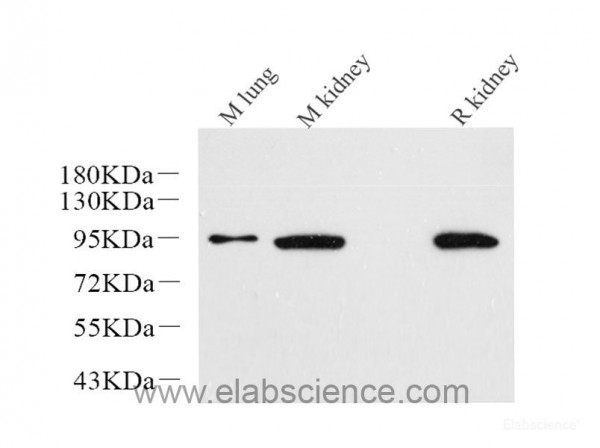
Anti-Catenin beta, clone 4A3H3

Artikelnummer Größe Datenblatt Manual SDB Lieferzeit Menge Preis
E-AB-70230.60 60 µl -

7 - 16 Werktage*

195,00 €
E-AB-70230.120 120 µl -

7 - 16 Werktage*

316,00 €
E-AB-70230.200 200 µl -

7 - 16 Werktage*

499,00 €
 
CTNNB1,also known as beta-Catenin,is an evolutionarily conserved,multifunctional intracellular... mehr
Produktinformationen "Anti-Catenin beta, clone 4A3H3"
CTNNB1,also known as beta-Catenin,is an evolutionarily conserved,multifunctional intracellular protein. CTNNB1 was originally identified in cell adherens junctions (Ajs) where it functions to bridge the cytoplasmic domain of cadherins to a-catenin and the actin cytoskeleton. Besides its essential role in the Ajs,CTNNB1 is also a key downstream component of the canonical Wnt pathway that plays diverse and critical roles in embryonic development and adult tissue homeostasis. Deregulation of CTNNB1 activity is associated with multiple diseases including cancers. . Protein function: Key downstream component of the canonical Wnt signaling pathway (PubMed:17524503, PubMed:18077326, PubMed:18086858, PubMed:18957423, PubMed:21262353, PubMed:22155184, PubMed:22647378, PubMed:22699938). In the absence of Wnt, forms a complex with AXIN1, AXIN2, APC, CSNK1A1 and GSK3B that promotes phosphorylation on N- terminal Ser and Thr residues and ubiquitination of CTNNB1 via BTRC and its subsequent degradation by the proteasome (PubMed:17524503, PubMed:18077326, PubMed:18086858, PubMed:18957423, PubMed:21262353, PubMed:22155184, PubMed:22647378, PubMed:22699938). In the presence of Wnt ligand, CTNNB1 is not ubiquitinated and accumulates in the nucleus, where it acts as a coactivator for transcription factors of the TCF/LEF family, leading to activate Wnt responsive genes (PubMed:17524503, PubMed:18077326, PubMed:18086858, PubMed:18957423, PubMed:21262353, PubMed:22155184, PubMed:22647378, PubMed:22699938). Involved in the regulation of cell adhesion, as component of an E-cadherin:catenin adhesion complex. Acts as a negative regulator of centrosome cohesion (PubMed:18086858). Involved in the CDK2/PTPN6/CTNNB1/CEACAM1 pathway of insulin internalization (PubMed:21262353). Blocks anoikis of malignant kidney and intestinal epithelial cells and promotes their anchorage-independent growth by down-regulating DAPK2 (PubMed:18957423). Disrupts PML function and PML- NB formation by inhibiting RANBP2-mediated sumoylation of PML (PubMed:22155184). Promotes neurogenesis by maintaining sympathetic neuroblasts within the cell cycle. Involved in chondrocyte differentiation via interaction with SOX9: SOX9-binding competes with the binding sites of TCF/LEF within CTNNB1, thereby inhibiting the Wnt signaling. Acts as a positive regulator of odontoblast differentiation during mesenchymal tooth germ formation, via promoting the transcription of differentiation factors such as LEF1, BMP2 and BMP4. Activity is repressed in a MSX1-mediated manner at the bell stage of mesenchymal tooth germ formation which prevents premature differentiation of odontoblasts. [The UniProt Consortium]
Schlagworte: Anti-CTNNB, Anti-Beta-catenin, Anti-Catenin beta-1, Catenin beta Monoclonal Antibody
Hersteller: Elabscience
Hersteller-Nr: E-AB-70230

Eigenschaften

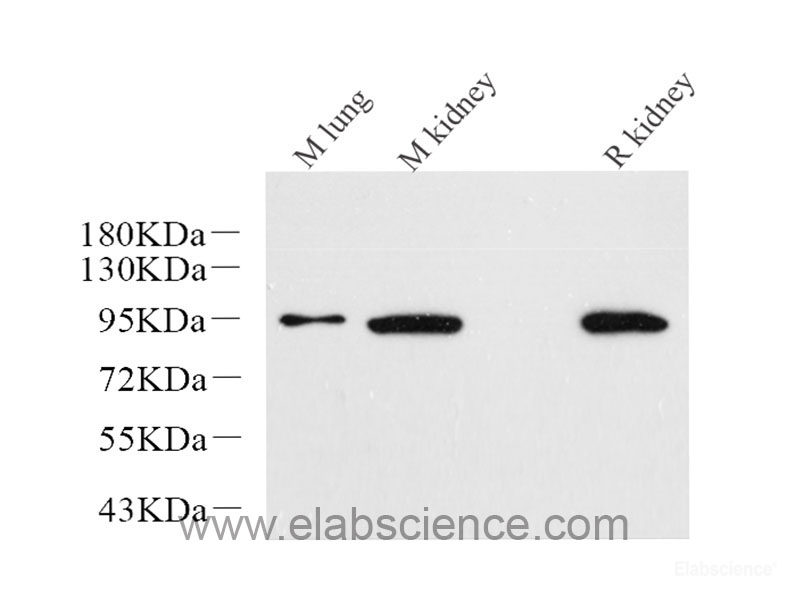
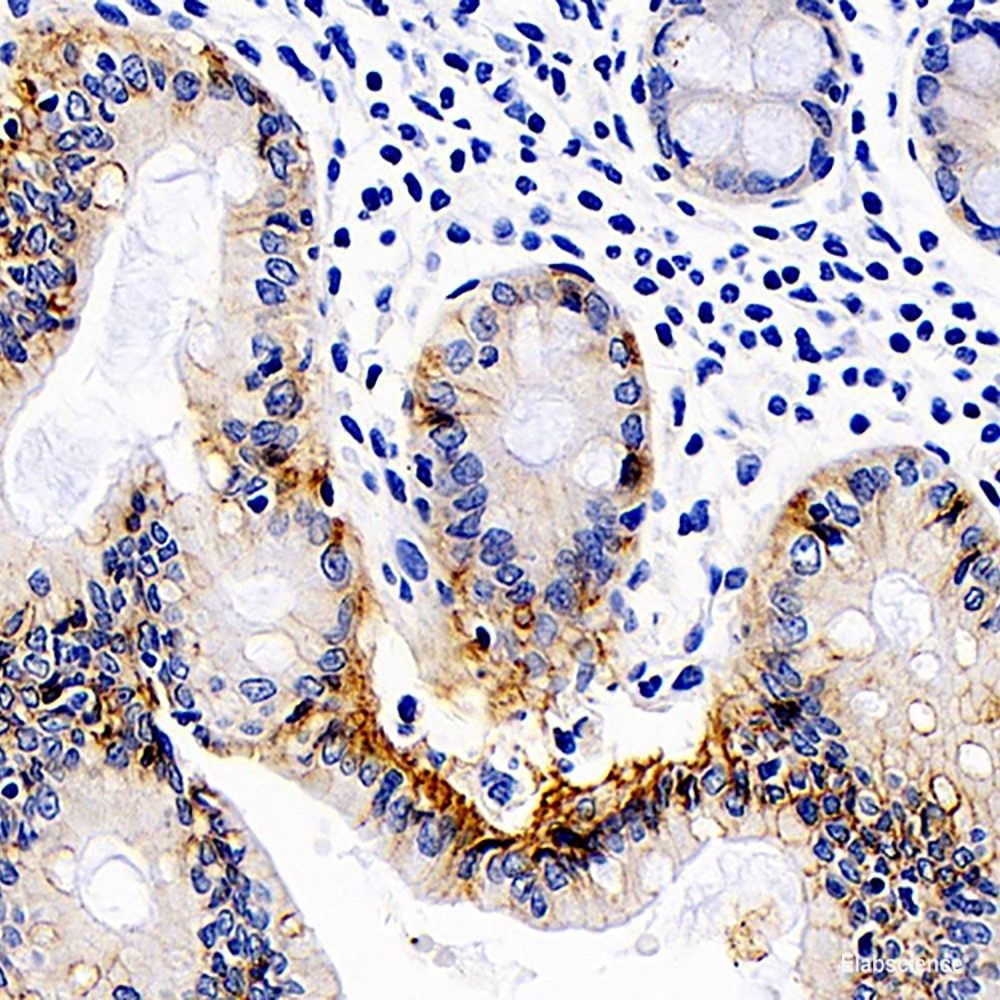
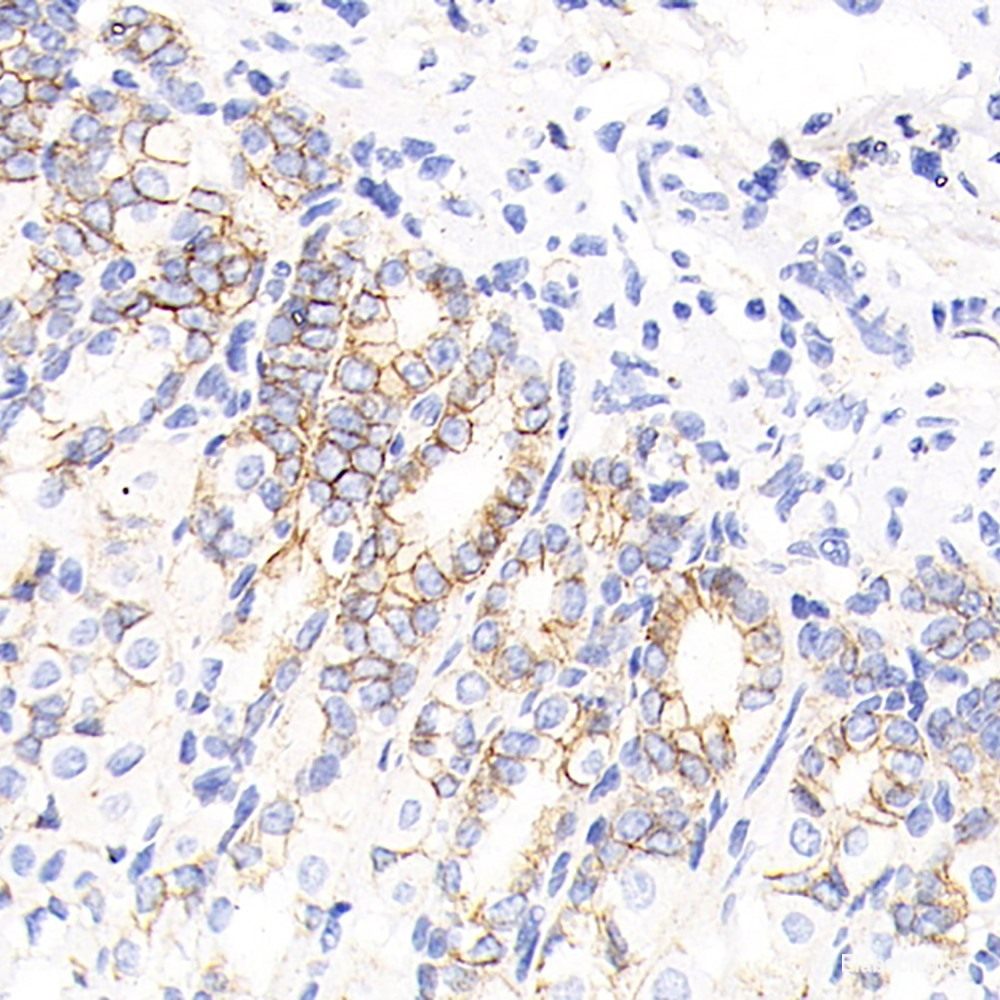
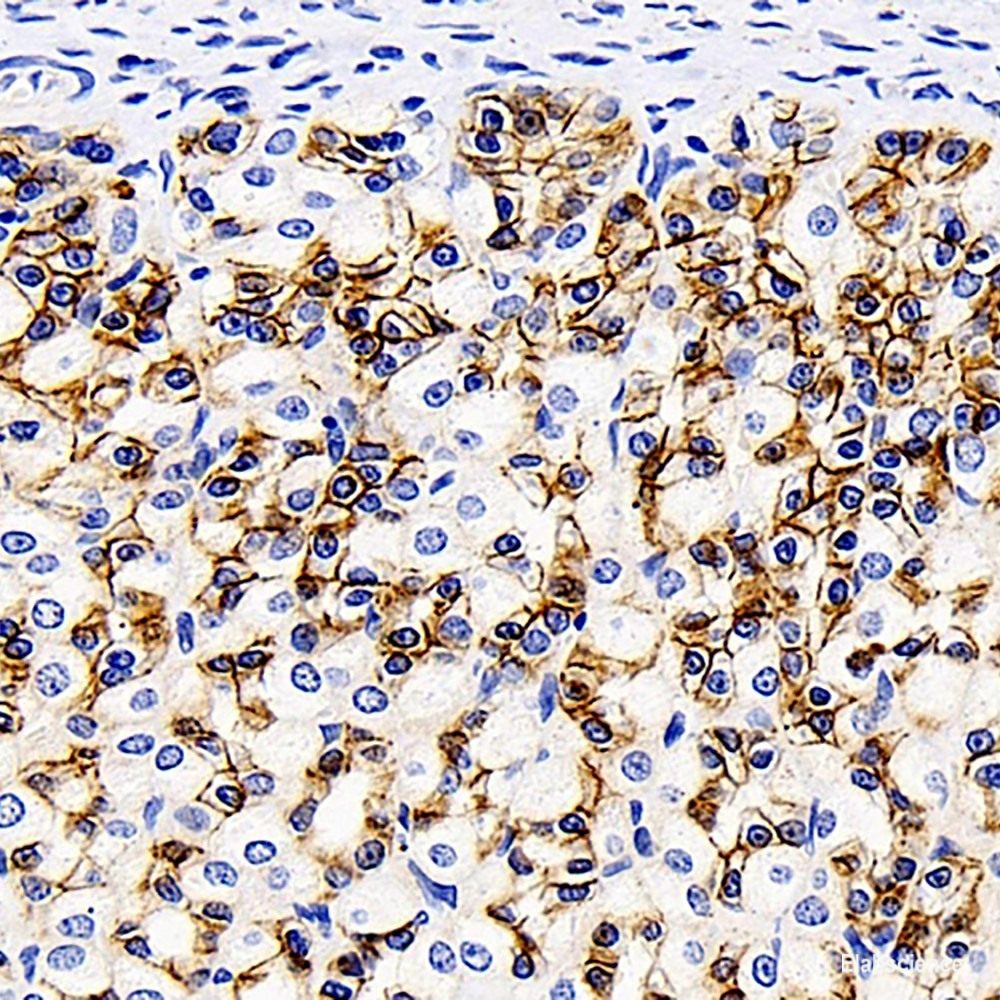
Anwendung: WB, IHC
Antikörper-Typ: Monoclonal
Klon: 4A3H3
Konjugat: No
Wirt: Mouse
Spezies-Reaktivität: human, mouse, rat
Immunogen: Recombinant protein corresponding to Mouse beta-catenin

Handhabung & Sicherheit

Lagerung: -20°C
Versand: -20°C (International: -20°C)
Achtung
Nur für Forschungszwecke und Laboruntersuchungen: Nicht für die Anwendung im oder am Menschen!
Hier kriegen Sie ein Zertifikat
oder , um Analysenzertifikate anzufordern.
Bewertungen lesen, schreiben und diskutieren... mehr
Kundenbewertungen für "Anti-Catenin beta, clone 4A3H3"
Bewertung schreiben
oder , um eine Produktbewertung abzugeben.
Zuletzt angesehen