
Cookie-Einstellungen
Diese Website benutzt Cookies, die für den technischen Betrieb der Website erforderlich sind und stets gesetzt werden. Andere Cookies, die den Komfort bei Benutzung dieser Website erhöhen, der Direktwerbung dienen oder die Interaktion mit anderen Websites und sozialen Netzwerken vereinfachen sollen, werden nur mit Ihrer Zustimmung gesetzt.
Konfiguration
Technisch erforderlich
Diese Cookies sind für die Grundfunktionen des Shops notwendig.
"Alle Cookies ablehnen" Cookie
"Alle Cookies annehmen" Cookie
Ausgewählter Shop
CSRF-Token
Cookie-Einstellungen
FACT-Finder Tracking
Individuelle Preise
Kundenspezifisches Caching
Session
Währungswechsel
Komfortfunktionen
Diese Cookies werden genutzt um das Einkaufserlebnis noch ansprechender zu gestalten, beispielsweise für die Wiedererkennung des Besuchers.
Facebook-Seite in der rechten Blog - Sidebar anzeigen
Merkzettel
Statistik & Tracking
Endgeräteerkennung
Kauf- und Surfverhalten mit Google Tag Manager
Partnerprogramm

| Artikelnummer | Größe | Datenblatt | Manual | SDB | Lieferzeit | Menge | Preis |
|---|---|---|---|---|---|---|---|
| NSJ-F44368-0.08ML | 80 µl | - | - |
3 - 10 Werktage* |
361,00 €
|
||
| NSJ-F44368-0.4ML | 400 µl | - | - |
3 - 10 Werktage* |
772,00 €
|
Bei Fragen nutzen Sie gerne unser Kontaktformular.
Bestellen Sie auch per E-Mail: info@biomol.com
Größere Menge gewünscht? Bulk-Anfrage
Bestellen Sie auch per E-Mail: info@biomol.com
Größere Menge gewünscht? Bulk-Anfrage
In 1X PBS, pH 7.4, with 0.09% sodium azide. Higher animals establish host defense by... mehr
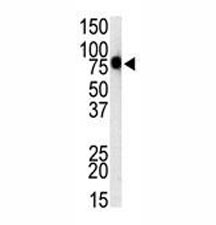
Produktinformationen "Anti-TLR1"
In 1X PBS, pH 7.4, with 0.09% sodium azide. Higher animals establish host defense by orchestrating innate and adaptive immunity. This is mediated by professional antigen presenting cells, i.e. dendritic cells (DCs). DCs can incorporate pathogens, produce a variety of cytokines, maturate, and present pathogen-derived peptides to T cells, thereby inducing T cell activation and differentiation. These responses are triggered by microbial recognition through type I transmembrane proteins, Toll-like receptors (TLRs) on DCs. TLRs consist of ten members and each TLR is involved in recognizing a variety of microorganism-derived molecular structures. TLR ligands include cell wall components, proteins, nucleic acids, and synthetic chemical compounds, all of which can activate DCs as immune adjuvants. Each TLR can activate DCs in a similar, but distinct manner. For example, TLRs can be divided into subgroups according to their type I interferon (IFN) inducing ability. TLR2 cannot induce IFN-alpha or IFN-beta, but TLR4 can lead to IFN-beta production. Meanwhile, TLR3, TLR7, and TLR9 can induce both IFN-alpha and IFN-beta. Recent evidences suggest that cytoplamic adapters for TLRs are especially crucial for this functional heterogeneity. Protein function: Participates in the innate immune response to microbial agents. Specifically recognizes diacylated and triacylated lipopeptides. Cooperates with TLR2 to mediate the innate immune response to bacterial lipoproteins or lipopeptides. Forms the activation cluster TLR2:TLR1:CD14 in response to triacylated lipopeptides, this cluster triggers signaling from the cell surface and subsequently is targeted to the Golgi in a lipid-raft dependent pathway. Acts via MYD88 and TRAF6, leading to NF-kappa-B activation, cytokine secretion and the inflammatory response. Acts as a coreceptor for M.tuberculosis lipoproteins LprG, LpqH and PhoS1 (pstS1), in conjunction with TLR2 and for some but not all lipoproteins CD14 and/or CD36. The lipoproteins act as agonists to modulate antigen presenting cell functions in response to the pathogen (PubMed:19362712). [The UniProt Consortium]
| Schlagworte: | Anti-TIL, Anti-Tlr1, Anti-CD281, Anti-Toll-like receptor 1, Anti-Toll/interleukin-1 receptor-like protein, TLR1 Antibody |
| Hersteller: | NSJ Bioreagents |
| Hersteller-Nr: | F44368 |
Eigenschaften
| Anwendung: | WB, IHC, ELISA |
| Antikörper-Typ: | Polyclonal |
| Konjugat: | No |
| Wirt: | Rabbit |
| Spezies-Reaktivität: | human, mouse |
| Immunogen: | A portion of amino acids 764-795 from the mouse protein was used as the immunogen for this TLR1 antibody. |
| Format: | Purified |
Datenbank Information
| KEGG ID : | K05398 | Passende Produkte |
| UniProt ID : | Q9EPQ1 | Passende Produkte |
| Gene ID : | GeneID 21897 | Passende Produkte |
Handhabung & Sicherheit
| Lagerung: | -20°C |
| Versand: | +4°C (International: +4°C) |
Achtung
Nur für Forschungszwecke und Laboruntersuchungen: Nicht für die Anwendung im oder am Menschen!
Nur für Forschungszwecke und Laboruntersuchungen: Nicht für die Anwendung im oder am Menschen!
Hier folgen Informationen zur Produktreferenz.
mehr
Hier kriegen Sie ein Zertifikat
Loggen Sie sich ein oder registrieren Sie sich, um Analysenzertifikate anzufordern.
Bewertungen lesen, schreiben und diskutieren... mehr
Kundenbewertungen für "Anti-TLR1"
Bewertung schreiben
Loggen Sie sich ein oder registrieren Sie sich, um eine Produktbewertung abzugeben.
Zuletzt angesehen