
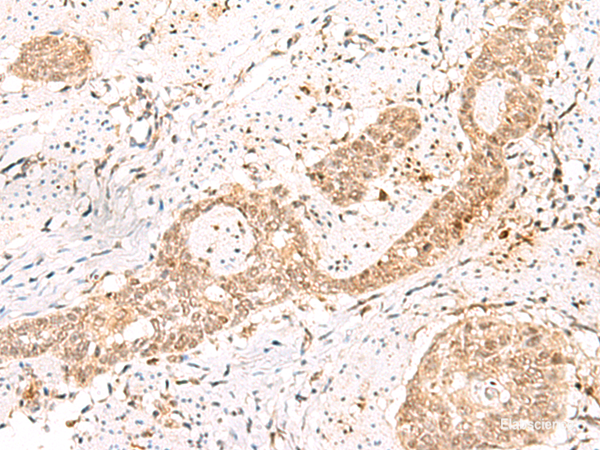
Anti-PRKAG2

Anti-PRKAG2
Artikelnummer Größe Datenblatt Manual SDB Lieferzeit Menge Preis
E-AB-52889.20 20 µl -

7 - 16 Werktage*

89,00 €
E-AB-52889.60 60 µl -

7 - 16 Werktage*

174,00 €
E-AB-52889.120 120 µl -

7 - 16 Werktage*

292,00 €
E-AB-52889.200 200 µl -

7 - 16 Werktage*

485,00 €
 
AMP-activated protein kinase (AMPK) is a heterotrimeric protein composed of a catalytic alpha... mehr
Produktinformationen "Anti-PRKAG2"
AMP-activated protein kinase (AMPK) is a heterotrimeric protein composed of a catalytic alpha subunit, a noncatalytic beta subunit, and a noncatalytic regulatory gamma subunit. Various forms of each of these subunits exist, encoded by different genes. AMPK is an important energy-sensing enzyme that monitors cellular energy status and functions by inactivating key enzymes involved in regulating de novo biosynthesis of fatty acid and cholesterol. This gene is a member of the AMPK gamma subunit family. Mutations in this gene have been associated with Wolff-Parkinson-White syndrome, familial hypertrophic cardiomyopathy, and glycogen storage disease of the heart. Alternate transcriptional splice variants, encoding different isoforms, have been characterized. PRKAG2 (Protein Kinase AMP-Activated Non-Catalytic Subunit Gamma 2) is a Protein Coding gene. Diseases associated with PRKAG2 include Glycogen Storage Disease Of Heart, Lethal Congenital and Wolff-Parkinson-White Syndrome. Among its related pathways are RET signaling and Regulation of TP53 Activity. GO annotations related to this gene include protein kinase binding and protein kinase activator activity. An important paralog of this gene is PRKAG1. Protein function: AMP/ATP-binding subunit of AMP-activated protein kinase (AMPK), an energy sensor protein kinase that plays a key role in regulating cellular energy metabolism. In response to reduction of intracellular ATP levels, AMPK activates energy-producing pathways and inhibits energy-consuming processes: inhibits protein, carbohydrate and lipid biosynthesis, as well as cell growth and proliferation. AMPK acts via direct phosphorylation of metabolic enzymes, and by longer-term effects via phosphorylation of transcription regulators. Also acts as a regulator of cellular polarity by remodeling the actin cytoskeleton, probably by indirectly activating myosin. Gamma non-catalytic subunit mediates binding to AMP, ADP and ATP, leading to activate or inhibit AMPK: AMP-binding results in allosteric activation of alpha catalytic subunit (PRKAA1 or PRKAA2) both by inducing phosphorylation and preventing dephosphorylation of catalytic subunits. ADP also stimulates phosphorylation, without stimulating already phosphorylated catalytic subunit. ATP promotes dephosphorylation of catalytic subunit, rendering the AMPK enzyme inactive. [The UniProt Consortium]
Schlagworte: Anti-PRKAG2, Anti-H91620p, Anti-AMPK gamma2, Anti-AMPK subunit gamma-2, Anti-5'-AMP-activated protein kinase subunit gamma-2, PRKAG2 Polyclonal Antibody
Hersteller: Elabscience
Hersteller-Nr: E-AB-52889

Eigenschaften

Anwendung: IHC, ELISA
Antikörper-Typ: Polyclonal
Konjugat: No
Wirt: Rabbit
Spezies-Reaktivität: human, mouse
Immunogen: Fusion protein of human PRKAG2

Handhabung & Sicherheit

Lagerung: -20°C
Versand: 4°C (International: -20°C)
Achtung
Nur für Forschungszwecke und Laboruntersuchungen: Nicht für die Anwendung im oder am Menschen!
Hier kriegen Sie ein Zertifikat
oder , um Analysenzertifikate anzufordern.
Bewertungen lesen, schreiben und diskutieren... mehr
Kundenbewertungen für "Anti-PRKAG2"
Bewertung schreiben
oder , um eine Produktbewertung abzugeben.
Zuletzt angesehen
