
Cookie-Einstellungen
Diese Website benutzt Cookies, die für den technischen Betrieb der Website erforderlich sind und stets gesetzt werden. Andere Cookies, die den Komfort bei Benutzung dieser Website erhöhen, der Direktwerbung dienen oder die Interaktion mit anderen Websites und sozialen Netzwerken vereinfachen sollen, werden nur mit Ihrer Zustimmung gesetzt.
Konfiguration
Technisch erforderlich
Diese Cookies sind für die Grundfunktionen des Shops notwendig.
"Alle Cookies ablehnen" Cookie
"Alle Cookies annehmen" Cookie
Ausgewählter Shop
CSRF-Token
Cookie-Einstellungen
FACT-Finder Tracking
Individuelle Preise
Kundenspezifisches Caching
Session
Währungswechsel
Komfortfunktionen
Diese Cookies werden genutzt um das Einkaufserlebnis noch ansprechender zu gestalten, beispielsweise für die Wiedererkennung des Besuchers.
Facebook-Seite in der rechten Blog - Sidebar anzeigen
Merkzettel
Statistik & Tracking
Endgeräteerkennung
Kauf- und Surfverhalten mit Google Tag Manager
Partnerprogramm

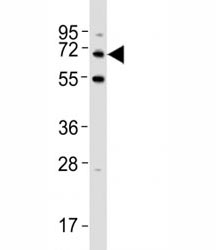
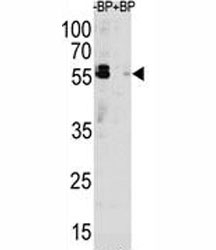
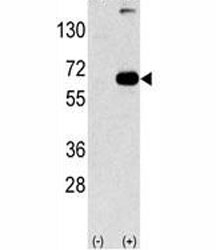
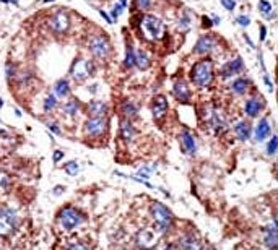
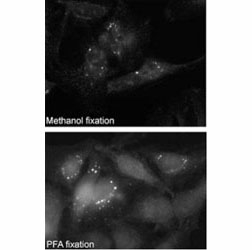
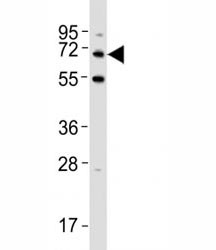


| Artikelnummer | Größe | Datenblatt | Manual | SDB | Lieferzeit | Menge | Preis |
|---|---|---|---|---|---|---|---|
| NSJ-F48010-0.08ML | 80 µl | - | - |
3 - 10 Werktage* |
361,00 €
|
||
| NSJ-F48010-0.4ML | 400 µl | - | - |
3 - 10 Werktage* |
772,00 €
|
Bei Fragen nutzen Sie gerne unser Kontaktformular.
Bestellen Sie auch per E-Mail: info@biomol.com
Größere Menge gewünscht? Bulk-Anfrage
Bestellen Sie auch per E-Mail: info@biomol.com
Größere Menge gewünscht? Bulk-Anfrage
In 1X PBS, pH 7.4, with 0.09% sodium azide. SQSTM1/p62 is an adapter protein which binds... mehr
Produktinformationen "Anti-p62"
In 1X PBS, pH 7.4, with 0.09% sodium azide. SQSTM1/p62 is an adapter protein which binds ubiquitin and may regulate the activation of NFKB1 by TNF-alpha, nerve growth factor (NGF) and interleukin-1. This protein may play a role in titin/TTN downstream signaling in muscle cells, and may also regulate signaling cascades through ubiquitination. This protein is involved in cell differentiation, apoptosis, immune response and regulation of K(+) channels. SQSTM1/p62 also appears to play a role in macroautophagic removal of intracellular protein aggregates. Cellular depletion studies of SQSTM1/p62 have indicated a role for association with LC3 and aggregate proteins in order to facilitate normal formation of the autophagosome. Protein function: Molecular adapter required for selective macroautophagy (aggrephagy) by acting as a bridge between polyubiquitinated proteins and autophagosomes (PubMed:15340068, PubMed:15953362, PubMed:16286508, PubMed:17580304, PubMed:20168092, PubMed:22017874, PubMed:22622177, PubMed:24128730, PubMed:28404643, PubMed:29343546, PubMed:29507397, PubMed:31857589, PubMed:33509017, PubMed:34471133, PubMed:34893540, PubMed:35831301, PubMed:37306101, PubMed:37802024). Promotes the recruitment of ubiquitinated cargo proteins to autophagosomes via multiple domains that bridge proteins and organelles in different steps (PubMed:16286508, PubMed:20168092, PubMed:22622177, PubMed:24128730, PubMed:28404643, PubMed:29343546, PubMed:29507397, PubMed:34893540, PubMed:37802024). SQSTM1 first mediates the assembly and removal of ubiquitinated proteins by undergoing liquid-liquid phase separation upon binding to ubiquitinated proteins via its UBA domain, leading to the formation of insoluble cytoplasmic inclusions, known as p62 bodies (PubMed:15911346, PubMed:20168092, PubMed:22017874, PubMed:24128730, PubMed:29343546, PubMed:29507397, PubMed:31857589, PubMed:37802024). SQSTM1 then interacts with ATG8 family proteins on autophagosomes via its LIR motif, leading to p62 body recruitment to autophagosomes, followed by autophagic clearance of ubiquitinated proteins (PubMed:16286508, PubMed:17580304, PubMed:20168092, PubMed:22622177, PubMed:24128730, PubMed:28404643, PubMed:37802024). SQSTM1 is itself degraded along with its ubiquitinated cargos (PubMed:16286508, PubMed:17580304, PubMed:37802024). Also required to recruit ubiquitinated proteins to PML bodies in the nucleus (PubMed:20168092). Also involved in autophagy of peroxisomes (pexophagy) in response to reactive oxygen species (ROS) by acting as a bridge between ubiquitinated PEX5 receptor and autophagosomes (PubMed:26344566). Acts as an activator of the NFE2L2/NRF2 pathway via interaction with KEAP1: interaction inactivates the BCR(KEAP1) complex by sequestering the complex in inclusion bodies, promoting nuclear accumulation of NFE2L2/NRF2 and subsequent expression of cytoprotective genes (PubMed:20452972, PubMed:28380357, PubMed:33393215, PubMed:37306101). Promotes relocalization of 'Lys-63'-linked ubiquitinated STING1 to autophagosomes (PubMed:29496741). Involved in endosome organization by retaining vesicles in the perinuclear cloud: following ubiquitination by RNF26, attracts specific vesicle-associated adapters, forming a molecular bridge that restrains cognate vesicles in the perinuclear region and organizes the endosomal pathway for efficient cargo transport (PubMed:27368102, PubMed:33472082). Sequesters tensin TNS2 into cytoplasmic puncta, promoting TNS2 ubiquitination and proteasomal degradation (PubMed:25101860). May regulate the activation of NFKB1 by TNF-alpha, nerve growth factor (NGF) and interleukin-1 (PubMed:10356400, PubMed:10747026, PubMed:11244088, PubMed:12471037, PubMed:16079148, PubMed:19931284). May play a role in titin/TTN downstream signaling in muscle cells (PubMed:15802564). Adapter that mediates the interaction between TRAF6 and CYLD. [The UniProt Consortium]
| Schlagworte: | Anti-p62, Anti-p60, Anti-ORCA, Anti-EBIAP, Anti-Sequestosome-1, Anti-Ubiquitin-binding protein p62, Anti-EBI3-associated protein of 60 kDa, Anti-Phosphotyrosine-independent ligand for the Lck SH2 domain of 62 kDa, p62 Antibody |
| Hersteller: | NSJ Bioreagents |
| Hersteller-Nr: | F48010 |
Eigenschaften
| Anwendung: | WB, IF, IHC, ELISA |
| Antikörper-Typ: | Polyclonal |
| Konjugat: | No |
| Wirt: | Rabbit |
| Spezies-Reaktivität: | human, african green monkey |
| Immunogen: | A portion of amino acids 317-346 from the human protein |
| Format: | Purified |
Datenbank Information
| KEGG ID : | K14381 | Passende Produkte |
| UniProt ID : | Q13501 | Passende Produkte |
| Gene ID : | GeneID 8878 | Passende Produkte |
Handhabung & Sicherheit
| Lagerung: | -20°C |
| Versand: | -20°C (International: -20°C) |
Achtung
Nur für Forschungszwecke und Laboruntersuchungen: Nicht für die Anwendung im oder am Menschen!
Nur für Forschungszwecke und Laboruntersuchungen: Nicht für die Anwendung im oder am Menschen!
Hier folgen Informationen zur Produktreferenz.
mehr
Hier kriegen Sie ein Zertifikat
Loggen Sie sich ein oder registrieren Sie sich, um Analysenzertifikate anzufordern.
Bewertungen lesen, schreiben und diskutieren... mehr
Kundenbewertungen für "Anti-p62"
Bewertung schreiben
Loggen Sie sich ein oder registrieren Sie sich, um eine Produktbewertung abzugeben.

Zuletzt angesehen