
Cookie-Einstellungen
Diese Website benutzt Cookies, die für den technischen Betrieb der Website erforderlich sind und stets gesetzt werden. Andere Cookies, die den Komfort bei Benutzung dieser Website erhöhen, der Direktwerbung dienen oder die Interaktion mit anderen Websites und sozialen Netzwerken vereinfachen sollen, werden nur mit Ihrer Zustimmung gesetzt.
Konfiguration
Technisch erforderlich
Diese Cookies sind für die Grundfunktionen des Shops notwendig.
"Alle Cookies ablehnen" Cookie
"Alle Cookies annehmen" Cookie
Ausgewählter Shop
CSRF-Token
Cookie-Einstellungen
FACT-Finder Tracking
Individuelle Preise
Kundenspezifisches Caching
Session
Währungswechsel
Komfortfunktionen
Diese Cookies werden genutzt um das Einkaufserlebnis noch ansprechender zu gestalten, beispielsweise für die Wiedererkennung des Besuchers.
Facebook-Seite in der rechten Blog - Sidebar anzeigen
Merkzettel
Statistik & Tracking
Endgeräteerkennung
Kauf- und Surfverhalten mit Google Tag Manager
Partnerprogramm



| Artikelnummer | Größe | Datenblatt | Manual | SDB | Lieferzeit | Menge | Preis |
|---|---|---|---|---|---|---|---|
| ELK-EM1086.50 | 50 µl | - | - |
10 - 15 Werktage* |
173,00 €
|
||
| ELK-EM1086.100 | 100 µl | - | - |
10 - 15 Werktage* |
288,00 €
|
Bei Fragen nutzen Sie gerne unser Kontaktformular.
Bestellen Sie auch per E-Mail: info@biomol.com
Größere Menge gewünscht? Bulk-Anfrage
Bestellen Sie auch per E-Mail: info@biomol.com
Größere Menge gewünscht? Bulk-Anfrage
The protein encoded by this gene functions together with DNA ligase IV and the DNA-dependent... mehr
Produktinformationen "Anti-XRCC4, monoclonal"
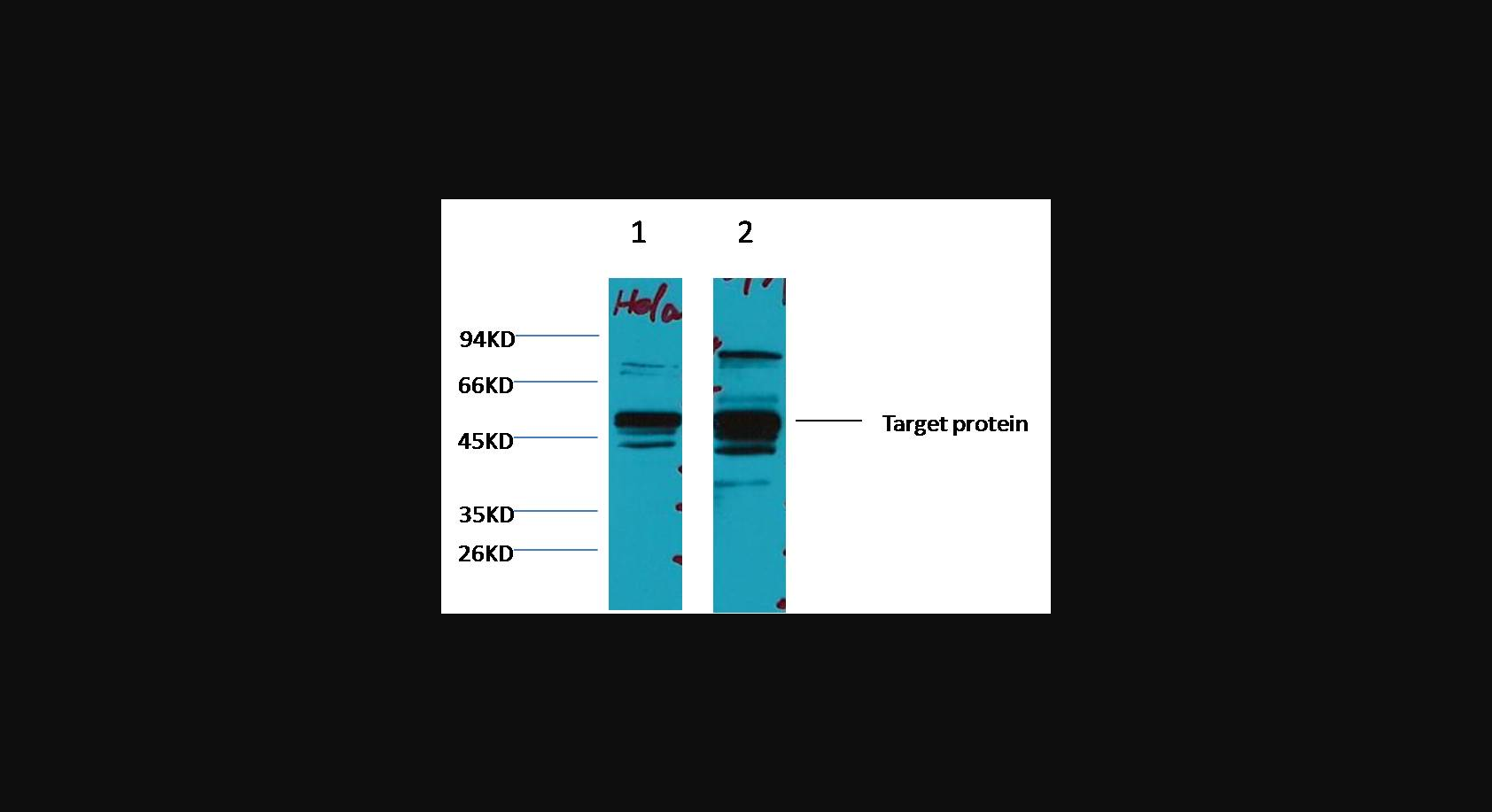
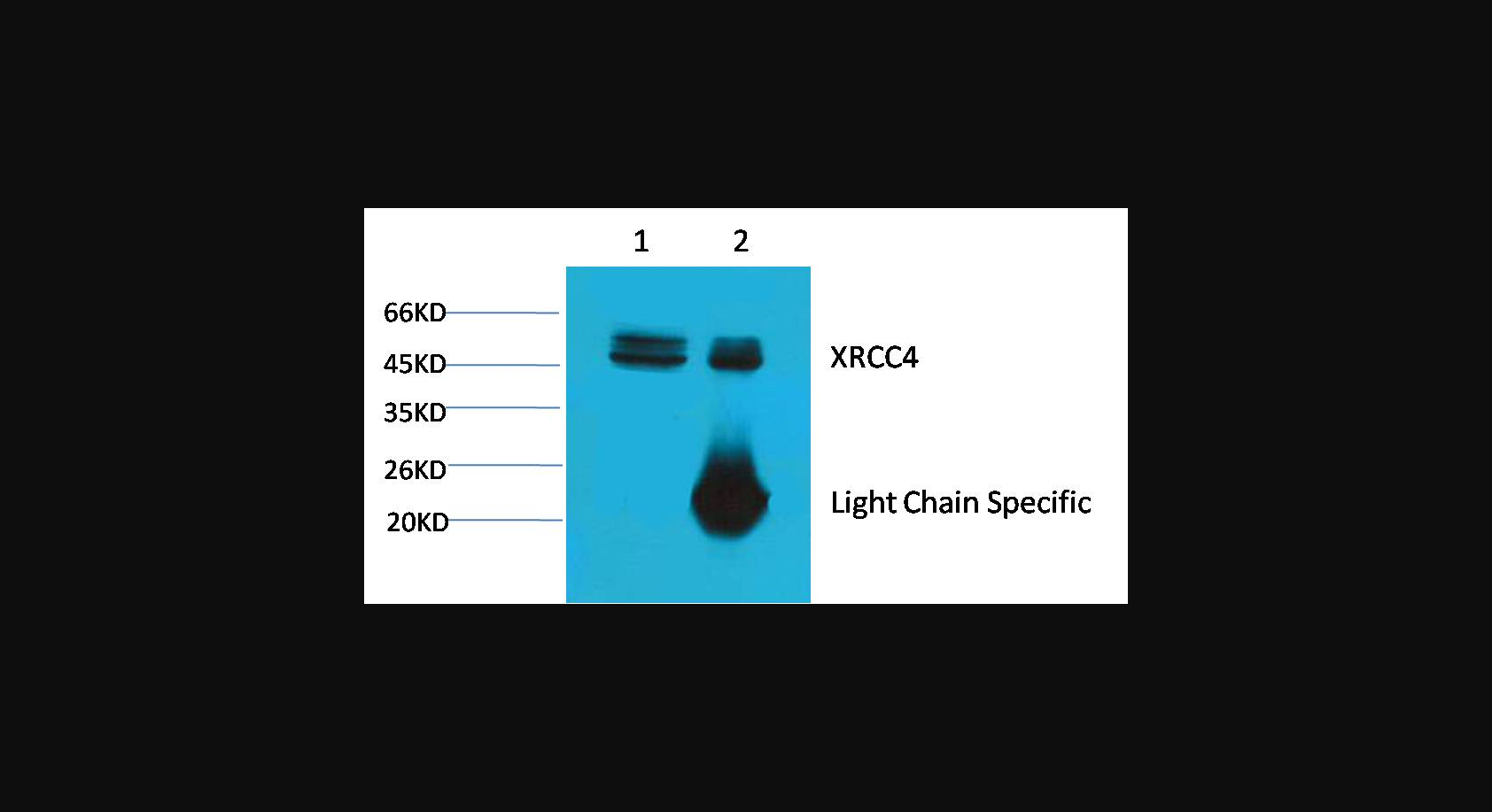
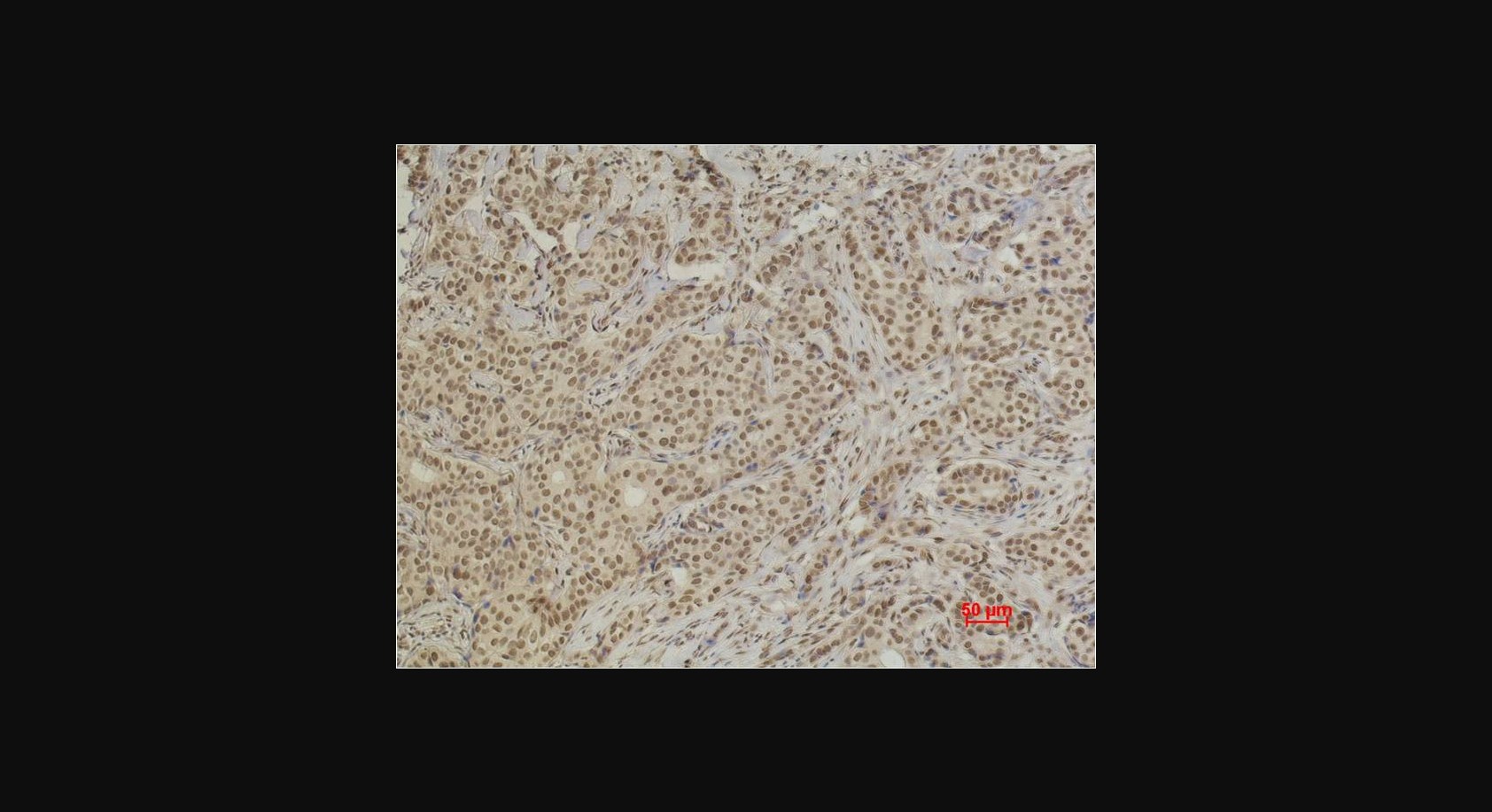
The protein encoded by this gene functions together with DNA ligase IV and the DNA-dependent protein kinase in the repair of DNA double-strand break by non-homologous end joining and the completion of V(D)J recombination events. Protein Function: DNA non-homologous end joining (NHEJ) core factor, required for double-strand break repair and V(D)J recombination (PubMed:10757784, PubMed:10854421, PubMed:12517771, PubMed:16412978, PubMed:17124166, PubMed:17290226, PubMed:22228831, PubMed:25597996, PubMed:25742519, PubMed:25934149, PubMed:26100018, PubMed:26774286, PubMed:8548796). Acts as a scaffold protein that regulates recruitment of other proteins to DNA double-strand breaks (DSBs) (PubMed:15385968, PubMed:20852255, PubMed:26774286, PubMed:27437582). Associates with NHEJ1/XLF to form alternating helical filaments that bridge DNA and act like a bandage, holding together the broken DNA until it is repaired (PubMed:21768349, PubMed:21775435, PubMed:22287571, PubMed:26100018, PubMed:27437582, PubMed:28500754). The XRCC4-NHEJ1/XLF subcomplex binds to the DNA fragments of a DSB in a highly diffusive manner and robustly bridges two independent DNA molecules, holding the broken DNA fragments in close proximity to one other (PubMed:27437582). The mobility of the bridges ensures that the ends remain accessible for further processing by other repair factors (PubMed:27437582). Plays a key role in the NHEJ ligation step of the broken DNA during DSB repair via direct interaction with DNA ligase IV (LIG4): the LIG4-XRCC4 subcomplex reseals the DNA breaks after the gap filling is completed (PubMed:10757784, PubMed:10854421, PubMed:12517771, PubMed:17290226, PubMed:19837014, PubMed:9242410). XRCC4 stabilizes LIG4, regulates its subcellular localization and enhances LIG4's joining activity (PubMed:10757784, PubMed:10854421, PubMed:12517771, PubMed:17290226, PubMed:21982441, PubMed:22228831, PubMed:9242410). Binding of the LIG4-XRCC4 subcomplex to DNA ends is dependent on the assembly of the DNA-dependent protein kinase complex DNA-PK to these DNA ends (PubMed:10757784, PubMed:10854421). Promotes displacement of PNKP from processed strand break termini (PubMed:20852255, PubMed:28453785) , Acts as an activator of the phospholipid scramblase activity of XKR4 (PubMed:33725486). This form, which is generated upon caspase-3 (CASP3) cleavage, translocates into the cytoplasm and interacts with XKR4, thereby promoting phosphatidylserine scramblase activity of XKR4 and leading to phosphatidylserine exposure on apoptotic cell surface (PubMed:33725486) [The Uniprot Consortium]
| Schlagworte: | Anti-XRCC4, Anti-DNA repair protein XRCC4, Anti-X-ray repair cross-complementing protein 4, XRCC4 Mouse mAb |
| Hersteller: | ELK Biotechnology |
| Hersteller-Nr: | EM1086 |
Eigenschaften
| Anwendung: | WB, IHC, IP |
| Antikörper-Typ: | Monoclonal |
| Konjugat: | No |
| Wirt: | Mouse |
| Spezies-Reaktivität: | human |
| Immunogen: | synthetic peptide |
| MW: | 38 kD |
| Format: | Solution |
Datenbank Information
| KEGG ID : | K10886 | Passende Produkte |
| UniProt ID : | Q13426 | Passende Produkte |
| Gene ID : | GeneID 7518 | Passende Produkte |
Handhabung & Sicherheit
| Lagerung: | -20°C (avoid repeat freezing and thawing cycles) |
| Versand: | +4°C (International: +4°C) |
Achtung
Nur für Forschungszwecke und Laboruntersuchungen: Nicht für die Anwendung im oder am Menschen!
Nur für Forschungszwecke und Laboruntersuchungen: Nicht für die Anwendung im oder am Menschen!
Hier kriegen Sie ein Zertifikat
Loggen Sie sich ein oder registrieren Sie sich, um Analysenzertifikate anzufordern.
Bewertungen lesen, schreiben und diskutieren... mehr
Kundenbewertungen für "Anti-XRCC4, monoclonal"
Bewertung schreiben
Loggen Sie sich ein oder registrieren Sie sich, um eine Produktbewertung abzugeben.
Zuletzt angesehen