
Cookie-Einstellungen
Diese Website benutzt Cookies, die für den technischen Betrieb der Website erforderlich sind und stets gesetzt werden. Andere Cookies, die den Komfort bei Benutzung dieser Website erhöhen, der Direktwerbung dienen oder die Interaktion mit anderen Websites und sozialen Netzwerken vereinfachen sollen, werden nur mit Ihrer Zustimmung gesetzt.
Konfiguration
Technisch erforderlich
Diese Cookies sind für die Grundfunktionen des Shops notwendig.
"Alle Cookies ablehnen" Cookie
"Alle Cookies annehmen" Cookie
Ausgewählter Shop
CSRF-Token
Cookie-Einstellungen
FACT-Finder Tracking
Individuelle Preise
Kundenspezifisches Caching
Session
Währungswechsel
Komfortfunktionen
Diese Cookies werden genutzt um das Einkaufserlebnis noch ansprechender zu gestalten, beispielsweise für die Wiedererkennung des Besuchers.
Facebook-Seite in der rechten Blog - Sidebar anzeigen
Merkzettel
Statistik & Tracking
Endgeräteerkennung
Kauf- und Surfverhalten mit Google Tag Manager
Partnerprogramm

Bei Fragen nutzen Sie gerne unser Kontaktformular.
Bestellen Sie auch per E-Mail: info@biomol.com
Größere Menge gewünscht? Bulk-Anfrage
Bestellen Sie auch per E-Mail: info@biomol.com
Größere Menge gewünscht? Bulk-Anfrage
The protein encoded by this gene is a key component of the XPC complex, which plays an important... mehr
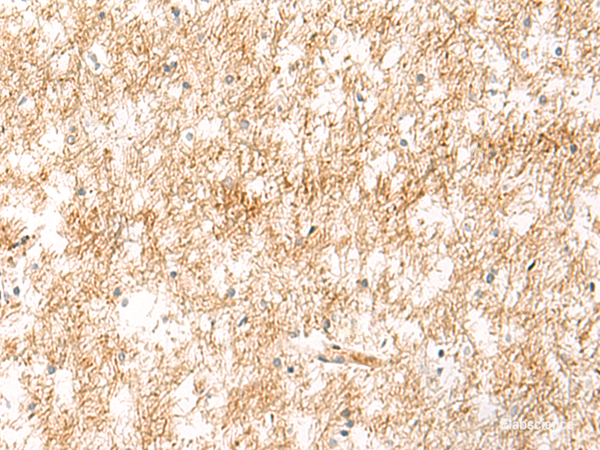
Produktinformationen "Anti-XPC"
The protein encoded by this gene is a key component of the XPC complex, which plays an important role in the early steps of global genome nucleotide excision repair (NER). The encoded protein is important for damage sensing and DNA binding, and shows a preference for single-stranded DNA. Mutations in this gene or some other NER components can result in Xeroderma pigmentosum, a rare autosomal recessive disorder characterized by increased sensitivity to sunlight with the development of carcinomas at an early age. Alternatively spliced transcript variants have been found for this gene. Protein function: Involved in global genome nucleotide excision repair (GG-NER) by acting as damage sensing and DNA-binding factor component of the XPC complex (PubMed:10734143, PubMed:19609301, PubMed:20649465, PubMed:9734359, PubMed:10873465, PubMed:12509299, PubMed:12547395, PubMed:19941824, PubMed:20028083, PubMed:20798892). Has only a low DNA repair activity by itself which is stimulated by RAD23B and RAD23A. Has a preference to bind DNA containing a short single-stranded segment but not to damaged oligonucleotides (PubMed:10734143, PubMed:19609301, PubMed:20649465). This feature is proposed to be related to a dynamic sensor function: XPC can rapidly screen duplex DNA for non-hydrogen- bonded bases by forming a transient nucleoprotein intermediate complex which matures into a stable recognition complex through an intrinsic single-stranded DNA-binding activity (PubMed:10734143, PubMed:19609301, PubMed:20649465). The XPC complex is proposed to represent the first factor bound at the sites of DNA damage and together with other core recognition factors, XPA, RPA and the TFIIH complex, is part of the pre-incision (or initial recognition) complex (PubMed:9734359, PubMed:10873465, PubMed:12509299, PubMed:12547395, PubMed:19941824, PubMed:20028083, PubMed:20798892). The XPC complex recognizes a wide spectrum of damaged DNA characterized by distortions of the DNA helix such as single-stranded loops, mismatched bubbles or single-stranded overhangs (PubMed:9734359, PubMed:10873465, PubMed:12509299, PubMed:12547395, PubMed:19941824, PubMed:20028083, PubMed:20798892). The orientation of XPC complex binding appears to be crucial for inducing a productive NER (PubMed:9734359, PubMed:10873465, PubMed:12509299, PubMed:12547395, PubMed:19941824, PubMed:20028083, PubMed:20798892). XPC complex is proposed to recognize and to interact with unpaired bases on the undamaged DNA strand which is followed by recruitment of the TFIIH complex and subsequent scanning for lesions in the opposite strand in a 5'-to-3' direction by the NER machinery (PubMed:9734359, PubMed:10873465, PubMed:12509299, PubMed:12547395, PubMed:19941824, PubMed:20028083, PubMed:20798892). Cyclobutane pyrimidine dimers (CPDs) which are formed upon UV-induced DNA damage esacpe detection by the XPC complex due to a low degree of structural perurbation. Instead they are detected by the UV-DDB complex which in turn recruits and cooperates with the XPC complex in the respective DNA repair (PubMed:9734359, PubMed:10873465, PubMed:12509299, PubMed:12547395, PubMed:19941824, PubMed:20028083, PubMed:20798892). In vitro, the XPC:RAD23B dimer is sufficient to initiate NER, it preferentially binds to cisplatin and UV-damaged double-stranded DNA and also binds to a variety of chemically and structurally diverse DNA adducts (PubMed:20028083). XPC:RAD23B contacts DNA both 5' and 3' of a cisplatin lesion with a preference for the 5' side. XPC:RAD23B induces a bend in DNA upon binding. XPC:RAD23B stimulates the activity of DNA glycosylases TDG and SMUG1 (PubMed:20028083). [The UniProt Consortium]
| Schlagworte: | Anti-XPC, Anti-XPCC, Anti-p125, Anti-DNA repair protein complementing XP-C cells, Anti-Xeroderma pigmentosum group C-complementing protein, XPC Polyclonal Antibody |
| Hersteller: | Elabscience |
| Hersteller-Nr: | E-AB-53352 |
Eigenschaften
| Anwendung: | IHC, ELISA |
| Antikörper-Typ: | Polyclonal |
| Konjugat: | No |
| Wirt: | Rabbit |
| Spezies-Reaktivität: | human |
| Immunogen: | Synthetic peptide of human XPC |
Datenbank Information
| KEGG ID : | K10838 | Passende Produkte |
| UniProt ID : | Q01831 | Passende Produkte |
| Gene ID : | GeneID 7508 | Passende Produkte |
Handhabung & Sicherheit
| Lagerung: | -20°C |
| Versand: | 4°C (International: -20°C) |
Achtung
Nur für Forschungszwecke und Laboruntersuchungen: Nicht für die Anwendung im oder am Menschen!
Nur für Forschungszwecke und Laboruntersuchungen: Nicht für die Anwendung im oder am Menschen!
Hier folgen Informationen zur Produktreferenz.
mehr
Hier kriegen Sie ein Zertifikat
Loggen Sie sich ein oder registrieren Sie sich, um Analysenzertifikate anzufordern.
Bewertungen lesen, schreiben und diskutieren... mehr
Kundenbewertungen für "Anti-XPC"
Bewertung schreiben
Loggen Sie sich ein oder registrieren Sie sich, um eine Produktbewertung abzugeben.

Zuletzt angesehen