
Cookie-Einstellungen
Diese Website benutzt Cookies, die für den technischen Betrieb der Website erforderlich sind und stets gesetzt werden. Andere Cookies, die den Komfort bei Benutzung dieser Website erhöhen, der Direktwerbung dienen oder die Interaktion mit anderen Websites und sozialen Netzwerken vereinfachen sollen, werden nur mit Ihrer Zustimmung gesetzt.
Konfiguration
Technisch erforderlich
Diese Cookies sind für die Grundfunktionen des Shops notwendig.
"Alle Cookies ablehnen" Cookie
"Alle Cookies annehmen" Cookie
Ausgewählter Shop
CSRF-Token
Cookie-Einstellungen
FACT-Finder Tracking
Individuelle Preise
Kundenspezifisches Caching
Session
Währungswechsel
Komfortfunktionen
Diese Cookies werden genutzt um das Einkaufserlebnis noch ansprechender zu gestalten, beispielsweise für die Wiedererkennung des Besuchers.
Facebook-Seite in der rechten Blog - Sidebar anzeigen
Merkzettel
Statistik & Tracking
Endgeräteerkennung
Kauf- und Surfverhalten mit Google Tag Manager
Partnerprogramm

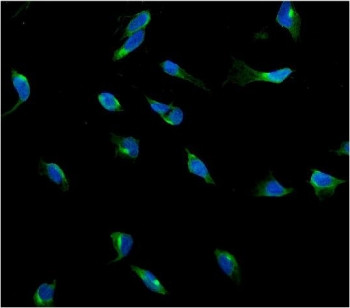
| Artikelnummer | Größe | Datenblatt | Manual | SDB | Lieferzeit | Menge | Preis |
|---|---|---|---|---|---|---|---|
| NSJ-RQ5685 | 100 µg | - | - |
7 - 12 Werktage* |
790,00 €
|
Bei Fragen nutzen Sie gerne unser Kontaktformular.
Bestellen Sie auch per E-Mail: info@biomol.com
Größere Menge gewünscht? Bulk-Anfrage
Bestellen Sie auch per E-Mail: info@biomol.com
Größere Menge gewünscht? Bulk-Anfrage
0.5mg/ml if reconstituted with 0.2ml sterile DI water. Ubiquitin carboxyl-terminal hydrolase 15... mehr
Produktinformationen "Anti-USP15"
0.5mg/ml if reconstituted with 0.2ml sterile DI water. Ubiquitin carboxyl-terminal hydrolase 15 is an enzyme that in humans is encoded by the USP15 gene. It is mapped to 12q14.1. This gene encodes a member of the ubiquitin specific protease (USP) family of deubiquitinating enzymes. USP enzymes play critical roles in ubiquitin-dependent processes through polyubiquitin chain disassembly and hydrolysis of ubiquitin-substrate bonds. The encoded protein associates with the COP9 signalosome, and also plays a role in transforming growth factor beta signalling through deubiquitination of receptor-activated SMAD transcription factors. Alternatively spliced transcript variants encoding multiple isoforms have been observed for this gene, and a pseudogene of this gene is located on the long arm of chromosome 2. Protein function: Hydrolase that removes conjugated ubiquitin from target proteins and regulates various pathways such as the TGF-beta receptor signaling, NF-kappa-B and RNF41/NRDP1-PRKN pathways (PubMed:21947082, PubMed:22344298, PubMed:24852371, PubMed:16005295, PubMed:17318178, PubMed:19826004, PubMed:19576224). Acts as a key regulator of TGF-beta receptor signaling pathway, but the precise mechanism is still unclear: according to a report, acts by promoting deubiquitination of monoubiquitinated R-SMADs (SMAD1, SMAD2 and/or SMAD3), thereby alleviating inhibition of R-SMADs and promoting activation of TGF-beta target genes (PubMed:21947082). According to another reports, regulates the TGF-beta receptor signaling pathway by mediating deubiquitination and stabilization of TGFBR1, leading to an enhanced TGF-beta signal (PubMed:22344298). Able to mediate deubiquitination of monoubiquitinated substrates as well as 'Lys-48'-linked polyubiquitin chains, protecting them against proteasomal degradation. May also regulate gene expression and/or DNA repair through the deubiquitination of histone H2B (PubMed:24526689). Acts as an inhibitor of mitophagy by counteracting the action of parkin (PRKN): hydrolyzes cleavage of 'Lys- 48'- and 'Lys-63'-linked polyubiquitin chains attached by parkin on target proteins such as MFN2, thereby reducing parkin's ability to drive mitophagy (PubMed:24852371). Acts as an associated component of COP9 signalosome complex (CSN) and regulates different pathways via this association: regulates NF-kappa-B by mediating deubiquitination of NFKBIA and deubiquitinates substrates bound to VCP (PubMed:16005295, PubMed:17318178, PubMed:19826004, PubMed:19576224). Involved in endosome organization by mediating deubiquitination of SQSTM1: ubiquitinated SQSTM1 forms a molecular bridge that restrains cognate vesicles in the perinuclear region and its deubiquitination releases target vesicles for fast transport into the cell periphery (PubMed:27368102). [The UniProt Consortium]
| Schlagworte: | Anti-USP15, Anti-Unph4, Anti-Unph-2, Anti-KIAA0529, Anti-Ubiquitin thioesterase 15, Anti-Deubiquitinating enzyme 15, Anti-Ubiquitin carboxyl-terminal hydrolase 15, Anti-Ubiquitin-specific-processing protease 15, USP15 Antibody |
| Hersteller: | NSJ Bioreagents |
| Hersteller-Nr: | RQ5685 |
Eigenschaften
| Anwendung: | WB, IF, FC, Direct ELISA |
| Antikörper-Typ: | Polyclonal |
| Konjugat: | No |
| Wirt: | Rabbit |
| Spezies-Reaktivität: | human |
| Immunogen: | Recombinant human protein (amino acids A6-H583) |
| Format: | Purified |
Datenbank Information
| KEGG ID : | K21343 | Passende Produkte |
| UniProt ID : | Q9Y4E8 | Passende Produkte |
| Gene ID : | GeneID 9958 | Passende Produkte |
Handhabung & Sicherheit
| Lagerung: | +4°C |
| Versand: | +4°C (International: +4°C) |
Achtung
Nur für Forschungszwecke und Laboruntersuchungen: Nicht für die Anwendung im oder am Menschen!
Nur für Forschungszwecke und Laboruntersuchungen: Nicht für die Anwendung im oder am Menschen!
Hier folgen Informationen zur Produktreferenz.
mehr
Hier kriegen Sie ein Zertifikat
Loggen Sie sich ein oder registrieren Sie sich, um Analysenzertifikate anzufordern.
Bewertungen lesen, schreiben und diskutieren... mehr
Kundenbewertungen für "Anti-USP15"
Bewertung schreiben
Loggen Sie sich ein oder registrieren Sie sich, um eine Produktbewertung abzugeben.
Zuletzt angesehen