
Cookie-Einstellungen
Diese Website benutzt Cookies, die für den technischen Betrieb der Website erforderlich sind und stets gesetzt werden. Andere Cookies, die den Komfort bei Benutzung dieser Website erhöhen, der Direktwerbung dienen oder die Interaktion mit anderen Websites und sozialen Netzwerken vereinfachen sollen, werden nur mit Ihrer Zustimmung gesetzt.
Konfiguration
Technisch erforderlich
Diese Cookies sind für die Grundfunktionen des Shops notwendig.
"Alle Cookies ablehnen" Cookie
"Alle Cookies annehmen" Cookie
Ausgewählter Shop
CSRF-Token
Cookie-Einstellungen
FACT-Finder Tracking
Individuelle Preise
Kundenspezifisches Caching
Session
Währungswechsel
Komfortfunktionen
Diese Cookies werden genutzt um das Einkaufserlebnis noch ansprechender zu gestalten, beispielsweise für die Wiedererkennung des Besuchers.
Facebook-Seite in der rechten Blog - Sidebar anzeigen
Merkzettel
Statistik & Tracking
Endgeräteerkennung
Kauf- und Surfverhalten mit Google Tag Manager
Partnerprogramm

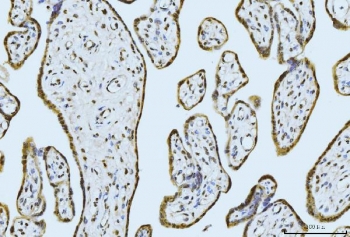
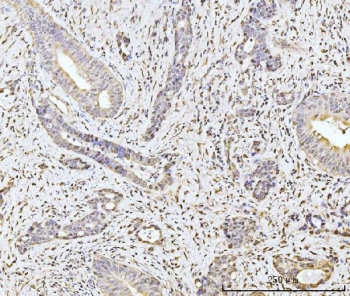
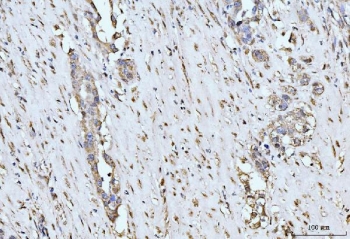
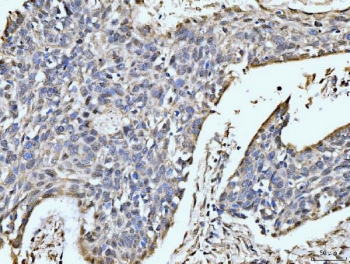


| Artikelnummer | Größe | Datenblatt | Manual | SDB | Lieferzeit | Menge | Preis |
|---|---|---|---|---|---|---|---|
| NSJ-RQ6657 | 100 µg | - | - |
3 - 10 Werktage* |
790,00 €
|
Bei Fragen nutzen Sie gerne unser Kontaktformular.
Bestellen Sie auch per E-Mail: info@biomol.com
Größere Menge gewünscht? Bulk-Anfrage
Bestellen Sie auch per E-Mail: info@biomol.com
Größere Menge gewünscht? Bulk-Anfrage
0.5mg/ml if reconstituted with 0.2ml sterile DI water. Putative helicase MOV-10 is an enzyme that... mehr
Produktinformationen "Anti-MOV10"
0.5mg/ml if reconstituted with 0.2ml sterile DI water. Putative helicase MOV-10 is an enzyme that in humans is encoded by the MOV10 gene. MOV10, also named as KIAA1631, belongs to the DNA2/NAM7 helicase family and SDE3 subfamily. It is required for RNA-mediated gene silencing by the RNA-induced silencing complex (RISC). Human MOV10 may regulate a wide range of RNA viruses and could also control the retro-transposition of endogenous retroelements in mammals. MOV10 has a broad antiretroviral activity that can target a wide range of retroviruses, and it could be actively involved in host defense against retroviral infection. MOV10 can potently inhibit HIV-1 replication at multiple stages. It is involved in the progression of telomerase-catalyzing reaction via the interaction of telomerase protein and telomere DNA. Protein function: 5' to 3' RNA helicase that is involved in a number of cellular roles ranging from mRNA metabolism and translation, modulation of viral infectivity, inhibition of retrotransposition, or regulation of synaptic transmission (PubMed:23093941). Plays an important role in innate antiviral immunity by promoting type I interferon production (PubMed:27016603, PubMed:35157734, PubMed:27974568). Mechanistically, specifically uses IKKepsilon/IKBKE as the mediator kinase for IRF3 activation (PubMed:27016603, PubMed:35157734). Blocks HIV-1 virus replication at a post-entry step (PubMed:20215113). Counteracts HIV-1 Vif-mediated degradation of APOBEC3G through its helicase activity by interfering with the ubiquitin-proteasome pathway (PubMed:29258557). Inhibits also hepatitis B virus/HBV replication by interacting with HBV RNA and thereby inhibiting the early step of viral reverse transcription (PubMed:31722967). Contributes to UPF1 mRNA target degradation by translocation along 3' UTRs (PubMed:24726324). Required for microRNA (miRNA)-mediated gene silencing by the RNA-induced silencing complex (RISC). Required for both miRNA-mediated translational repression and miRNA-mediated cleavage of complementary mRNAs by RISC (PubMed:16289642, PubMed:17507929, PubMed:22791714). In cooperation with FMR1, regulates miRNA-mediated translational repression by AGO2 (PubMed:25464849). Restricts retrotransposition of long interspersed element-1 (LINE-1) in cooperation with TUT4 and TUT7 counteracting the RNA chaperonne activity of L1RE1 (PubMed:30122351, PubMed:23093941). Facilitates LINE-1 uridylation by TUT4 and TUT7 (PubMed:30122351). Required for embryonic viability and for normal central nervous system development and function. Plays two critical roles in early brain development: suppresses retroelements in the nucleus by directly inhibiting cDNA synthesis, while regulates cytoskeletal mRNAs to influence neurite outgrowth in the cytosol. May function as a messenger ribonucleoprotein (mRNP) clearance factor (PubMed:24726324). [The UniProt Consortium]
| Schlagworte: | Anti-KIAA1631, Anti-Helicase MOV-10, Anti-Armitage homolog, Anti-Moloney leukemia virus 10 protein, MOV10 Antibody |
| Hersteller: | NSJ Bioreagents |
| Hersteller-Nr: | RQ6657 |
Eigenschaften
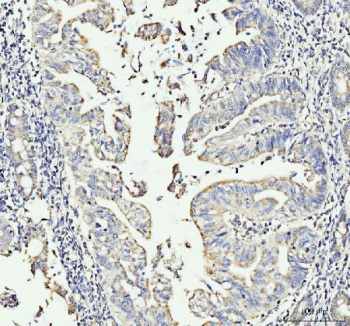
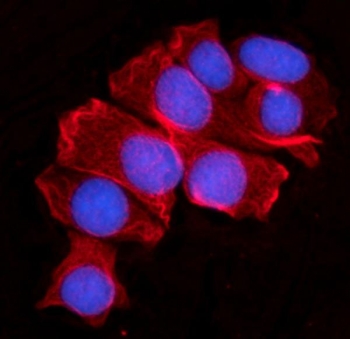
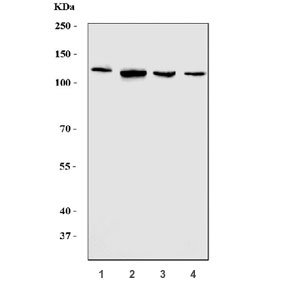
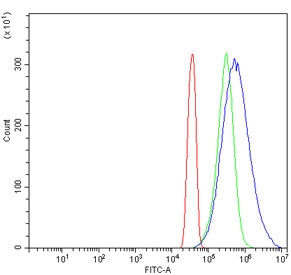
| Anwendung: | WB, IHC (paraffin), IF, FC, Direct ELISA |
| Antikörper-Typ: | Polyclonal |
| Konjugat: | No |
| Wirt: | Rabbit |
| Spezies-Reaktivität: | human |
| Immunogen: | Recombinant human protein (amino acids H167-Q772) |
| Format: | SiRNA |
Datenbank Information
| KEGG ID : | K18422 | Passende Produkte |
| UniProt ID : | Q9HCE1 | Passende Produkte |
| Gene ID : | GeneID 4343 | Passende Produkte |
Handhabung & Sicherheit
| Lagerung: | +4°C |
| Versand: | +4°C (International: +4°C) |
Achtung
Nur für Forschungszwecke und Laboruntersuchungen: Nicht für die Anwendung im oder am Menschen!
Nur für Forschungszwecke und Laboruntersuchungen: Nicht für die Anwendung im oder am Menschen!
Hier folgen Informationen zur Produktreferenz.
mehr
Hier kriegen Sie ein Zertifikat
Loggen Sie sich ein oder registrieren Sie sich, um Analysenzertifikate anzufordern.
Bewertungen lesen, schreiben und diskutieren... mehr
Kundenbewertungen für "Anti-MOV10"
Bewertung schreiben
Loggen Sie sich ein oder registrieren Sie sich, um eine Produktbewertung abzugeben.
Zuletzt angesehen