
Cookie-Einstellungen
Diese Website benutzt Cookies, die für den technischen Betrieb der Website erforderlich sind und stets gesetzt werden. Andere Cookies, die den Komfort bei Benutzung dieser Website erhöhen, der Direktwerbung dienen oder die Interaktion mit anderen Websites und sozialen Netzwerken vereinfachen sollen, werden nur mit Ihrer Zustimmung gesetzt.
Konfiguration
Technisch erforderlich
Diese Cookies sind für die Grundfunktionen des Shops notwendig.
"Alle Cookies ablehnen" Cookie
"Alle Cookies annehmen" Cookie
Ausgewählter Shop
CSRF-Token
Cookie-Einstellungen
FACT-Finder Tracking
Individuelle Preise
Kundenspezifisches Caching
Session
Währungswechsel
Komfortfunktionen
Diese Cookies werden genutzt um das Einkaufserlebnis noch ansprechender zu gestalten, beispielsweise für die Wiedererkennung des Besuchers.
Facebook-Seite in der rechten Blog - Sidebar anzeigen
Merkzettel
Statistik & Tracking
Endgeräteerkennung
Kauf- und Surfverhalten mit Google Tag Manager
Partnerprogramm

| Artikelnummer | Größe | Datenblatt | Manual | SDB | Lieferzeit | Menge | Preis |
|---|---|---|---|---|---|---|---|
| NSJ-F40228-0.08ML | 80 µl | - | - |
3 - 10 Werktage* |
361,00 €
|
||
| NSJ-F40228-0.4ML | 400 µl | - | - |
3 - 10 Werktage* |
772,00 €
|
Bei Fragen nutzen Sie gerne unser Kontaktformular.
Bestellen Sie auch per E-Mail: info@biomol.com
Größere Menge gewünscht? Bulk-Anfrage
Bestellen Sie auch per E-Mail: info@biomol.com
Größere Menge gewünscht? Bulk-Anfrage
In 1X PBS, pH 7.4, with 0.09% sodium azide. Implicated in tumor cell metastasis. May function in... mehr
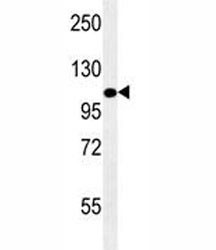
Produktinformationen "Anti-LAMP2, clone 157CT16.6.6"
In 1X PBS, pH 7.4, with 0.09% sodium azide. Implicated in tumor cell metastasis. May function in protection of the lysosomal membrane from autodigestion, maintenance of the acidic environment of the lysosome, adhesion when expressed on the cell surface (plasma membrane), and inter-and intracellular signal transduction. Protects cells from the toxic effects of methylating mutagens. Protein function: Lysosomal membrane glycoprotein which plays an important role in lysosome biogenesis, lysosomal pH regulation and autophagy (PubMed:11082038, PubMed:18644871, PubMed:24880125, PubMed:27628032, PubMed:36586411, PubMed:37390818, PubMed:8662539). Acts as an important regulator of lysosomal lumen pH regulation by acting as a direct inhibitor of the proton channel TMEM175, facilitating lysosomal acidification for optimal hydrolase activity (PubMed:37390818). Plays an important role in chaperone-mediated autophagy, a process that mediates lysosomal degradation of proteins in response to various stresses and as part of the normal turnover of proteins with a long biological half-live (PubMed:11082038, PubMed:18644871, PubMed:24880125, PubMed:27628032, PubMed:36586411, PubMed:8662539). Functions by binding target proteins, such as GAPDH, NLRP3 and MLLT11, and targeting them for lysosomal degradation (PubMed:11082038, PubMed:18644871, PubMed:24880125, PubMed:36586411, PubMed:8662539). In the chaperone-mediated autophagy, acts downstream of chaperones, such as HSPA8/HSC70, which recognize and bind substrate proteins and mediate their recruitment to lysosomes, where target proteins bind LAMP2 (PubMed:36586411). Plays a role in lysosomal protein degradation in response to starvation. Required for the fusion of autophagosomes with lysosomes during autophagy (PubMed:27628032). Cells that lack LAMP2 express normal levels of VAMP8, but fail to accumulate STX17 on autophagosomes, which is the most likely explanation for the lack of fusion between autophagosomes and lysosomes (PubMed:27628032). Required for normal degradation of the contents of autophagosomes (PubMed:27628032). Required for efficient MHC class II-mediated presentation of exogenous antigens via its function in lysosomal protein degradation, antigenic peptides generated by proteases in the endosomal/lysosomal compartment are captured by nascent MHC II subunits (PubMed:15894275, PubMed:20518820). Is not required for efficient MHC class II-mediated presentation of endogenous antigens (PubMed:20518820). [The UniProt Consortium]
| Schlagworte: | Anti-LAMP2, Anti-LGP-96, Anti-CD107b, Anti-LAMP-2, Anti-CD107 antigen-like family member B, Anti-Lysosome-associated membrane protein 2, Anti-Lysosome-associated membrane glycoprotein 2, LAMP2 Antibody |
| Hersteller: | NSJ Bioreagents |
| Hersteller-Nr: | F40228 |
Eigenschaften
| Anwendung: | WB, IF, ELISA |
| Antikörper-Typ: | Monoclonal |
| Klon: | 157CT16.6.6 |
| Konjugat: | No |
| Wirt: | Mouse |
| Spezies-Reaktivität: | human, mouse |
| Immunogen: | This LAMP2 antibody was produced from a mouse immunized with LAMP2 recombinant protein. |
| Format: | Purified |
Datenbank Information
| KEGG ID : | K06528 | Passende Produkte |
| UniProt ID : | P13473 | Passende Produkte |
| Gene ID : | GeneID 3920 | Passende Produkte |
Handhabung & Sicherheit
| Lagerung: | +4°C |
| Versand: | +4°C (International: +4°C) |
Achtung
Nur für Forschungszwecke und Laboruntersuchungen: Nicht für die Anwendung im oder am Menschen!
Nur für Forschungszwecke und Laboruntersuchungen: Nicht für die Anwendung im oder am Menschen!
Hier folgen Informationen zur Produktreferenz.
mehr
Hier kriegen Sie ein Zertifikat
Loggen Sie sich ein oder registrieren Sie sich, um Analysenzertifikate anzufordern.
Bewertungen lesen, schreiben und diskutieren... mehr
Kundenbewertungen für "Anti-LAMP2, clone 157CT16.6.6"
Bewertung schreiben
Loggen Sie sich ein oder registrieren Sie sich, um eine Produktbewertung abzugeben.

Zuletzt angesehen