
Anti-GDF15 Monoclonal Antibody

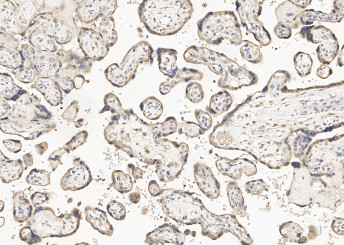
| Artikelnummer | Größe | Datenblatt | Manual | SDB | Lieferzeit | Menge | Preis |
|---|---|---|---|---|---|---|---|
| E-AN200035P.100 | 100 µl | - |
7 - 16 Werktage* |
389,00 €
|
Bei Fragen nutzen Sie gerne unser Kontaktformular.
Bestellen Sie auch per E-Mail: info@biomol.com
Größere Menge gewünscht? Bulk-Anfrage
Bestellen Sie auch per E-Mail: info@biomol.com
Größere Menge gewünscht? Bulk-Anfrage
Growth Differentiation Factor 15 (GDF-15), also called Macrophage inhibitory cytokine-1 (MIC-1),... mehr
Produktinformationen "Anti-GDF15 Monoclonal Antibody"
Growth Differentiation Factor 15 (GDF-15), also called Macrophage inhibitory cytokine-1 (MIC-1), placental transforming growth factor-beta, prostate-derived factor, and placental bone morphogenetic protein, is a divergent member of the transforming growth factor beta (TGF-beta ) superfamily. GDF-15 is highly expressed in placenta and is expressed at lower levels in kidney, pancreas, prostate and colon. It is also widely expressed in brain. Protein function: Hormone produced in response to various stresses to confer information about those stresses to the brain, and trigger an aversive response, characterized by nausea, vomiting, and/or loss of appetite (PubMed:23468844, PubMed:24971956, PubMed:28846097, PubMed:28846098, PubMed:28846099, PubMed:28953886, PubMed:29046435, PubMed:30639358, PubMed:31875646, PubMed:33589633, PubMed:38092039). The aversive response is both required to reduce continuing exposure to those stresses at the time of exposure and to promote avoidance behavior in the future (PubMed:30639358, PubMed:33589633, PubMed:38092039). Acts by binding to its receptor, GFRAL, activating GFRAL-expressing neurons localized in the area postrema and nucleus tractus solitarius of the brainstem (PubMed:28846097, PubMed:28846098, PubMed:28846099, PubMed:28953886, PubMed:31535977). It then triggers the activation of neurons localized within the parabrachial nucleus and central amygdala, which constitutes part of the 'emergency circuit' that shapes responses to stressful conditions (PubMed:28953886). The GDF15-GFRAL signal induces expression of genes involved in metabolism, such as lipid metabolism in adipose tissues (PubMed:31402172). Required for avoidance behavior in response to food allergens: induced downstream of mast cell activation to promote aversion and minimize harmful effects of exposure to noxious substances. In addition to suppress appetite, also promotes weight loss by enhancing energy expenditure in muscle: acts by increasing calcium futile cycling in muscle. Contributes to the effect of metformin, an anti-diabetic drug, on appetite reduction and weight loss: produced in the kidney in response to metformin treatment, thereby activating the GDF15-GFRAL response, leading to reduced appetite and weight (PubMed:31875646, PubMed:37060902). The contribution of GDF15 to weight loss following metformin treatment is however limited and subject to discussion (PubMed:36001956). Produced in response to anticancer drugs, such as camptothecin or cisplatin, promoting nausea, vomiting and contributing to malnutrition. Overproduced in many cancers, promoting anorexia in cancer (cachexia) (PubMed:32661391). Responsible for the risk of nausea and vomiting during pregnancy: high levels of GDF15 during pregnancy, mostly originating from the fetus, are associated with increased nausea and vomiting (PubMed:38092039). Maternal sensitivity to nausea is probably determined by pre-pregnancy exposure to GDF15, women with naturally high level of GDF15 being less susceptible to nausea than women with low levels of GDF15 before pregnancy (PubMed:38092039). Promotes metabolic adaptation in response to systemic inflammation caused by bacterial and viral infections in order to promote tissue tolerance and prevent tissue damage (PubMed:31402172). Required for tissue tolerance in response to myocardial infarction by acting as an inhibitor of leukocyte integring activation, thereby protecting against cardiac rupture. Inhibits growth hormone signaling on hepatocytes. [The UniProt Consortium]
| Schlagworte: | MIC-1, NRG-1, NAG-1, GDF-15, Placental TGF-beta, NSAID-activated gene 1 protein, NSAID-regulated gene 1 protein, Prostate differentiation factor, Macrophage inhibitory cytokine 1, Growth/differentiation factor 15, Placental bone morphogenetic protein, GDF |
| Hersteller: | Elabscience |
| Hersteller-Nr: | E-AN200035P |
Eigenschaften
| Anwendung: | IHC (paraffin) |
| Antikörper-Typ: | Monoclonal |
| Klon: | 11D14 |
| Konjugat: | No |
| Wirt: | Mouse |
| Spezies-Reaktivität: | human |
| Immunogen: | Recombinant human GDF15 Protein |
| Format: | Purified |
Datenbank Information
| KEGG ID : | K05504 | Passende Produkte |
| UniProt ID : | Q99988 | Passende Produkte |
| Gene ID : | GeneID 9518 | Passende Produkte |
Handhabung & Sicherheit
| Lagerung: | +4°C (avoid repeat freezing and thawing cycles) |
| Versand: | +4°C (International: +4°C) |
| Signalwort: | Warning |
| GHS-Piktogramme: |

|
| H-Sätze: | H317 |
| P-Sätze: | P261, P272, P280, P302+352, P333+313 |
Achtung
Nur für Forschungszwecke und Laboruntersuchungen: Nicht für die Anwendung im oder am Menschen!
Nur für Forschungszwecke und Laboruntersuchungen: Nicht für die Anwendung im oder am Menschen!
Hier folgen Informationen zur Produktreferenz.
mehr
Hier kriegen Sie ein Zertifikat
Loggen Sie sich ein oder registrieren Sie sich, um Analysenzertifikate anzufordern.
Bewertungen lesen, schreiben und diskutieren... mehr
Kundenbewertungen für "Anti-GDF15 Monoclonal Antibody"
Bewertung schreiben
Loggen Sie sich ein oder registrieren Sie sich, um eine Produktbewertung abzugeben.
Zuletzt angesehen