
Cookie-Einstellungen
Diese Website benutzt Cookies, die für den technischen Betrieb der Website erforderlich sind und stets gesetzt werden. Andere Cookies, die den Komfort bei Benutzung dieser Website erhöhen, der Direktwerbung dienen oder die Interaktion mit anderen Websites und sozialen Netzwerken vereinfachen sollen, werden nur mit Ihrer Zustimmung gesetzt.
Konfiguration
Technisch erforderlich
Diese Cookies sind für die Grundfunktionen des Shops notwendig.
"Alle Cookies ablehnen" Cookie
"Alle Cookies annehmen" Cookie
Ausgewählter Shop
CSRF-Token
Cookie-Einstellungen
FACT-Finder Tracking
Individuelle Preise
Kundenspezifisches Caching
Session
Währungswechsel
Komfortfunktionen
Diese Cookies werden genutzt um das Einkaufserlebnis noch ansprechender zu gestalten, beispielsweise für die Wiedererkennung des Besuchers.
Facebook-Seite in der rechten Blog - Sidebar anzeigen
Merkzettel
Statistik & Tracking
Endgeräteerkennung
Kauf- und Surfverhalten mit Google Tag Manager
Partnerprogramm

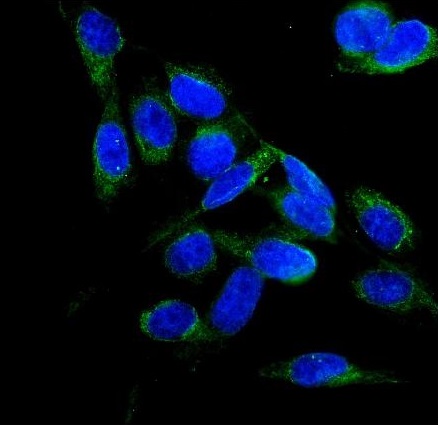
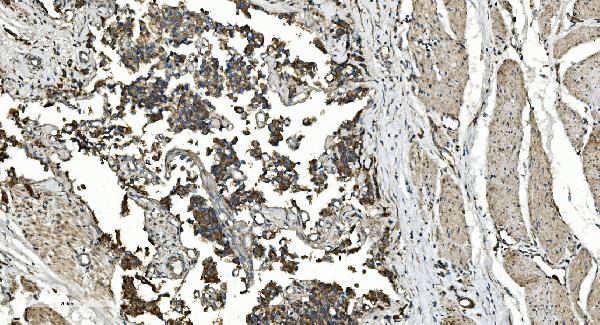

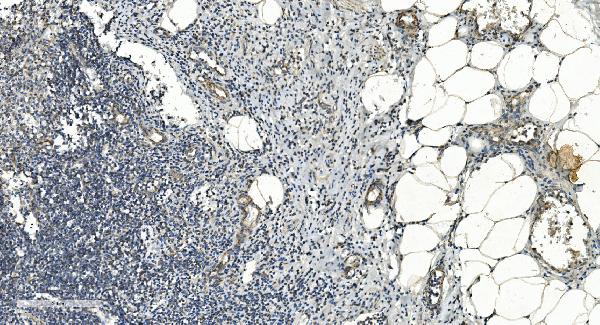
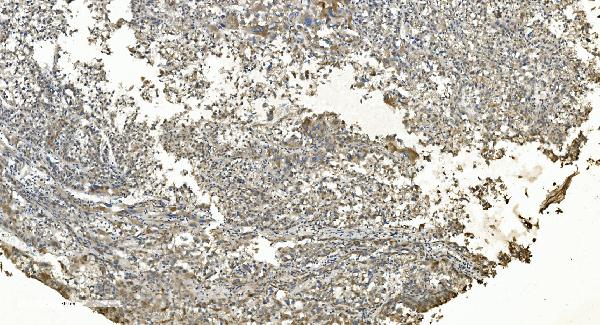
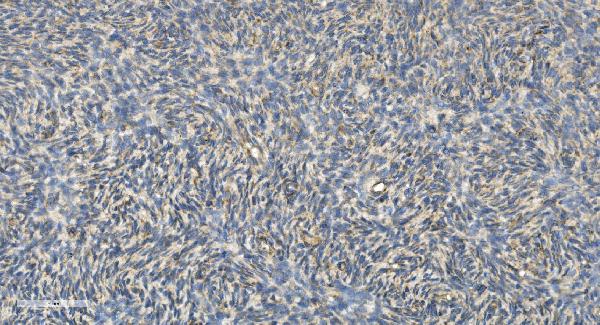
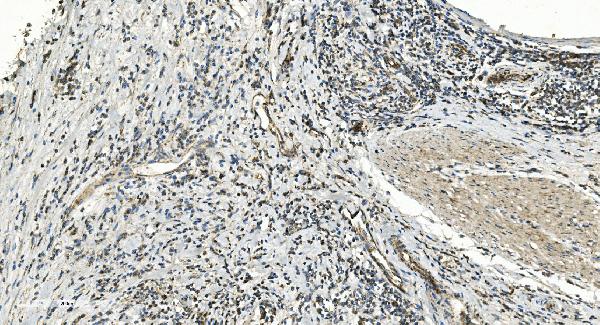
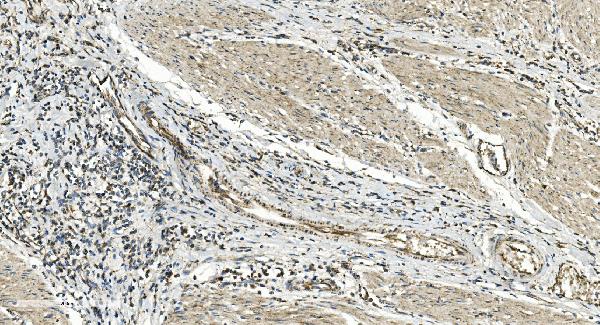
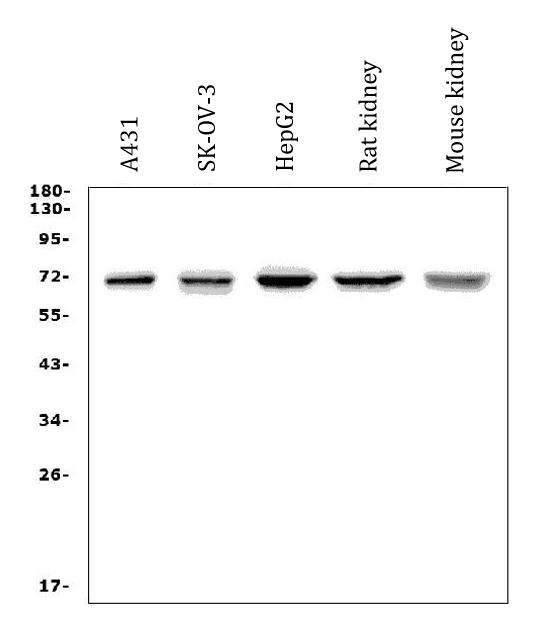


| Artikelnummer | Größe | Datenblatt | Manual | SDB | Lieferzeit | Menge | Preis |
|---|---|---|---|---|---|---|---|
| ARG43134.50 | 50 µg | - | - |
6 - 14 Werktage* |
551,00 €
|
Bei Fragen nutzen Sie gerne unser Kontaktformular.
Bestellen Sie auch per E-Mail: info@biomol.com
Größere Menge gewünscht? Bulk-Anfrage
Bestellen Sie auch per E-Mail: info@biomol.com
Größere Menge gewünscht? Bulk-Anfrage
Protein function: GTPase-activating protein that plays a key role in the cellular response to... mehr
Produktinformationen "Anti-FLCN"
Protein function: GTPase-activating protein that plays a key role in the cellular response to amino acid availability through regulation of the mTORC1 signaling cascade controlling the MiT/TFE factors TFEB and TFE3 (PubMed:17028174, PubMed:18663353, PubMed:21209915, PubMed:24081491, PubMed:24095279, PubMed:31704029, PubMed:31672913). Activates mTORC1 by acting as a GTPase-activating protein: specifically stimulates GTP hydrolysis by RRAGC/RagC or RRAGD/RagD, promoting the conversion to the GDP-bound state of RRAGC/RagC or RRAGD/RagD, and thereby activating the kinase activity of mTORC1 (PubMed:24095279, PubMed:31704029, PubMed:31672913). The GTPase-activating activity is inhibited during starvation and activated in presence of nutrients (PubMed:31672913). Acts as a key component for mTORC1-dependent control of the MiT/TFE factors TFEB and TFE3, while it is not involved in mTORC1-dependent phosphorylation of canonical RPS6KB1/S6K1 and EIF4EBP1/4E-BP1 (PubMed:21209915, PubMed:24081491, PubMed:31672913). In low-amino acid conditions, the lysosomal folliculin complex (LFC) is formed on the membrane of lysosomes, which inhibits the GTPase-activating activity of FLCN, inactivates mTORC1 and maximizes nuclear translocation of TFEB and TFE3 (PubMed:31672913). Upon amino acid restimulation, RRAGA/RagA (or RRAGB/RagB) nucleotide exchange promotes disassembly of the LFC complex and liberates the GTPase-activating activity of FLCN, leading to activation of mTORC1 and subsequent cytoplasmic retention of TFEB and TFE3 (PubMed:31672913). Indirectly acts as a positive regulator of Wnt signaling by promoting mTOR-dependent cytoplasmic retention of MiT/TFE factor TFE3 (PubMed:31272105). Required for the exit of hematopoietic stem cell from pluripotency by promoting mTOR-dependent cytoplasmic retention of TFE3, thereby increasing Wnt signaling (PubMed:30733432). Acts as an inhibitor of browning of adipose tissue by regulating mTOR-dependent cytoplasmic retention of TFE3. In response to flow stress, regulates STK11/LKB1 accumulation and mTORC1 activation through primary cilia: may act by recruiting STK11/LKB1 to primary cilia for activation of AMPK resided at basal bodies, causing mTORC1 down-regulation (PubMed:27072130). Together with FNIP1 and/or FNIP2, regulates autophagy: following phosphorylation by ULK1, interacts with GABARAP and promotes autophagy (PubMed:25126726). Required for starvation-induced perinuclear clustering of lysosomes by promoting association of RILP with its effector RAB34 (PubMed:27113757). [The UniProt Consortium]
| Schlagworte: | Anti-Folliculin, Anti-Folliculin, Anti-Birt-Hogg-Dube syndrome protein, Anti-Birt-Hogg-Dube syndrome protein, Anti-BHD skin lesion fibrofolliculoma protein, Anti-BHD skin lesion fibrofolliculoma protein |
| Hersteller: | Arigo Biolaboratories |
| Hersteller-Nr: | ARG43134 |
Eigenschaften
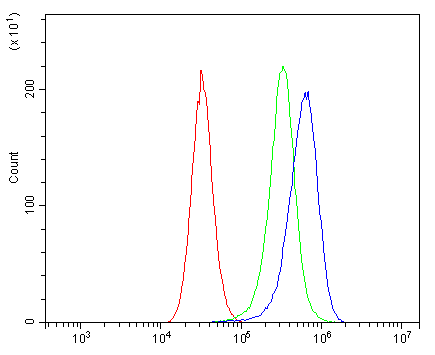
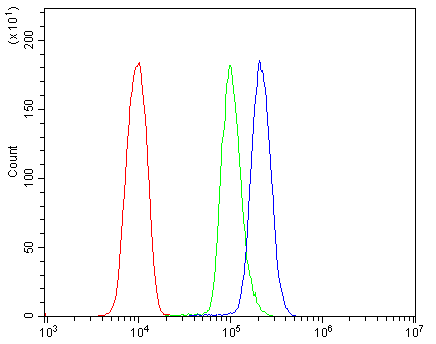
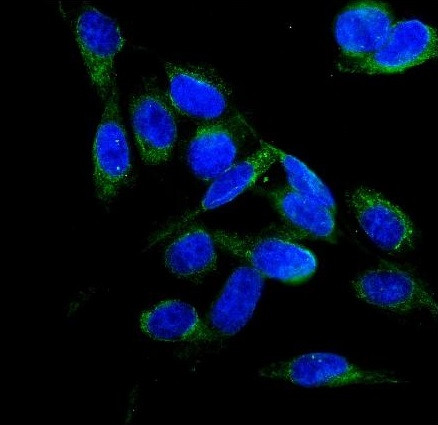
| Anwendung: | FC, ICC, IF, IHC (paraffin), WB |
| Antikörper-Typ: | Polyclonal |
| Konjugat: | No |
| Wirt: | Rabbit |
| Spezies-Reaktivität: | human, mouse, rat |
| Immunogen: | Recombinant protein corresponding to C8-K551 of Human FLCN |
| MW: | 64 kD |
| Format: | Antigen Affinity Purified |
Datenbank Information
| KEGG ID : | K09594 | Passende Produkte |
| UniProt ID : | Q8NFG4 | Passende Produkte |
| Gene ID : | GeneID 201163 | Passende Produkte |
Handhabung & Sicherheit
| Lagerung: | -20°C |
| Versand: | +4°C (International: °C) |
Achtung
Nur für Forschungszwecke und Laboruntersuchungen: Nicht für die Anwendung im oder am Menschen!
Nur für Forschungszwecke und Laboruntersuchungen: Nicht für die Anwendung im oder am Menschen!
Hier folgen Informationen zur Produktreferenz.
mehr
Hier kriegen Sie ein Zertifikat
Loggen Sie sich ein oder registrieren Sie sich, um Analysenzertifikate anzufordern.
Bewertungen lesen, schreiben und diskutieren... mehr
Kundenbewertungen für "Anti-FLCN"
Bewertung schreiben
Loggen Sie sich ein oder registrieren Sie sich, um eine Produktbewertung abzugeben.
Zuletzt angesehen