
Cookie-Einstellungen
Diese Website benutzt Cookies, die für den technischen Betrieb der Website erforderlich sind und stets gesetzt werden. Andere Cookies, die den Komfort bei Benutzung dieser Website erhöhen, der Direktwerbung dienen oder die Interaktion mit anderen Websites und sozialen Netzwerken vereinfachen sollen, werden nur mit Ihrer Zustimmung gesetzt.
Konfiguration
Technisch erforderlich
Diese Cookies sind für die Grundfunktionen des Shops notwendig.
"Alle Cookies ablehnen" Cookie
"Alle Cookies annehmen" Cookie
Ausgewählter Shop
CSRF-Token
Cookie-Einstellungen
FACT-Finder Tracking
Individuelle Preise
Kundenspezifisches Caching
Session
Währungswechsel
Komfortfunktionen
Diese Cookies werden genutzt um das Einkaufserlebnis noch ansprechender zu gestalten, beispielsweise für die Wiedererkennung des Besuchers.
Facebook-Seite in der rechten Blog - Sidebar anzeigen
Merkzettel
Statistik & Tracking
Endgeräteerkennung
Kauf- und Surfverhalten mit Google Tag Manager
Partnerprogramm



| Artikelnummer | Größe | Datenblatt | Manual | SDB | Lieferzeit | Menge | Preis |
|---|---|---|---|---|---|---|---|
| REV-31-1355-00-R100 | 100 µl | - | - |
3 - 9 Werktage* |
541,00 €
|
Bei Fragen nutzen Sie gerne unser Kontaktformular.
Bestellen Sie auch per E-Mail: info@biomol.com
Größere Menge gewünscht? Bulk-Anfrage
Bestellen Sie auch per E-Mail: info@biomol.com
Größere Menge gewünscht? Bulk-Anfrage
Asprosin is a new fasting-induced protein hormone that targets the liver to increase plasma... mehr
Produktinformationen "Anti-Asprosin, Rabbit Monoclonal (RM463)"
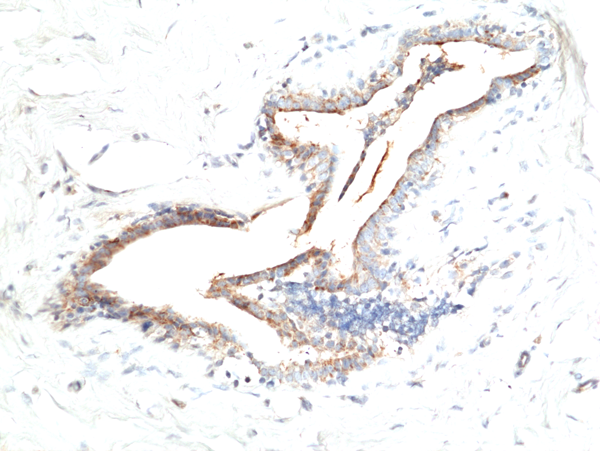
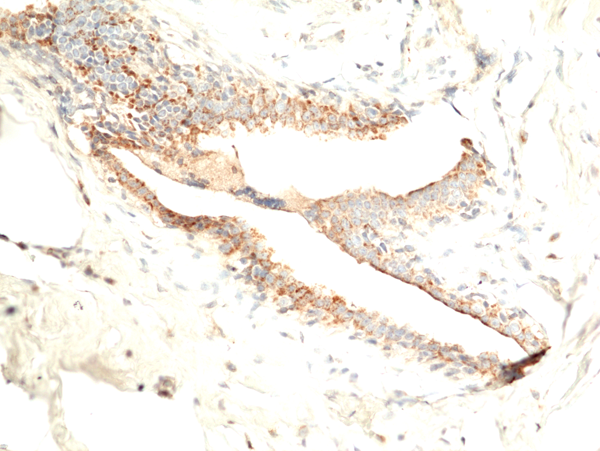
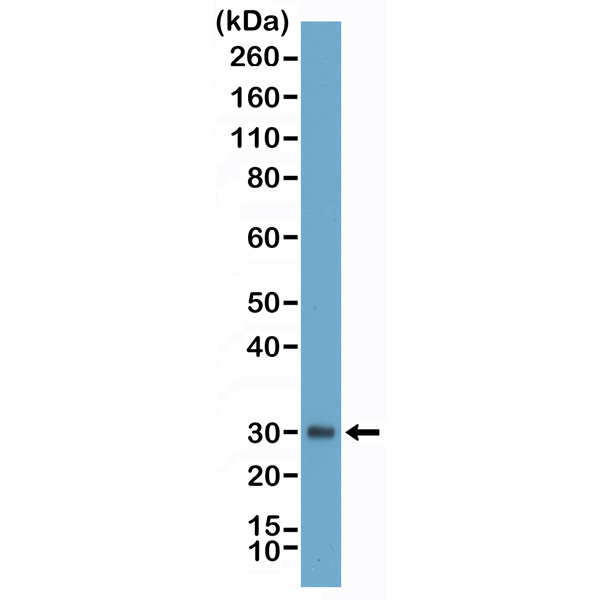
Asprosin is a new fasting-induced protein hormone that targets the liver to increase plasma glucose levels. Asprosin is the C-terminal cleavage product of the protein pro-Fibrillin-1. Asprosin is secreted from white adipose tissue and increases hepatic glucose production by using cAMP as a second messenger, leading to activation of protein Kinase A. Reduction of Asprosin levels protects against metabolic syndrome-associated hyperinsulinism. Asprosin may act as a circulating hunger signal. Indeed, peripherally injected recombinant asprosin can cross the blood-brain barrier and intracerebroventricular (i.c.v.) injection of recombinant asprosin stimulated appetite in wild-type mice, indicating a central mechanism of action. Loss of Asprosin in mice and human leads to decreased fat mass and body weight, and hypophagia. Mice are also completely protected from the development of diet-induced obesity. Asprosin works by stimulating the orexigenic AgRP+ (Agouti related neuropeptide) neurons via a cAMP-dependent pathway and by inhibiting the anorexigenic neurons POMC+ (pro-opiomelanocortin) neurons in a GABA-dependent manner. Mutation in Asprosin in human leads to the pattern of metabolic dysregulation, including partial lipodystrophy, accompanied by reduced plasma insulin. Due to its key role in food regulation, Asprosin function could serve as a potentially unique therapeutic target against obesity, diabetes or metabolic diseases. Protein function: [Fibrillin-1]: Structural component of the 10-12 nm diameter microfibrils of the extracellular matrix, which conveys both structural and regulatory properties to load-bearing connective tissues (PubMed:1860873, PubMed:15062093). Fibrillin-1-containing microfibrils provide long-term force bearing structural support. In tissues such as the lung, blood vessels and skin, microfibrils form the periphery of the elastic fiber, acting as a scaffold for the deposition of elastin. In addition, microfibrils can occur as elastin-independent networks in tissues such as the ciliary zonule, tendon, cornea and glomerulus where they provide tensile strength and have anchoring roles. Fibrillin-1 also plays a key role in tissue homeostasis through specific interactions with growth factors, such as the bone morphogenetic proteins (BMPs), growth and differentiation factors (GDFs) and latent transforming growth factor-beta-binding proteins (LTBPs), cell-surface integrins and other extracellular matrix protein and proteoglycan components (PubMed:27026396). Regulates osteoblast maturation by controlling TGF-beta bioavailability and calibrating TGF-beta and BMP levels, respectively. Negatively regulates osteoclastogenesis by binding and sequestering an osteoclast differentiation and activation factor TNFSF11. This leads to disruption of TNFSF11-induced Ca(2+) signaling and impairment of TNFSF11-mediated nuclear translocation and activation of transcription factor NFATC1 which regulates genes important for osteoclast differentiation and function (PubMed:24039232). Mediates cell adhesion via its binding to cell surface receptors integrins ITGAV:ITGB3 and ITGA5:ITGB1 (PubMed:12807887, PubMed:17158881). Binds heparin and this interaction has an important role in the assembly of microfibrils (PubMed:11461921). [The UniProt Consortium]
| Schlagworte: | Anti-FBN |
| Hersteller: | RevMAb Biosciences |
| Hersteller-Nr: | 31-1355-00 |
Eigenschaften
| Anwendung: | IHC, WB |
| Antikörper-Typ: | Monoclonal |
| Klon: | RM463 |
| Konjugat: | No |
| Wirt: | Rabbit |
| Spezies-Reaktivität: | human |
| Immunogen: | Recombinant full-length human Asprosin protein. |
| Format: | Purified |
Datenbank Information
| KEGG ID : | K06825 | Passende Produkte |
| UniProt ID : | P35555 | Passende Produkte |
| Gene ID : | GeneID 2200 | Passende Produkte |
Handhabung & Sicherheit
| Lagerung: | -20°C |
| Versand: | +4°C (International: +4°C) |
Achtung
Nur für Forschungszwecke und Laboruntersuchungen: Nicht für die Anwendung im oder am Menschen!
Nur für Forschungszwecke und Laboruntersuchungen: Nicht für die Anwendung im oder am Menschen!
Hier folgen Informationen zur Produktreferenz.
mehr
Hier kriegen Sie ein Zertifikat
Loggen Sie sich ein oder registrieren Sie sich, um Analysenzertifikate anzufordern.
Bewertungen lesen, schreiben und diskutieren... mehr
Kundenbewertungen für "Anti-Asprosin, Rabbit Monoclonal (RM463)"
Bewertung schreiben
Loggen Sie sich ein oder registrieren Sie sich, um eine Produktbewertung abzugeben.
Zuletzt angesehen