
Cookie-Einstellungen
Diese Website benutzt Cookies, die für den technischen Betrieb der Website erforderlich sind und stets gesetzt werden. Andere Cookies, die den Komfort bei Benutzung dieser Website erhöhen, der Direktwerbung dienen oder die Interaktion mit anderen Websites und sozialen Netzwerken vereinfachen sollen, werden nur mit Ihrer Zustimmung gesetzt.
Konfiguration
Technisch erforderlich
Diese Cookies sind für die Grundfunktionen des Shops notwendig.
"Alle Cookies ablehnen" Cookie
"Alle Cookies annehmen" Cookie
Ausgewählter Shop
CSRF-Token
Cookie-Einstellungen
FACT-Finder Tracking
Individuelle Preise
Kundenspezifisches Caching
Session
Währungswechsel
Komfortfunktionen
Diese Cookies werden genutzt um das Einkaufserlebnis noch ansprechender zu gestalten, beispielsweise für die Wiedererkennung des Besuchers.
Facebook-Seite in der rechten Blog - Sidebar anzeigen
Merkzettel
Statistik & Tracking
Endgeräteerkennung
Kauf- und Surfverhalten mit Google Tag Manager
Partnerprogramm

Bei Fragen nutzen Sie gerne unser Kontaktformular.
Bestellen Sie auch per E-Mail: info@biomol.com
Größere Menge gewünscht? Bulk-Anfrage
Bestellen Sie auch per E-Mail: info@biomol.com
Größere Menge gewünscht? Bulk-Anfrage
Organism: BK polyomavirus (BKPyV) (Human polyomavirus 1). Source: E.coli. Expression Region:... mehr
Produktinformationen "Minor capsid protein VP2, BK polyomavirus, recombinant"
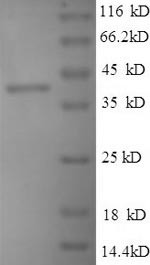
Organism: BK polyomavirus (BKPyV) (Human polyomavirus 1). Source: E.coli. Expression Region: 2-351aa. Protein Length: Full Length of Mature Protein. Tag Info: N-terminal 6xHis-SUMO-tagged. Target Protein Sequence: GAALALLGDL VASVSEAAAA TGFSVAEIAA GEAAAAIEVQ IASLATVEGI TSTSEAIAAI GLTPQTYAVI AGAPGAIAGF AALIQTVSGI SSLAQVGYRF FSDWDHKVST VGLYQQSGMA LELFNPDEYY DILFPGVNTF VNNIQYLDPR HWGPSLFATI SQALWHVIRD DIPSITSQEL QRRTERFFRD SLARFLEETT WTIVNAPINF YNYIQQYYSD LSPIRPSMVR QVAEREGTRV HFGHTYSIDD ADSIEEVTQR MDLRNQQSVH SGEFIEKTIA PGGANQRTAP QWMLPLLLGL YGTVTPALEA YEDGPNQKKR RVSRGSSQKA KGTRASAKTT NKRRSRSSRS. Purity: Greater than 90% as determined by SDS-PAGE. Endotoxin: Not test. Biological Activity: n/a. Form: Liquid or Lyophilized powder. Buffer: If the delivery form is liquid, the default storage buffer is Tris/PBS-based buffer, 5%-50% glycerol. If the delivery form is lyophilized powder, the buffer before lyophilization is Tris/PBS-based buffer, 6% Trehalose, pH 8.0. Reconstitution: We recommend that this vial be briefly centrifuged prior to opening to bring the contents to the bottom. Please reconstitute protein in deionized sterile water to a concentration of 0.1-1.0 mg/mL.We recommend to add 5-50% of glycerol (final concentration) and aliquot for long-term storage at -20 °C/-80 °C. Our default final concentration of glycerol is 50%. Customers could use it as reference. Storage: The shelf life is related to many factors, storage state, buffer ingredients, storage temperature and the stability of the protein itself. Generally, the shelf life of liquid form is 6 months at -20 °C/-80 °C. The shelf life of lyophilized form is 12 months at -20 °C/-80 °C. Notes: Repeated freezing and thawing is not recommended. Store working aliquots at 4 °C for up to one week. Relevance: Isoform VP2 is a structural protein that resides within the core of the capsid surrounded by 72 VP1 pentamers. Participates in host cell receptor binding together with VP1. Following virus endocytosis and trafficking to the endoplasmic reticulum, VP2 and VP3 form oligomers and integrate into the endoplasmic reticulum mbrane. Heterooligomer VP2-VP3 may create a viroporin for transporting the viral genome across the endoplasmic reticulum mbrane to the cytoplasm. Nuclear entry of the viral DNA involves the selective exposure and importin recognition of VP2 or Vp3 nuclear localization signal (shared C-terminus). Plays a role in virion assbly within the nucleus in particular through a DNA-binding domain located in the C-terminal region. A N-terminal myristoylation suggests a scaffold function for virion assbly .Isoform VP3: structural protein that resides within the core of the capsid surrounded by 72 VP1 pentamers. Following virus endocytosis and trafficking to the endoplasmic reticulum, VP2 and VP3 form oligomers and integrate into the endoplasmic reticulum mbrane. Heterooligomer VP2-VP3 may create a viroporin for transporting the viral genome across the endoplasmic reticulum mbrane to the cytoplasm. Nuclear entry of the viral DNA involves the selective exposure and importin recognition of VP2 or Vp3 nuclear localization signal (shared C-terminus). Isoform VP3 plays a role in virion assbly within the nucleus. May participate in host cell lysis when associated with VP4 .Isoform VP4 is a viroporin inducing perforation of cellular mbranes to trigger virus progeny release. Forms pores of 3 nm inner diameter. VP4 is expressed about 24 hours after the late structural proteins and is not incorporated into the mature virion . Reference: The Polyomaviridae Contributions of virus structure to our understanding of virus receptors and infectious entry.Neu U., Stehle T., Atwood W.J.Virology 384:389-399(2009). Function: Isoform VP2 is a structural protein that resides within the core of the capsid surrounded by 72 VP1 pentamers. Participates in host cell receptor binding together with VP1. Following virus endocytosis and trafficking to the endoplasmic reticulum, VP2 and VP3 form oligomers and integrate into the endoplasmic reticulum membrane. Heterooligomer VP2-VP3 may create a viroporin for transporting the viral genome across the endoplasmic reticulum membrane to the cytoplasm. Nuclear entry of the viral DNA involves the selective exposure and importin recognition of VP2 or Vp3 nuclear localization signal (shared C-terminus). Plays a role in virion assembly within the nucleus in particular through a DNA-binding domain located in the C-terminal region. A N-terminal myristoylation suggests a scaffold function for virion assembly (By similarity).
| Schlagworte: | Minor capsid protein VP2, Minor structural protein VP2, Recombinant BK polyomavirus Minor capsid protein VP2 |
| Hersteller: | Cusabio |
| Hersteller-Nr: | EP360956BGY |
Eigenschaften
| Anwendung: | Activity not tested |
| Konjugat: | No |
| Wirt: | E.coli |
| Spezies-Reaktivität: | BK polyomavirus (BKPyV) |
| MW: | 54.2 kD |
| Reinheit: | >90% (SDS-PAGE) |
Datenbank Information
| UniProt ID : | P03094 | Passende Produkte |
| Gene ID : | GeneID 29031010 | Passende Produkte |
Handhabung & Sicherheit
| Lagerung: | -20°C |
| Versand: | +4°C (International: +4°C) |
Achtung
Nur für Forschungszwecke und Laboruntersuchungen: Nicht für die Anwendung im oder am Menschen!
Nur für Forschungszwecke und Laboruntersuchungen: Nicht für die Anwendung im oder am Menschen!
Hier kriegen Sie ein Zertifikat
Loggen Sie sich ein oder registrieren Sie sich, um Analysenzertifikate anzufordern.
Bewertungen lesen, schreiben und diskutieren... mehr
Kundenbewertungen für "Minor capsid protein VP2, BK polyomavirus, recombinant"
Bewertung schreiben
Loggen Sie sich ein oder registrieren Sie sich, um eine Produktbewertung abzugeben.
Zuletzt angesehen