
Cookie-Einstellungen
Diese Website benutzt Cookies, die für den technischen Betrieb der Website erforderlich sind und stets gesetzt werden. Andere Cookies, die den Komfort bei Benutzung dieser Website erhöhen, der Direktwerbung dienen oder die Interaktion mit anderen Websites und sozialen Netzwerken vereinfachen sollen, werden nur mit Ihrer Zustimmung gesetzt.
Konfiguration
Technisch erforderlich
Diese Cookies sind für die Grundfunktionen des Shops notwendig.
"Alle Cookies ablehnen" Cookie
"Alle Cookies annehmen" Cookie
Ausgewählter Shop
CSRF-Token
Cookie-Einstellungen
FACT-Finder Tracking
Individuelle Preise
Kundenspezifisches Caching
Session
Währungswechsel
Komfortfunktionen
Diese Cookies werden genutzt um das Einkaufserlebnis noch ansprechender zu gestalten, beispielsweise für die Wiedererkennung des Besuchers.
Facebook-Seite in der rechten Blog - Sidebar anzeigen
Merkzettel
Statistik & Tracking
Endgeräteerkennung
Kauf- und Surfverhalten mit Google Tag Manager
Partnerprogramm

Bei Fragen nutzen Sie gerne unser Kontaktformular.
Bestellen Sie auch per E-Mail: info@biomol.com
Größere Menge gewünscht? Bulk-Anfrage
Bestellen Sie auch per E-Mail: info@biomol.com
Größere Menge gewünscht? Bulk-Anfrage
Organism: Crimean-Congo hemorrhagic fever virus (strain Nigeria/IbAr10200/1970) (CCHFV). Source:... mehr
Produktinformationen "Envelope glycoprotein (GP), partial-VLPs, Crimean-Congo hemorrhagic fever virus, recombinant"
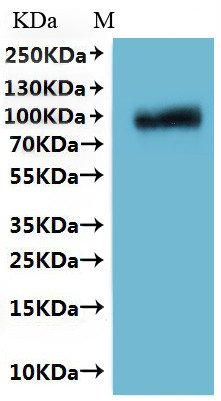
Organism: Crimean-Congo hemorrhagic fever virus (strain Nigeria/IbAr10200/1970) (CCHFV). Source: Mammalian cell. Expression Region: 995-1684aa. Protein Length: Partial. Tag Info: C-terminal 10xHis-tagged (This tag can be tested only under denaturing conditions). Target Protein Sequence: AVEMENLPAG TWEREEDLTN FCHQECQVTE TECLCPYEAL VLRKPLFLDS TAKGMKNLLN STSLETSLSI EAPWGAINVQ STYKPTVSTA NIALSWSSVE HRGNKILVSG RSESIMKLEE RTGISWDLGV EDASESKLLT VSVMDLSQMY SPVFEYLSGD RQVGEWPKAT CTGDCPERCG CTSSTCLHKE WPHSRNWRCN PTWCWGVGTG CTCCGLDVKD LFTDYMFVKW KVEYIKTEAI VCVELTSQER QCSLIEAGTR FNLGPVTITL SEPRNIQQKL PPEIITLHPR IEEGFFDLMH VQKVLSASTV CKLQSCTHGV PGDLQVYHIG NLLKGDKVNG HLIHKIEPHF NTSWMSWDGC DLDYYCNMGD WPSCTYTGVT QHNHASFVNL LNIETDYTKN FHFHSKRVTA HGDTPQLDLK ARPTYGAGEI TVLVEVADME LHTKKIEISG LKFASLACTG CYACSSGISC KVRIHVDEPD ELTVHVKSDD PDVVAASSSL MARKLEFGTD STFKAFSAMP KTSLCFYIVE REHCKSCSEE DTKKCVNTKL EQPQSILIEH KGTIIGKQNS TCTAKASCWL ESVKSFFYGL KNMLSGIFGN VFMGIFLFLA PFILLILFFM FGWRILFCFK CCRRTRGLFK YRHLKDDEET GYRRIIEKLN NKKGKNKLLD GERLADRRIA ELFSTKTHIG. Purity: The purity information is not available for VLPs proteins. Endotoxin: Not test. Biological Activity: n/a. Form: Lyophilized powder. Buffer: Lyophilized from a 0.2 µm filtered PBS, 6% Trehalose, pH 7.4. Reconstitution: We recommend that this vial be briefly centrifuged prior to opening to bring the contents to the bottom. Please reconstitute protein indeionized sterile water to a concentration of 0.1-1.0 mg/mL.Aliquot for long-term storage at -80 °C. Solubilize for 60 minutes at room temperature with occasional gentle mixing. Avoid vigorous shaking or vortexing. Storage: The shelf life is related to many factors, storage state, buffer ingredients, storage temperature and the stability of the protein itself. Generally, the shelf life of liquid form is 6 months at -20 °C/-80 °C. The shelf life of lyophilized form is 12 months at -20 °C/-80 °C. Notes: The VLPs are expressed from human 293 cells (HEK293).Mix the sample gently by repeatedly pipetting it up and down. Do not vortex.Repeated freezing and thawing is not recommended.Store the protein at -20 °C/-80 °C upon receiving it, and ensure to avoid repeated freezing and thawing, otherwise, it will affect the protein activity. The immunization strategy should be optimized (antigen dose, regimen and adjuvant). Relevance: Glycoprotein N]: Glycoprotein N and glycoprotein C interact with each other and are present at the surface of the virion (Probable). Glycoprotein N probably locks the Gn-Gc complex in a prefusion state. Glycoprotein N and glycoprotein C are able to attach the virion to host cell receptors (Probable). This attachment induces virion internalization predominantly through clathrin-dependent endocytosis. , Glycoprotein C]: Glycoprotein C and glycoprotein N interact with each other and are present at the surface of the virion. The spikes at the surface of the virion are formed by an N-terminal extension of glycoprotein C. Glycoprotein N and glycoprotein C are able to attach the virion to host cell receptors (Probable). This attachment induces virion internalization predominantly through clathrin-dependent endocytosis. Class II fusion protein that promotes fusion of viral membrane with host endosomal membrane after endocytosis of the virion. Exposure of the glycoprotein spikes to potassium is necessary for the conformational change leading to fusion. Reference: n/a. Function: nan
| Schlagworte: | GP, Recombinant Crimean-Congo hemorrhagic fever virus Envelope glycoprotein (GP), partial-VLPs |
| Hersteller: | Cusabio |
| Hersteller-Nr: | MP810349CSC |
Eigenschaften
| Anwendung: | Activity not tested |
| Konjugat: | No |
| Wirt: | Mammalian cells |
| Spezies-Reaktivität: | Crimean-Congo hemorrhagic fever virus |
| MW: | 79.3 kD |
| Format: | Lyophilized |
Datenbank Information
| UniProt ID : | Q8JSZ3 | Passende Produkte |
Handhabung & Sicherheit
| Lagerung: | -20°C |
| Versand: | +4°C (International: +4°C) |
Achtung
Nur für Forschungszwecke und Laboruntersuchungen: Nicht für die Anwendung im oder am Menschen!
Nur für Forschungszwecke und Laboruntersuchungen: Nicht für die Anwendung im oder am Menschen!
Hier kriegen Sie ein Zertifikat
Loggen Sie sich ein oder registrieren Sie sich, um Analysenzertifikate anzufordern.
Bewertungen lesen, schreiben und diskutieren... mehr
Kundenbewertungen für "Envelope glycoprotein (GP), partial-VLPs, Crimean-Congo hemorrhagic fever virus, recombinant"
Bewertung schreiben
Loggen Sie sich ein oder registrieren Sie sich, um eine Produktbewertung abzugeben.
Zuletzt angesehen