
Cookie-Einstellungen
Diese Website benutzt Cookies, die für den technischen Betrieb der Website erforderlich sind und stets gesetzt werden. Andere Cookies, die den Komfort bei Benutzung dieser Website erhöhen, der Direktwerbung dienen oder die Interaktion mit anderen Websites und sozialen Netzwerken vereinfachen sollen, werden nur mit Ihrer Zustimmung gesetzt.
Konfiguration
Technisch erforderlich
Diese Cookies sind für die Grundfunktionen des Shops notwendig.
"Alle Cookies ablehnen" Cookie
"Alle Cookies annehmen" Cookie
Ausgewählter Shop
CSRF-Token
Cookie-Einstellungen
FACT-Finder Tracking
Individuelle Preise
Kundenspezifisches Caching
Session
Währungswechsel
Komfortfunktionen
Diese Cookies werden genutzt um das Einkaufserlebnis noch ansprechender zu gestalten, beispielsweise für die Wiedererkennung des Besuchers.
Facebook-Seite in der rechten Blog - Sidebar anzeigen
Merkzettel
Statistik & Tracking
Endgeräteerkennung
Kauf- und Surfverhalten mit Google Tag Manager
Partnerprogramm

NEU
Bei Fragen nutzen Sie gerne unser Kontaktformular.
Bestellen Sie auch per E-Mail: info@biomol.com
Größere Menge gewünscht? Bulk-Anfrage
Bestellen Sie auch per E-Mail: info@biomol.com
Größere Menge gewünscht? Bulk-Anfrage
Carcinoembryonic antigen related cell adhesion molecule 1 (CEACAM1), also termed CD66a, is a... mehr
Produktinformationen "Rat CEACAM1(Carcinoembryonic Antigen Related Cell Adhesion Molecule 1) ELISA Kit"
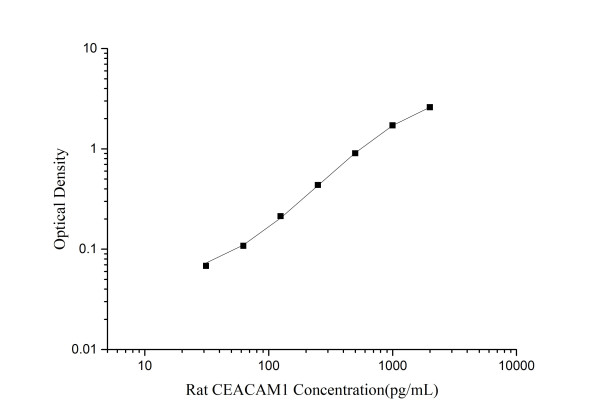
Carcinoembryonic antigen related cell adhesion molecule 1 (CEACAM1), also termed CD66a, is a glycoprotein belonging to the immunoglobulin superfamily and CEA gene family in rats. Initially identified as hepatic biliary glycoprotein, it is widely expressed in leukocytes, epithelia and endothelia, as well as multiple malignant tissues including gastric, colorectal, pancreatic, non-small cell lung cancers and melanoma.Structurally, rat CEACAM1 consists of an N-terminal variable domain, six C2-like Ig domains and a GPI linker, mediating cell adhesion via homophilic binding and heterophilic interactions with CEACAM5. It participates in diverse biological processes, including tissue structural remodeling, angiogenesis, apoptosis, and regulation of innate and adaptive immunity.As a critical tumor biomarker for gastrointestinal and respiratory malignancies, CEACAM1 exerts dual regulatory effects on tumor initiation, progression and metastasis, and serves as a vital tumor cell growth inhibitor with important clinical research value in rat tumor models. Protein function: Cell adhesion protein that mediates homophilic cell adhesion in a calcium-independent manner (PubMed:2373740, PubMed:8454589). Plays a role as coinhibitory receptor in immune response, insulin action and also functions as an activator during angiogenesis (PubMed:11850617). Its coinhibitory receptor function is phosphorylation- and PTPN6 -dependent, which in turn, suppress signal transduction of associated receptors by dephosphorylation of their downstream effectors (By similarity). Plays a role in immune response, of T-cells, natural killer (NK) and neutrophils (By similarity). Upon TCR/CD3 complex stimulation, inhibits TCR-mediated cytotoxicity by blocking granule exocytosis by mediating homophilic binding to adjacent cells, allowing interaction with and phosphorylation by LCK and interaction with the TCR/CD3 complex which recruits PTPN6 resulting in dephosphorylation of CD247 and ZAP70 (By similarity). Also inhibits T-cell proliferation and cytokine production through inhibition of JNK cascade and plays a crucial role in regulating autoimmunity and anti-tumor immunity by inhibiting T-cell through its interaction with HAVCR2 (By similarity). Upon natural killer (NK) cells activation, inhibit KLRK1-mediated cytolysis of CEACAM1-bearing tumor cells by trans-homophilic interactions with CEACAM1 on the target cell and lead to cis-interaction between CEACAM1 and KLRK1, allowing PTPN6 recruitment and then VAV1 dephosphorylation (By similarity). Upon neutrophils activation negatively regulates IL1B production by recruiting PTPN6 to a SYK-TLR4-CEACAM1 complex, that dephosphorylates SYK, reducing the production of reactive oxygen species (ROS) and lysosome disruption, which in turn, reduces the activity of the inflammasome (By similarity). Down-regulates neutrophil production by acting as a coinhibitory receptor for CSF3R by downregulating the CSF3R-STAT3 pathway through recruitment of PTPN6 that dephosphorylates CSF3R (By similarity). Also regulates insulin action by promoting INS clearance and regulating lipogenesis in liver through regulating insulin signaling (PubMed:11850617). Upon INS stimulation, undergoes phosphorylation by INSR leading to INS clearance by increasing receptor-mediated insulin endocytosis (PubMed:7592607, PubMed:9712832). This inernalization promotes interaction with FASN leading to receptor-mediated insulin degradation and to reduction of FASN activity leading to negative regulation of fatty acid synthesis (PubMed:16054098, PubMed:7592607). INSR-mediated phosphorylation also provokes a down-regulation of cell proliferation through SHC1 interaction resulting in decrease coupling of SHC1 to the MAPK3/ERK1-MAPK1/ERK2 and phosphatidylinositol 3-kinase pathways (PubMed:11694516). Functions as activator in angiogenesis by promoting blood vessel remodeling through endothelial cell differentiation and migration and in arteriogenesis by increasing the number of collateral arteries and collateral vessel calibers after ischemia (By similarity). Also regulates vascular permeability through the VEGFR2 signaling pathway resulting in control of nitric oxide production (By similarity). Down-regulates cell growth in response to EGF through its interaction with SHC1 that mediates interaction with EGFR resulting in decrease coupling of SHC1 to the MAPK3/ERK1-MAPK1/ERK2 pathway (PubMed:15467833). Negatively regulates platelet aggregation by decreasing platelet adhesion on type I collagen through the GPVI-FcRgamma complex (By similarity). Inhibits cell migration and cell scattering through interaction with FLNA, interferes with the interaction of FLNA with RALA (By similarity). Mediates bile acid transport activity in a phosphorylation dependent manner (PubMed:7518458). Negatively regulates osteoclastogenesis (By similarity) Cell adhesion proteins that mediates homophilic cell adhesion in a calcium-independent manner (PubMed:7774714, PubMed:8536699). Promotes populations of T-cells regulating IgA production and secretion associated with control of the commensal microbiota and resistance to enteropathogens (By similarity) [The UniProt Consortium]
| Schlagworte: | pp120, GP110, Ceacam1, Ecto-ATPase, Cell-CAM 105, Cell adhesion molecule CEACAM1, ATP-dependent taurocolate-carrier protein, Carcinoembryonic antigen-related cell adhesion molecule 1 |
| Hersteller: | Elabscience |
| Hersteller-Nr: | E-EL-R3082 |
Eigenschaften
| Anwendung: | ELISA |
| Spezies-Reaktivität: | rat |
Datenbank Information
| KEGG ID : | K06499 | Passende Produkte |
| UniProt ID : | P16573 | Passende Produkte |
| Gene ID : | GeneID 81613 | Passende Produkte |
Handhabung & Sicherheit
| Lagerung: | +4°C |
| Versand: | +4°C (International: +4°C) |
Achtung
Nur für Forschungszwecke und Laboruntersuchungen: Nicht für die Anwendung im oder am Menschen!
Nur für Forschungszwecke und Laboruntersuchungen: Nicht für die Anwendung im oder am Menschen!
Hier folgen Informationen zur Produktreferenz.
mehr
Hier kriegen Sie ein Zertifikat
Loggen Sie sich ein oder registrieren Sie sich, um Analysenzertifikate anzufordern.
Bewertungen lesen, schreiben und diskutieren... mehr
Kundenbewertungen für "Rat CEACAM1(Carcinoembryonic Antigen Related Cell Adhesion Molecule 1) ELISA Kit"
Bewertung schreiben
Loggen Sie sich ein oder registrieren Sie sich, um eine Produktbewertung abzugeben.
Zuletzt angesehen