
Cookie-Einstellungen
Diese Website benutzt Cookies, die für den technischen Betrieb der Website erforderlich sind und stets gesetzt werden. Andere Cookies, die den Komfort bei Benutzung dieser Website erhöhen, der Direktwerbung dienen oder die Interaktion mit anderen Websites und sozialen Netzwerken vereinfachen sollen, werden nur mit Ihrer Zustimmung gesetzt.
Konfiguration
Technisch erforderlich
Diese Cookies sind für die Grundfunktionen des Shops notwendig.
"Alle Cookies ablehnen" Cookie
"Alle Cookies annehmen" Cookie
Ausgewählter Shop
CSRF-Token
Cookie-Einstellungen
FACT-Finder Tracking
Individuelle Preise
Kundenspezifisches Caching
Session
Währungswechsel
Komfortfunktionen
Diese Cookies werden genutzt um das Einkaufserlebnis noch ansprechender zu gestalten, beispielsweise für die Wiedererkennung des Besuchers.
Facebook-Seite in der rechten Blog - Sidebar anzeigen
Merkzettel
Statistik & Tracking
Endgeräteerkennung
Kauf- und Surfverhalten mit Google Tag Manager
Partnerprogramm


| Artikelnummer | Größe | Datenblatt | Manual | SDB | Lieferzeit | Menge | Preis |
|---|---|---|---|---|---|---|---|
| ABS-ES-062.1 | 1 pair (100 µg/100 µg) | - | - |
10 - 14 Werktage* |
1.080,00 €
|
Bei Fragen nutzen Sie gerne unser Kontaktformular.
Bestellen Sie auch per E-Mail: info@biomol.com
Größere Menge gewünscht? Bulk-Anfrage
Bestellen Sie auch per E-Mail: info@biomol.com
Größere Menge gewünscht? Bulk-Anfrage
Product Description: INHBA, or Inhibin Subunit Beta A, is a gene that encodes a member of the... mehr
Produktinformationen "Anti-Human Inhibin beta A Antibody Pair"
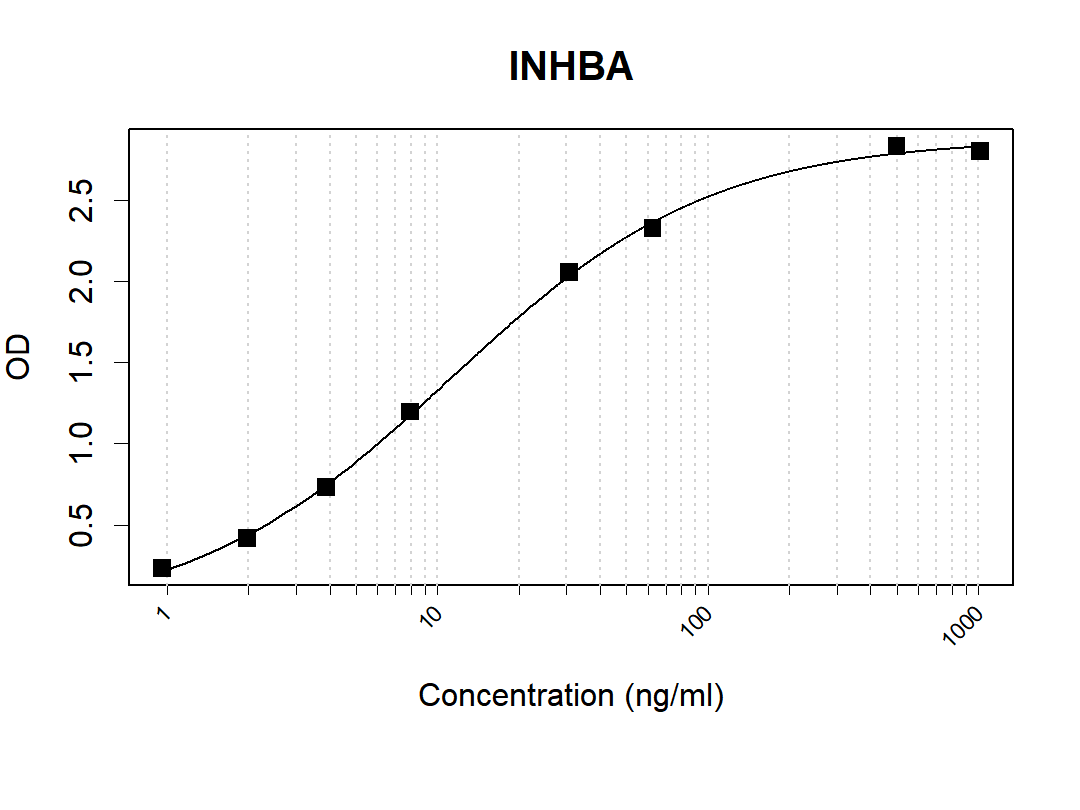
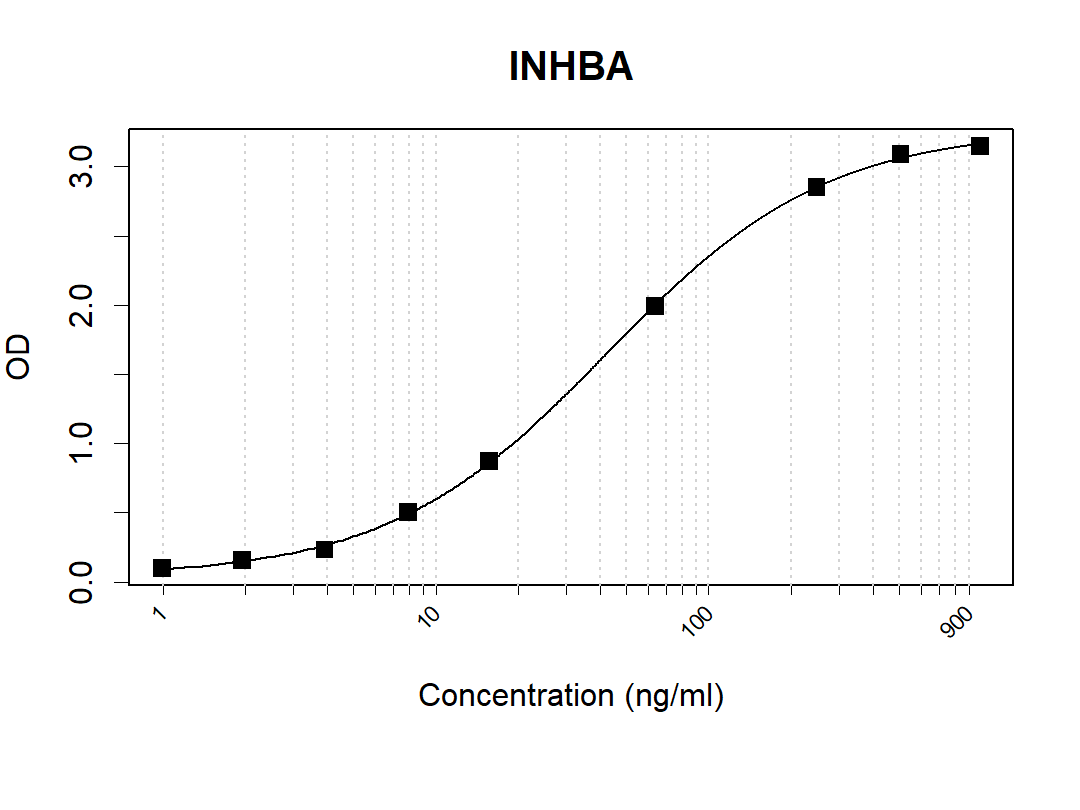
Product Description: INHBA, or Inhibin Subunit Beta A, is a gene that encodes a member of the transforming growth factor-beta (TGF-beta) superfamily of proteins. The INHBA protein plays a key role in regulating follicle-stimulating hormone secretion from the pituitary gland, and is also involved in eye, tooth, and testis development. Elevated expression of INHBA has been associated with various types of cancer, including colorectal cancer, gastric cancer, and head and neck squamous cell carcinoma. Studies have shown that INHBA promotes the proliferation, migration, and invasion of cancer cells, and its overexpression is correlated with poor prognosis and reduced overall survival in cancer patients. The high expression of INHBA in cancer is also linked to increased immune cell infiltration, particularly of macrophages, mast cells, natural killer cells, neutrophils, Th2 cells, and eosinophils. These findings suggest that INHBA plays a critical role in cancer progression and may serve as a potential biomarker and therapeutic target for various types of cancer. Protein Function: Inhibins/activins are involved in regulating a number of diverse functions such as hypothalamic and pituitary hormone secretion, gonadal hormone secretion, germ cell development and maturation, erythroid differentiation, insulin secretion, nerve cell survival, embryonic axial development or bone growth, depending on their subunit composition , Activin A is a homodimer of INHBA that plays a role in several essential biological processes including embryonic development, stem cell maintenance and differentiation, haematopoiesis, cell proliferation and tissue fibrosis (PubMed:3194407, PubMed:16440334). Signals through type I (such as ACVR1B or ACVR1C) and type II receptors (such as ACVR2A, ACVR2B or BMPR2) which, upon ligand binding, phosphorylate SMAD2 and SMAD3 intracellular signaling mediators that form a complex with SMAD4, translocate to the nucleus and modulate gene expression (PubMed:10652306, PubMed:24018044). Can also activate alternative non-canonical intracellular signaling pathways including the p38 MAPK, extracellular signal-regulated kinases 1/2 (ERK1/2) and c-Jun N-terminal kinases (JNKs) to modulate cell migration and differentiation (PubMed:16440334). Alternatively, promotes osteoblastic differentiation via ACVRL1-SMAD1/5/9 pathway (PubMed:34948289). In addition, can engage the type I receptor ACVR1 to form an ACVR1-activin A-type II receptor non-signaling complex (NSC) that renders receptors unavailable for engagement with BMPs, hence resulting in an apparent inhibition of ACVR1-mediated BMP signaling (PubMed:26333933) , Inhibin A is a dimer of alpha/INHA and beta-A/INHBA that functions as a feedback regulator in the hypothalamic-pituitary-gonadal (HPG) axis. Inhibits the secretion of FSH from the anterior pituitary gland by acting on pituitary gonadotrope cells. Antagonizes activin A by binding to the proteoglycan, betaglycan, and forming a stable complex with and, thereby, sequestering type II activin receptors while excluding type I receptor [The Uniprot Consortium]
| Schlagworte: | Anti-INHBA, Anti-Inhibin beta A chain, Anti-Activin beta-A chain, Anti-Erythroid differentiation protein, Human Inhibin beta A Antibody Pair |
| Hersteller: | Absea |
| Hersteller-Nr: | ES-062 |
Eigenschaften
| Anwendung: | ELISA |
| Antikörper-Typ: | Monoclonal |
| Klon: | KAA378_4H12/KAA378_7F6 |
| Konjugat: | No |
| Wirt: | Mouse/Mouse |
| Spezies-Reaktivität: | human |
| Reinheit: | >85% |
| Format: | Solution |
Datenbank Information
| KEGG ID : | K04667 | Passende Produkte |
| UniProt ID : | P08476 | Passende Produkte |
| Gene ID : | GeneID 3624 | Passende Produkte |
Handhabung & Sicherheit
| Lagerung: | -20°C (avoid repeat freezing and thawing cycles) |
| Versand: | -20°C (International: +4°C) |
Achtung
Nur für Forschungszwecke und Laboruntersuchungen: Nicht für die Anwendung im oder am Menschen!
Nur für Forschungszwecke und Laboruntersuchungen: Nicht für die Anwendung im oder am Menschen!
Hier kriegen Sie ein Zertifikat
Loggen Sie sich ein oder registrieren Sie sich, um Analysenzertifikate anzufordern.
Bewertungen lesen, schreiben und diskutieren... mehr
Kundenbewertungen für "Anti-Human Inhibin beta A Antibody Pair"
Bewertung schreiben
Loggen Sie sich ein oder registrieren Sie sich, um eine Produktbewertung abzugeben.
Zuletzt angesehen