
Cookie-Einstellungen
Diese Website benutzt Cookies, die für den technischen Betrieb der Website erforderlich sind und stets gesetzt werden. Andere Cookies, die den Komfort bei Benutzung dieser Website erhöhen, der Direktwerbung dienen oder die Interaktion mit anderen Websites und sozialen Netzwerken vereinfachen sollen, werden nur mit Ihrer Zustimmung gesetzt.
Konfiguration
Technisch erforderlich
Diese Cookies sind für die Grundfunktionen des Shops notwendig.
"Alle Cookies ablehnen" Cookie
"Alle Cookies annehmen" Cookie
Ausgewählter Shop
CSRF-Token
Cookie-Einstellungen
FACT-Finder Tracking
Individuelle Preise
Kundenspezifisches Caching
Session
Währungswechsel
Komfortfunktionen
Diese Cookies werden genutzt um das Einkaufserlebnis noch ansprechender zu gestalten, beispielsweise für die Wiedererkennung des Besuchers.
Facebook-Seite in der rechten Blog - Sidebar anzeigen
Merkzettel
Statistik & Tracking
Endgeräteerkennung
Kauf- und Surfverhalten mit Google Tag Manager
Partnerprogramm

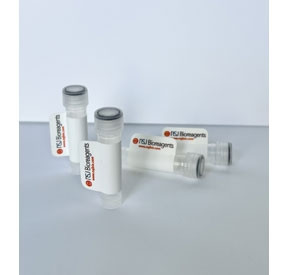
| Artikelnummer | Größe | Datenblatt | Manual | SDB | Lieferzeit | Menge | Preis |
|---|---|---|---|---|---|---|---|
| NSJ-RQ8870 | 100 µg | - | - |
3 - 10 Werktage* |
790,00 €
|
Bei Fragen nutzen Sie gerne unser Kontaktformular.
Bestellen Sie auch per E-Mail: info@biomol.com
Größere Menge gewünscht? Bulk-Anfrage
Bestellen Sie auch per E-Mail: info@biomol.com
Größere Menge gewünscht? Bulk-Anfrage
0.5mg/ml if reconstituted with 0.2ml sterile DI water. RPE antibody targets Ribulose-phosphate... mehr
Produktinformationen "Anti-RPE / Ribulose-phosphate 3-epimerase"
0.5mg/ml if reconstituted with 0.2ml sterile DI water. RPE antibody targets Ribulose-phosphate 3-epimerase, encoded by the RPE gene. Ribulose-phosphate 3-epimerase is a cytosolic enzyme that plays an essential role in the non-oxidative phase of the pentose phosphate pathway. This metabolic pathway is critical for generating ribose-5-phosphate for nucleotide synthesis and for maintaining cellular redox balance through coordinated flux with NADPH-producing reactions. RPE catalyzes the reversible epimerization of ribulose-5-phosphate to xylulose-5-phosphate, enabling flexible carbon rearrangement to meet cellular biosynthetic demands.Functionally, Ribulose-phosphate 3-epimerase supports cellular metabolism by facilitating the interconversion of pentose phosphates that feed into glycolysis and nucleotide biosynthesis. Through its enzymatic activity, RPE helps balance carbon flow between energy production and anabolic processes, particularly in rapidly dividing or metabolically active cells. The enzyme operates in concert with other pentose phosphate pathway components to adapt metabolic output in response to oxidative stress, nutrient availability, and proliferative signals. An RPE antibody supports studies focused on metabolic regulation and central carbon metabolism.RPE is broadly expressed across tissues, reflecting the universal requirement for pentose phosphate pathway activity in mammalian cells. Expression is particularly relevant in tissues with high biosynthetic or detoxification capacity, such as liver and proliferative cell populations. As a housekeeping metabolic enzyme, RPE expression is relatively stable but can be modulated by metabolic state, cellular growth conditions, and stress responses that alter flux through the pentose phosphate pathway.From a disease-relevance perspective, Ribulose-phosphate 3-epimerase has been studied in the context of cancer metabolism and cellular adaptation to oxidative stress. Altered pentose phosphate pathway activity is a hallmark of many tumors, where increased nucleotide demand and redox control support uncontrolled proliferation. Changes in RPE expression or regulation have therefore been examined as part of broader investigations into metabolic reprogramming in cancer and other diseases characterized by disrupted cellular metabolism.At the molecular level, Ribulose-phosphate 3-epimerase is a conserved enzyme that functions as part of a tightly regulated metabolic network. Post-translational modifications, protein conformation, and cellular context can influence its enzymatic activity and electrophoretic behavior on SDS-PAGE without indicating changes in primary sequence. An RPE antibody supports research applications focused on metabolic enzyme expression, pentose phosphate pathway regulation, and disease-associated changes in cellular metabolism, with NSJ Bioreagents providing reagents intended for research use.
| Schlagworte: | Anti-RPE, Anti-Ribulose-phosphate 3-epimerase, Anti-Ribulose-5-phosphate-3-epimerase, RPE Antibody / Ribulose-phosphate 3-epimerase |
| Hersteller: | NSJ Bioreagents |
| Hersteller-Nr: | RQ8870 |
Eigenschaften
| Anwendung: | WB`, ELISA |
| Antikörper-Typ: | Polyclonal |
| Konjugat: | No |
| Wirt: | Rabbit |
| Spezies-Reaktivität: | human, mouse, rat |
| Immunogen: | An E.coli-derived human recombinant protein (amino acids D68-E110) |
| Format: | Purified |
Datenbank Information
| KEGG ID : | K01783 | Passende Produkte |
| UniProt ID : | Q96AT9 | Passende Produkte |
| Gene ID : | GeneID 6120 | Passende Produkte |
Handhabung & Sicherheit
| Lagerung: | +4°C |
| Versand: | +4°C (International: +4°C) |
Achtung
Nur für Forschungszwecke und Laboruntersuchungen: Nicht für die Anwendung im oder am Menschen!
Nur für Forschungszwecke und Laboruntersuchungen: Nicht für die Anwendung im oder am Menschen!
Hier folgen Informationen zur Produktreferenz.
mehr
Hier kriegen Sie ein Zertifikat
Loggen Sie sich ein oder registrieren Sie sich, um Analysenzertifikate anzufordern.
Bewertungen lesen, schreiben und diskutieren... mehr
Kundenbewertungen für "Anti-RPE / Ribulose-phosphate 3-epimerase"
Bewertung schreiben
Loggen Sie sich ein oder registrieren Sie sich, um eine Produktbewertung abzugeben.
Zuletzt angesehen